

- Updated: February 15, 2026
- 6 min read
Off‑Grid Mobile AI: Offline Text, Image, and Vision Generation on the Go
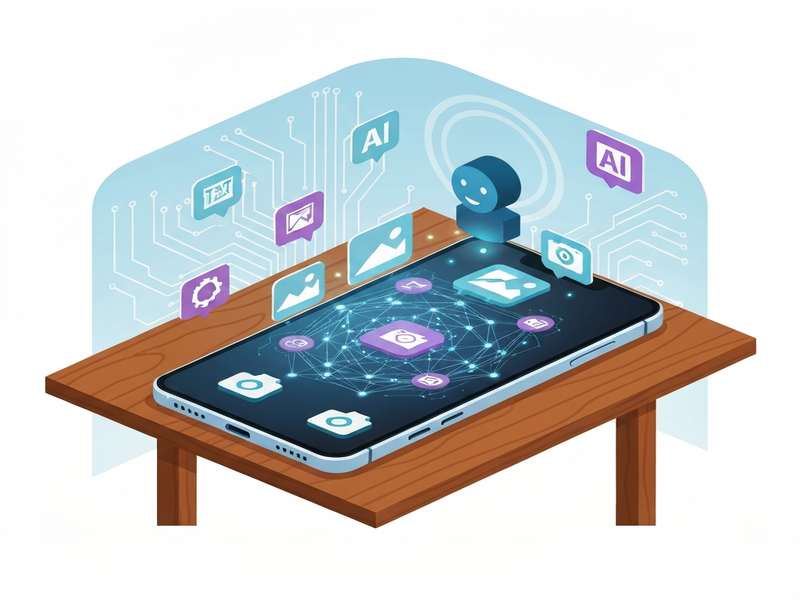
Off‑Grid mobile AI is a privacy‑first, fully offline AI suite that runs text generation, image generation, and vision AI directly on smartphones without any internet connection.
What Is the Off‑Grid Mobile AI Project?
The Off‑Grid mobile AI project, often dubbed “the Swiss Army Knife of Offline AI,” delivers a complete on‑device artificial‑intelligence experience. Unlike typical chat‑bot apps that merely wrap a large language model (LLM) in a UI, Off‑Grid bundles multiple AI capabilities—text generation, image synthesis, vision analysis, voice transcription, and document parsing—into a single native mobile application. All processing happens locally on Android or iOS hardware, guaranteeing that no user data ever leaves the device. This makes it an ideal solution for developers, AI researchers, and privacy‑conscious tech enthusiasts who need robust AI on the go, even in environments with limited or no connectivity.
Key Features: Offline Text Generation, Image Generation, and Vision AI
📝 Offline Text Generation
Run state‑of‑the‑art LLMs such as Qwen 3, Llama 3.2, Gemma 3, and Phi‑4 directly on the phone. The engine supports:
- Streaming responses with a speed of 15‑30 tokens per second on flagship devices.
- “Thinking mode” for longer, more coherent outputs.
- Custom GGUF model imports, letting developers experiment with any quantized model.
🖼️ Offline Image Generation
Leverages on‑device Stable Diffusion variants (e.g., Absolute Reality, DreamShaper, Anything V5) with real‑time preview:
- GPU/NPU acceleration on Snapdragon 8 Gen 2/3 (5‑10 seconds per image).
- Core ML support on Apple A17 Pro devices.
- More than 20 pre‑bundled models for diverse artistic styles.
👁️ Vision AI (On‑Device)
Point the camera at any scene and ask questions. Powered by SmolVLM, Qwen‑3‑VL, and Gemma 3n, the vision module can:
- Analyze documents, receipts, and code snippets.
- Describe complex scenes in natural language (~7 seconds on flagship hardware).
- Extract structured data from PDFs, CSVs, and plain‑text files.
🎤 Voice Input & Document Analysis
Built‑in Whisper integration provides on‑device speech‑to‑text with real‑time transcription. Document handling includes native PDF text extraction and support for code, CSV, and other file types.
Technical Overview & Repository Details
Off‑Grid is written primarily in TypeScript, Swift, and Kotlin, using the llama.cpp and whisper.cpp runtimes for LLM and speech processing. The architecture follows a modular, native‑bridge pattern that isolates heavy inference workloads to the device’s Neural Processing Unit (NPU) or GPU, while the UI runs on React Native.
| Component | Technology | Performance (Typical) |
|---|---|---|
| Text Generation | llama.cpp (GGUF) | 15‑30 tok/s (flagship) |
| Image Generation | Stable Diffusion (NPU/CPU) | 5‑10 s (NPU) / 15‑30 s (CPU) |
| Vision AI | SmolVLM / Qwen‑3‑VL | ~7 s per inference |
| Voice Transcription | Whisper.cpp | Real‑time |
The source code, build scripts, and detailed documentation are hosted on GitHub. Developers can clone the repo, run npm install, and compile for Android (./gradlew) or iOS (pod install). Full build prerequisites include Node 20+, JDK 17, Android SDK 34, and Xcode 15+.
Benefits and Real‑World Use Cases
By keeping AI computation on the device, Off‑Grid delivers three core advantages:
- Privacy by Design: No network traffic means zero data leakage, a critical factor for healthcare, legal, and finance apps.
- Offline Resilience: Works in remote locations, disaster zones, or on‑the‑go fieldwork where connectivity is unreliable.
- Cost Efficiency: Eliminates cloud‑compute fees and reduces latency to milliseconds.
Typical Scenarios
- Field Researchers: Capture images of specimens, ask the model to identify species, and generate descriptive reports without internet.
- Travel & Logistics Apps: Translate signage, read receipts, and generate itineraries on the fly.
- Content Creators: Draft blog posts, generate artwork, and edit videos directly from a phone.
- Enterprise Security Teams: Run confidential data analysis in isolated environments, ensuring compliance with GDPR and HIPAA.
How Off‑Grid Fits Into the UBOS Ecosystem
UBOS (Unified Business Operating System) provides a low‑code, AI‑first platform for building, deploying, and scaling SaaS solutions. Off‑Grid’s offline capabilities complement UBOS in several ways:
- Integrate the ChatGPT and Telegram integration to let users interact with the offline model via secure messaging.
- Leverage the OpenAI ChatGPT integration for hybrid scenarios where a fallback to cloud is optional.
- Combine with the Chroma DB integration to store vector embeddings locally for fast similarity search.
- Enhance voice experiences using the ElevenLabs AI voice integration, turning transcribed text into natural‑sounding speech.
Developers can embed Off‑Grid’s engine inside a Web app editor on UBOS to create custom offline AI tools without writing native code. The Workflow automation studio can orchestrate multi‑step pipelines—e.g., capture an image, run vision AI, then auto‑generate a PDF report—all on the device.
For startups seeking rapid prototyping, the UBOS for startups program offers credits and mentorship, making it easy to launch an offline‑first SaaS product. SMBs can adopt UBOS solutions for SMBs to reduce operational costs while maintaining data sovereignty.
Large enterprises benefit from the Enterprise AI platform by UBOS, which adds governance, role‑based access, and audit trails to the offline AI stack—perfect for regulated industries.
To explore ready‑made templates that showcase Off‑Grid’s capabilities, check out the UBOS templates for quick start. Notable examples include:
- AI SEO Analyzer – runs keyword analysis offline.
- AI Article Copywriter – generates drafts without cloud calls.
- AI Video Generator – combines text‑to‑image and audio synthesis locally.
Why Offline Mobile AI Matters in 2026
The convergence of powerful mobile SoCs and efficient model quantization has made on‑device AI a mainstream reality. According to the AI section of UBOS, the global market for edge AI is projected to exceed $30 billion by 2028, driven by privacy regulations and the need for real‑time inference. Simultaneously, mobile technology advancements—such as Snapdragon 8 Gen 3 and Apple’s Neural Engine—provide the compute horsepower required for multi‑modal models without draining battery life.
Off‑Grid capitalizes on this trend by offering a single, open‑source package that abstracts hardware differences, letting developers focus on product logic rather than low‑level optimization.
Get Started with Off‑Grid Today
Whether you are a solo developer, a startup founder, or an enterprise architect, the path to an offline‑first AI solution is now straightforward:
- Visit the GitHub repository and clone the project.
- Follow the quick‑start guide to install the Android APK or iOS build on your device.
- Explore UBOS integrations—such as the Telegram integration on UBOS—to extend functionality.
- Leverage UBOS’s partner program for co‑marketing and technical support.
- Scale your solution with UBOS’s pricing plans that fit from hobbyist to enterprise.
The future of AI is moving to the edge. By adopting Off‑Grid, you ensure your applications stay fast, private, and resilient—no matter where your users are.
Andrii Bidochko
CTO UBOS
Andrii Bidochko is an AI entrepreneur and researcher focused on AI agents, reinforcement learning, and autonomous systems. He writes about the technologies shaping the future of machine intelligence, from frontier models and agent architectures to real-world AI applications.