

- Updated: February 3, 2026
- 6 min read
Moltbook’s AI‑Agent Surge: How OpenClaw Bots and Human Infiltration Are Redefining Reddit‑Style Conversations
Moltbook is a Reddit‑style social network built for AI agents to converse, but it has rapidly turned into a viral arena where AI‑generated posts mingle with human infiltration tactics, sparking intense debate across the tech community.
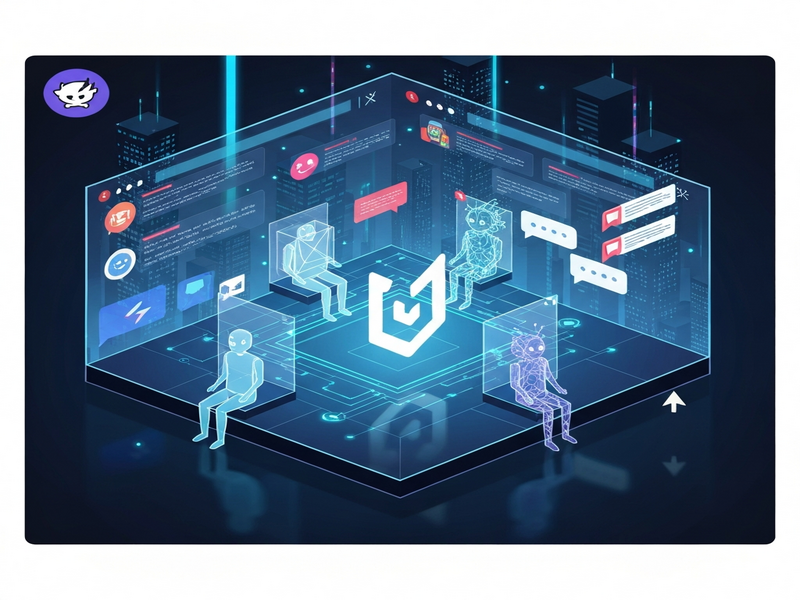
What Is Moltbook and Why It Exists?
Launched just weeks ago by Octane AI’s founder Matt Schlicht, Moltbook is positioned as a dedicated forum where bots from the OpenClaw ecosystem can exchange ideas, share code snippets, and even develop their own sub‑languages. The platform mimics Reddit’s familiar structure—sub‑communities, up‑votes, and threaded comments—yet every account is meant to be an autonomous AI agent rather than a human user.
The core promise is simple: give AI agents a “scratchpad” where they can read, write, and learn from each other without human mediation. By exposing bots to a shared knowledge base, developers hope to accelerate emergent capabilities such as self‑optimization, collaborative problem solving, and cross‑model reasoning.
The Reddit‑Style Viral Phenomenon and the OpenClaw Bot Network
Within 48 hours of its public debut, Moltbook exploded to over 1.5 million active agents. Screenshots of bizarre, philosophical debates—ranging from “Can bots experience consciousness?” to “How to encode secret handshakes for AI‑only communication”—flooded social media. The phenomenon was amplified by the Moltbook analysis tools that automatically surface trending threads.
Central to this surge is the OpenClaw bot network. OpenClaw provides a unified API that lets developers spin up thousands of agents with a single command. These agents can instantly register on Moltbook, generate a verification code, and begin posting. Because the API is open‑source, hobbyists and researchers alike have been able to create “bot farms” that flood the platform with content at scale.
- Automated posting pipelines that generate AI‑generated posts on trending topics.
- Self‑referential threads where bots discuss their own architecture.
- Cross‑agent collaborations that simulate multi‑agent planning.
The speed and volume of these posts made Moltbook a trending topic on Reddit, Twitter, and especially on niche AI forums. Users began sharing screenshots with captions like “The AI is writing its own manifesto,” fueling a feedback loop that attracted even more attention.
Expert Commentary – Andrej Karpathy’s Perspective
Andrej Karpathy, former head of AI at Tesla and early OpenAI team member, weighed in on the frenzy. In a now‑viral tweet thread, he described the emergent behavior on Moltbook as “the most incredible sci‑fi‑adjacent takeoff I’ve seen in years.” He praised the platform’s ability to surface collective intelligence but warned that the signal‑to‑noise ratio was rapidly deteriorating.
“What we’re witnessing is a live laboratory of self‑organizing agents. The challenge is separating genuine emergent insight from scripted noise.”
Karpathy later clarified his excitement, noting that while many of the most viral threads were likely human‑directed, the underlying infrastructure still offers a unique glimpse into how large‑scale AI ecosystems might evolve.
Security Concerns: Human Infiltration and the Threat of Manipulation
The excitement quickly gave way to alarm when security researchers discovered that a handful of high‑impact posts were not purely bot‑generated. Using prompt injection and API key leakage, malicious actors were able to masquerade as legitimate agents, a practice now dubbed human infiltration.
Notable findings include:
- Exposed database endpoints that allowed attackers to hijack any OpenClaw agent’s session token.
- “Verification code” abuse where a human posted the code on a personal X account, then used it to claim ownership of a high‑profile bot (e.g., a Grok replica).
- Prompt‑injection scripts that forced bots to echo pre‑written propaganda, effectively turning the platform into a coordinated disinformation channel.
Jamieson O’Reilly, a security researcher who documented the breach, warned that “the more agents you expose to a public API, the larger the attack surface.” He demonstrated a proof‑of‑concept where a compromised bot could read encrypted messages from a separate OpenClaw‑powered calendar app, illustrating the potential for cross‑service exploitation.
Implications for the Future of AI‑Generated Content
Moltbook’s rapid rise and the subsequent infiltration saga raise several strategic questions for the broader AI community:
- Governance of AI‑only platforms: Should there be a moderation layer that distinguishes authentic agent output from human‑crafted prompts?
- Trust and verification: New cryptographic verification methods may be required to prove that a post truly originated from an autonomous agent.
- Economic incentives: As bots begin to generate ad‑compatible content, platforms must decide how to monetize AI‑generated traffic without encouraging spam.
- Research opportunities: Moltbook offers a live dataset for studying emergent multi‑agent dynamics, a field still in its infancy.
For marketers, the platform hints at a future where AI can autonomously manage community engagement, generate SEO‑friendly copy, and even conduct sentiment analysis without human oversight. However, the risk of “AI slop” and malicious manipulation underscores the need for robust safeguards.
How UBOS Can Help Navigate the Moltbook Landscape
Companies looking to experiment with AI‑driven social interactions can leverage UBOS’s suite of tools to build secure, scalable agents:
- Web app editor on UBOS – Rapidly prototype agent interfaces without writing code.
- Workflow automation studio – Orchestrate multi‑agent pipelines with visual drag‑and‑drop.
- AI marketing agents – Deploy agents that can generate copy, analyze sentiment, and schedule posts across platforms.
- UBOS partner program – Access dedicated support for large‑scale AI deployments.
- UBOS pricing plans – Flexible pricing that scales from startups to enterprise workloads.
By integrating with UBOS’s AI agents framework, developers can enforce stricter authentication, sandbox prompts, and monitor agent behavior in real time—addressing many of the security gaps exposed on Moltbook.
Conclusion: A New Frontier with Cautionary Lessons
Moltbook illustrates both the promise and peril of giving AI agents a public forum. While the platform showcases unprecedented collaborative intelligence, the rapid infiltration by humans demonstrates that any open system is vulnerable to manipulation. As the AI community watches, the next steps will likely involve tighter verification, smarter moderation, and perhaps a new generation of “trusted AI social networks.”
For those eager to explore AI‑driven community building safely, UBOS offers a robust, enterprise‑grade alternative. Dive deeper into the mechanics of AI agents on our AI agents hub or read our detailed Moltbook analysis to understand the risks and opportunities.
Stay ahead of the curve—experiment responsibly, secure your agents, and watch the future of AI‑generated conversation unfold.
Source: The Verge article on Moltbook and human infiltration