

- Updated: March 4, 2026
- 5 min read
Mexico Mandates Biometric SIM Registration for All Phone Numbers – Telecom Regulation Update
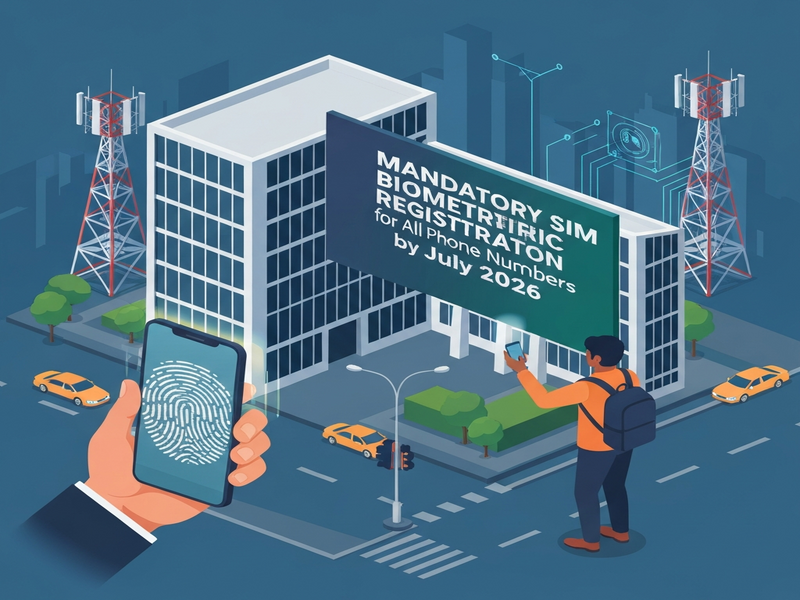
Mexico will require every mobile phone number to be linked to a biometric identity by July 1 2026, creating a nationwide database that ties each SIM card to a verified face.
Introduction – Why Mexico’s New SIM Law Matters
The Mexican government has set a hard deadline of July 1 2026 for the telecom policy that forces every active mobile line—prepaid, postpaid, physical SIM or eSIM—to be registered with a biometric profile. Failure to comply will result in suspension of the line. This sweeping mandate is poised to reshape privacy, security, and business operations across the country.
Background – Mexico’s Telecom Landscape Before the Mandate
Mexico’s mobile market has long been dominated by a mix of large carriers (Telcel, AT&T Mexico, Movistar) and a vibrant ecosystem of MVNOs offering low‑cost prepaid plans. Historically, prepaid SIMs required only a name and a government‑issued ID, leaving a sizable “anonymous” segment that many consumers relied on for privacy, affordability, and flexibility.
In early 2026, the Federal Telecommunications Institute (IFT) introduced the CURP Biométrica—an upgraded version of the national population registry that embeds a photograph, electronic signature, and QR code. The new system was marketed as a fraud‑prevention tool, but its scope quickly expanded to cover every mobile subscriber.
Details of the Biometric SIM Registration Requirement
Scope: All Phone Numbers, No Exceptions
The law applies to all 127 million active mobile numbers in Mexico, regardless of plan type or carrier. Both new activations (30‑day window) and existing lines (deadline June 30 2026) must submit biometric data.
Required Biometric Data
- Government‑issued CURP number
- Valid photo ID (INE, passport, or driver’s license)
- Facial photograph captured at the point of registration
- Electronic signature linked to the CURP Biométrica QR code
Enforcement Timeline
January 9 2026 – Law takes effect.
June 30 2026 – Deadline for existing subscribers.
July 1 2026 – Full enforcement; non‑compliant numbers are deactivated.
Implications for Consumers
The biometric rollout raises several concerns for everyday users, especially those who have relied on the anonymity of prepaid SIMs.
Privacy Concerns
By linking a phone number to a facial image stored in a centralized government database, the state gains the ability to trace calls, messages, and data usage back to an individual with minimal friction. Critics argue this creates a de‑facto surveillance network without robust oversight.
Impact on Anonymity
Vulnerable groups—domestic‑abuse survivors, journalists, activists, and migrants—have historically used prepaid SIMs to protect their identities. The new law eliminates that safety net, potentially exposing them to retaliation or harassment.
Practical Burdens
- Travelers must locate a registration kiosk or authorized retailer, often in major cities only.
- Rural residents may face long wait times and limited internet connectivity for the QR‑code verification.
- Data‑plan users must ensure their devices support the required camera resolution for facial capture.
Impact on Telecom Operators
Carriers are now tasked with integrating the CURP Biométrica API into their provisioning systems, a process that demands significant technical and financial resources.
Compliance Costs
Operators must invest in hardware (biometric scanners), software development, staff training, and ongoing data‑security audits. According to industry estimates, compliance could cost each major carrier upwards of $15 million USD in the first year.
Creation of a National Surveillance Database
The integration creates a real‑time feed of subscriber identities to the government’s central registry. While the official narrative emphasizes fraud reduction, the data architecture also enables law‑enforcement agencies to query call‑detail records (CDRs) by face, not just by number.
Comparison with Similar Systems Worldwide
Mexico is not the first country to tie SIM registration to a biometric ID. Below is a quick snapshot of comparable regimes:
| Country | ID System | Coverage | Key Rationale |
|---|---|---|---|
| India | Aadhaar (biometric UID) | All prepaid & postpaid SIMs | Fraud prevention, national security |
| Nigeria | National Identity Management System (NIMS) | All mobile subscribers | Combat SIM‑boxing, terrorism |
| Tanzania | National ID (biometric) | Prepaid SIMs only | Reduce fraud, improve tax collection |
While each regime cites fraud reduction, the common thread is the creation of a state‑controlled identity‑to‑communication map. Mexico’s approach mirrors India’s model but adds a QR‑code layer that simplifies real‑time verification.
Conclusion – What to Watch for Next
The biometric SIM mandate will be fully operational by mid‑2026, and its ripple effects will be felt across privacy advocacy, telecom economics, and digital rights discourse. Stakeholders should monitor:
- Legal challenges filed by civil‑society groups, especially after the Yucatán court’s temporary suspension in 2025.
- Technical rollout reports from carriers—delays or glitches could expose users to service interruptions.
- Potential policy refinements that introduce exemptions for at‑risk populations.
- International reactions, particularly from neighboring countries that may adopt similar frameworks.
For businesses operating in Mexico, the new regime underscores the importance of robust data‑privacy practices and compliance automation. Leveraging platforms that streamline identity verification—such as the Workflow automation studio—can reduce operational friction while ensuring adherence to the law.
Learn more about how AI is reshaping regulatory compliance in our AI regulation news hub. If you’re interested in building secure, AI‑enhanced telecom solutions, explore the UBOS platform overview and check out the UBOS templates for quick start. For a hands‑on example of biometric verification in action, try the AI Voice Assistant template.
Explore AI‑Driven Marketing
AI marketing agents can personalize campaigns while respecting new privacy norms.
Pricing Transparency
UBOS pricing plans offer scalable options for telecom firms of any size.
Enterprise‑Grade AI
Enterprise AI platform by UBOS integrates seamlessly with national ID APIs.
Developer Tools
Web app editor on UBOS lets you prototype compliance dashboards in days.
Source: original news article.
Andrii Bidochko
CTO UBOS
Andrii Bidochko is an AI entrepreneur and researcher focused on AI agents, reinforcement learning, and autonomous systems. He writes about the technologies shaping the future of machine intelligence, from frontier models and agent architectures to real-world AI applications.