

- Updated: February 18, 2026
- 5 min read
Mark Zuckerberg’s Congressional Testimony Exposed: New Evidence Fuels Calls for Stronger Privacy Regulation
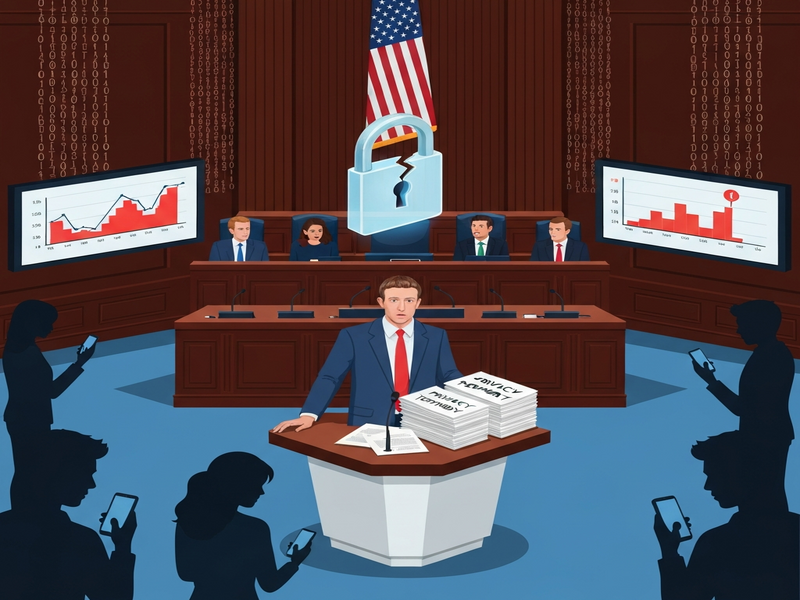
Mark Zuckerberg testified before the Senate Judiciary Committee on March 20, 2024, where he defended Meta’s safety measures while lawmakers pressed him on the company’s role in eroding tech‑industry trust and the need for stricter privacy regulation.
Why Zuckerberg’s Testimony Matters for the Future of Social Media Regulation
Meta’s CEO faced a grilling session that highlighted the tension between rapid AI‑driven product growth and the mounting demand for user‑privacy safeguards. The hearing not only put a spotlight on Meta’s internal practices but also served as a bellwether for how Congress may shape the next wave of tech‑industry regulation.
1. Context: The Senate Judiciary Committee’s Focus
The Senate Judiciary Committee convened a special session titled “Big Tech and the Online Child Sexual Exploitation Crisis.” While the headline issue was child safety, the broader agenda encompassed:
- Algorithmic transparency for AI‑powered feeds.
- Data‑ownership rights under emerging privacy laws.
- Accountability mechanisms for platform‑wide harms.
These topics intersect directly with the Enterprise AI platform by UBOS, which helps organizations embed responsible AI controls into their products.
2. Summary of Zuckerberg’s Statements
2.1. Emphasis on Ongoing Investment
Zuckerberg opened his testimony by assuring the committee that Meta “invests heavily in industry‑leading safety tools” and that “no family should have to endure the harms we see on our platforms.” He cited recent launches such as Teen Accounts and the AI‑driven content moderation engine as proof points.
2.2. Defense of Section 230
He reiterated Meta’s reliance on Section 230, arguing that “the law provides a safe harbor that encourages innovation while we continue to improve safety.” This stance was met with sharp rebuttals from Senators who view Section 230 as a shield for negligent behavior.
2.3. Data‑Privacy Position
When asked about privacy, Zuckerberg claimed that “the bulk of scientific evidence does not yet prove a causal link between social‑media use and mental‑health decline.” He positioned Meta as a “partner” rather than a “regulator” of user data.
For companies looking to navigate similar privacy challenges, the About UBOS page outlines a framework for building privacy‑by‑design solutions.
3. Congressional Reaction
Senators from both parties expressed frustration:
- Sen. Josh Hawley demanded a victim‑compensation fund, to which Zuckerberg replied, “I don’t think that’s my job is to make good tools.”
- Sen. Maria Cantwell highlighted internal documents showing that many of Meta’s safety features were either “red” (non‑functional) or “yellow” (partially effective).
- Sen. Mark Warner warned that without legislative action, “trust in the tech industry will continue to erode.”
These remarks echo concerns raised in the UBOS blog on privacy regulation, where the need for clear, enforceable standards is emphasized.
4. Implications for Tech‑Industry Trust
Trust is a fragile commodity in the digital age. Zuckerberg’s testimony, combined with the committee’s pushback, signals three critical shifts for the industry:
4.1. Heightened Scrutiny of AI‑Generated Content
AI models now power recommendation engines, ad targeting, and even automated moderation. The hearing underscored the need for transparent model governance—a capability showcased by the Chroma DB integration, which provides explainable vector search for AI applications.
4.2. Stronger Data‑Protection Mandates
Legislators are eyeing a federal “Data‑Transparency Act” that would require platforms to disclose data‑collection practices in plain language. Companies can prepare by adopting UBOS pricing plans that include built‑in compliance modules.
4.3. Demand for Auditable Safety Tools
Meta’s claim of “industry‑leading safety” will be measured against third‑party audits. Tools like the AI SEO Analyzer demonstrate how automated audits can be embedded directly into product pipelines.
5. Privacy Regulation: The Road Ahead
Two legislative tracks dominate the conversation:
- Kids Online Safety Act (KOSA) – proposes age‑verification standards and mandatory parental‑control APIs.
- Digital Services Accountability Act (DSAA) – aims to create a federal oversight board for algorithmic transparency.
Both bills would force platforms to expose their AI decision‑making pipelines. For developers, the Workflow automation studio offers a low‑code environment to build audit trails without writing extensive code.
6. How Companies Can Prepare Today
While lawmakers debate, forward‑thinking firms can take concrete steps:
- Adopt OpenAI ChatGPT integration for transparent user‑support bots that log every interaction.
- Leverage the ChatGPT and Telegram integration to create secure, auditable communication channels.
- Deploy the ElevenLabs AI voice integration for accessible content that complies with accessibility standards.
- Utilize the Web app editor on UBOS to rapidly prototype privacy‑by‑design features.
- Explore ready‑made solutions in the UBOS templates for quick start, such as the AI Article Copywriter for generating compliance documentation.
7. The Bigger Picture: Trust, Innovation, and Regulation
Meta’s testimony illustrates a classic paradox: the same AI technologies that fuel growth also generate risk. As the Senate Judiciary Committee makes clear, unchecked innovation can erode public confidence, prompting a regulatory backlash that may stifle future breakthroughs.
Companies that embed responsible AI practices now—through tools like AI marketing agents that respect user consent—will be better positioned to thrive under any regulatory regime.
8. Conclusion & Call to Action
Mark Zuckerberg’s congressional testimony is more than a headline; it is a catalyst for a new era of accountability in the tech sector. Stakeholders must:
- Audit existing AI models for bias and transparency.
- Implement robust privacy‑by‑design frameworks.
- Engage with policymakers to shape balanced legislation.
Ready to future‑proof your AI initiatives? Explore the UBOS partner program and discover how our ecosystem can help you meet emerging compliance standards while still delivering innovative experiences.
For a deeper dive into the original hearing transcript and the broader implications for the tech industry, read the full report on The Dispatch.
“Trust is earned through transparency, not through legal shields.” – Senate Judiciary Committee
Stay informed, stay compliant, and stay ahead of the curve.