

- Updated: February 20, 2026
- 5 min read
Lucid Motors Cuts 12% of Workforce Amid Profitability Push
Lucid Motors has cut roughly 12% of its global workforce to tighten costs and accelerate its path to profitability while still pushing forward its Gravity SUV, a new $50 k midsize EV, and a robotaxi partnership with Uber and Nuro.
Lucid Motors Announces Major Workforce Reduction
In a surprise move that sent ripples through the electric‑vehicle (EV) sector, Lucid Motors disclosed a 12% layoff of its staff. The decision, detailed in an internal memo obtained by TechCrunch, is framed as a necessary step to improve operational efficiency and safeguard the company’s long‑term financial health.
For investors, analysts, and EV enthusiasts tracking market dynamics, this development raises critical questions about Lucid’s product pipeline, leadership stability, and competitive positioning against industry giants like Tesla and emerging Chinese manufacturers.
If you’re exploring how AI can help you stay ahead of such market shifts, start at the UBOS homepage for a suite of tools that turn raw data into actionable insights.
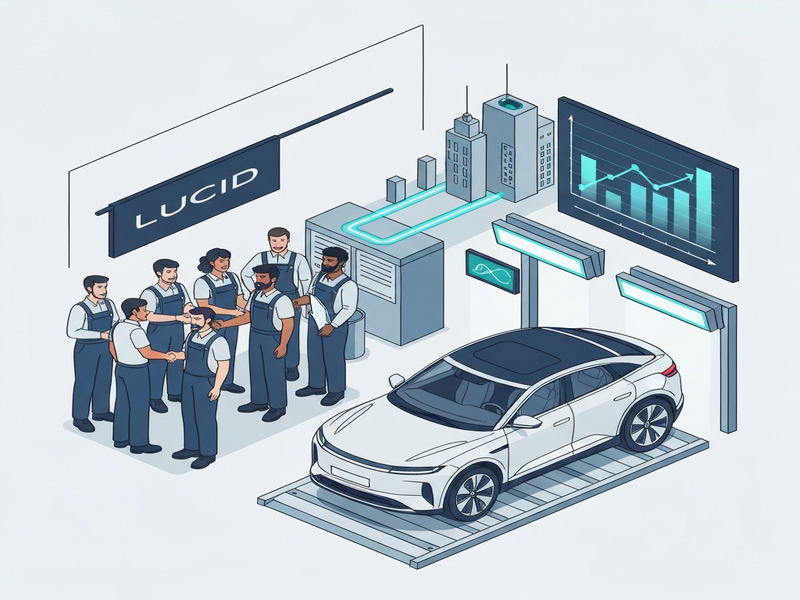
What Exactly Is Being Cut and Why?
The memo, signed by interim CEO Marc Winterhoff, clarified that the reductions target corporate, engineering, and sales functions, while hourly manufacturing, logistics, and quality‑control teams remain untouched. With roughly 6,800 full‑time employees at the end of 2024, the cuts likely affect several hundred individuals.
Winterhoff emphasized that the company will provide severance, bonuses, continued health benefits, and transition support. The rationale centers on three pillars:
- Streamlining overhead to free cash for core vehicle development.
- Aligning headcount with realistic production forecasts for the upcoming Gravity SUV.
- Preserving liquidity ahead of the 2025 financial results release.
These measures echo a broader trend in the EV industry where capital‑intensive manufacturers are tightening belts after a period of aggressive expansion.
How the Layoffs Affect Lucid’s Product Roadmap
Despite the workforce shrinkage, Lucid’s product ambitions remain largely unchanged. The company is in the midst of scaling production of its flagship Gravity SUV, a luxury electric sport‑utility vehicle slated for a 2025 launch. Early production hiccups have been largely resolved, and output has doubled compared to 2024.
Simultaneously, Lucid is preparing to unveil a more affordable midsize EV priced around $50,000. This model is critical for expanding market share beyond the premium segment and competing directly with Tesla’s Model 3 and upcoming Chinese entrants.
A third strategic pillar is the robotaxi partnership with Uber and autonomous‑vehicle pioneer Nuro. The collaboration aims to launch a driver‑less ride‑hailing service in the San Francisco Bay Area by the end of 2025, leveraging Lucid’s advanced battery technology and autonomous driving stack.
For tech‑savvy investors looking to model these developments, the UBOS platform overview offers modular analytics that can ingest production data, forecast revenue, and simulate market scenarios.
Leadership Turbulence and the 2025 Financial Outlook
Lucid has been without a permanent CEO for almost a year. Founder‑CEO Peter Rawlinson resigned abruptly in February 2025, leaving the firm under interim leadership. The departure triggered a cascade of executive exits, including the chief engineer who filed a wrongful‑termination lawsuit.
Winterhoff’s memo reassured stakeholders that the strategic direction remains intact: focus on the midsize platform, expand robotaxi operations, and continue software and ADAS enhancements. The company is slated to release its 2025 earnings next week, a critical data point for investors assessing the impact of the layoffs.
Understanding the financial implications of such restructuring can be daunting. The About UBOS page outlines how our AI‑driven financial modeling tools can break down earnings, cash flow, and cost‑saving initiatives into clear, actionable dashboards.
EV Industry Landscape: Why Lucid’s Moves Matter
The EV market is entering a phase of consolidation. While Tesla continues to dominate volume, legacy automakers such as Ford and General Motors are accelerating their electric line‑ups, and Chinese firms like BYD and Nio are expanding globally. In this environment, capital efficiency is as vital as technological edge.
Lucid’s decision mirrors actions taken by rivals:
- Rivian’s workforce reduction after a costly IPO.
- Polestar’s shift to a leaner operating model to meet profitability targets.
- Fisker’s strategic partnership with Foxconn to share production resources.
For companies navigating similar pressures, the Enterprise AI platform by UBOS provides end‑to‑end workflow automation, predictive maintenance, and market‑trend analysis—all essential for staying competitive.
“Cost discipline does not have to mean stifling innovation; it can free resources for the breakthroughs that truly differentiate a brand.” – Industry Analyst
What Should Investors and EV Enthusiasts Do Next?
Stay ahead of the curve by leveraging AI‑powered tools that turn corporate announcements into predictive insights. Whether you’re a startup founder, a mid‑size business, or an enterprise, UBOS offers solutions tailored to your scale.
- Explore the UBOS solutions for SMBs to automate financial reporting.
- Try the AI SEO Analyzer to monitor how news like Lucid’s layoffs affect search visibility.
- Build a custom dashboard with the Web app editor on UBOS for real‑time EV market tracking.
- Automate data pipelines using the Workflow automation studio to ingest earnings releases and sentiment data.
- Leverage the AI Article Copywriter to generate briefing notes for your investment committee.
- Enhance presentations with the AI Video Generator for visual storytelling.
- Integrate voice‑enabled insights using the ElevenLabs AI voice integration for hands‑free briefings.
- Connect your analytics to popular messaging platforms via the Telegram integration on UBOS and the ChatGPT and Telegram integration for instant alerts.
- Tap into the power of large language models with the OpenAI ChatGPT integration for natural‑language queries.
- Store and query vector embeddings using the Chroma DB integration for semantic search across earnings calls.
Ready to future‑proof your analysis workflow? Review the UBOS pricing plans and start a free trial today.
Andrii Bidochko
CTO UBOS
Andrii Bidochko is an AI entrepreneur and researcher focused on AI agents, reinforcement learning, and autonomous systems. He writes about the technologies shaping the future of machine intelligence, from frontier models and agent architectures to real-world AI applications.