

- Updated: February 15, 2026
- 5 min read
LT6502 Open-Source 6502‑Based Laptop Project Gains Momentum
The LT6502 project is an open‑source, 6502‑based laptop that revives classic retro‑computing in a portable, battery‑powered device, complete with a built‑in keyboard, display, and storage.
LT6502 Project Overview
The LT6502 is a hobbyist‑focused laptop built around the classic MOS 6502 microprocessor, a chip that powered the Apple II, Commodore 64, and countless other iconic machines of the 1970s and 1980s. Spearheaded by TechPaula, the project aims to combine the nostalgic charm of 6502 computing with modern conveniences such as USB‑C charging, a 9‑inch LCD, and a compact flash storage slot.
Designed as a fully open‑source hardware and software platform, LT6502 invites developers, retro‑computing fans, and hardware hobbyists to explore microcontroller design, low‑level programming, and hands‑on electronics without the overhead of a full‑scale development board.
Key Features & Specifications
Core Processor
- 65C02 CPU running at 8 MHz – a modern, low‑power variant of the original 6502.
- Integrated 65C22 VIA for timers, parallel I/O, and interrupt handling.
Memory & Storage
- 46 KB of SRAM, split between program RAM and video buffer.
- 32 KB of ROM containing EhBASIC, an enhanced Wozmon monitor, and a custom bootloader.
- CompactFlash slot for up to 2 GB of persistent storage.
Display & Input
- 9‑inch LCD (800 × 480) driven by an RA8875 controller.
- Full‑size QWERTY keyboard with built‑in 8‑character LED display for status messages.
- Serial console via FTDI USB‑C for debugging and firmware updates.
Power & Portability
- 10 000 mAh Li‑Po battery providing up to 8 hours of continuous use.
- USB‑C power delivery for fast charging and optional external power.
- Lightweight aluminum‑polymer chassis, fully 3‑D printable.
Beyond the hardware, the LT6502 firmware includes a set of extended BASIC commands for graphics (CIRCLE, LINE, FILL), file management (LOAD, SAVE, DIR), and direct hardware control (BEER, OUTK). This makes the laptop a practical learning platform for anyone interested in low‑level programming.
Development Timeline & Community Momentum
The LT6502 roadmap is documented in the project’s GitHub README and has progressed rapidly since the first commit in November 2025. Below is a concise chronology of major milestones:
| Date | Milestone |
|---|---|
| 2025‑11‑12 | Initial PCB schematics completed. |
| 2025‑12‑30 | First batch of PCBs received. |
| 2026‑01‑01 | Power‑up verification – all voltages correct. |
| 2026‑01‑04 | VIA and ACIA functional; keyboard I/O integrated. |
| 2026‑01‑09 | CompactFlash and beeper operational; battery run‑time validated. |
| 2026‑01‑16 | 9‑inch RA8875 display driver completed. |
| 2026‑02‑08 | Added BASIC commands for file management (SAVE, LOAD, DIR). |
| 2026‑02‑14 | Final case assembled; first fully functional prototype. |
The community around LT6502 is vibrant on GitHub, Discord, and the Retro Computing blog hosted by UBOS. Contributors regularly submit firmware patches, PCB revisions, and custom case designs, keeping the project alive and evolving.
Illustration: LT6502 in Action
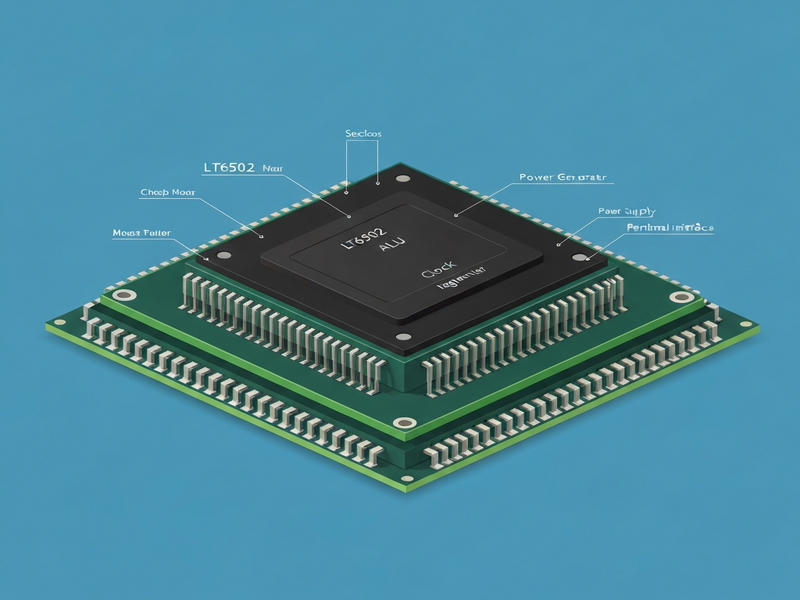
The generated illustration above captures the LT6502’s compact form factor: a sleek aluminum chassis housing a 9‑inch LCD, a full‑size keyboard, and a visible USB‑C port. The image highlights the device’s retro aesthetic—clean lines, a monochrome keyboard backlight, and the iconic 6502 chip visible through a transparent case window.
For makers who prefer a visual reference before ordering parts, the illustration serves as a quick checklist of ports, connectors, and component placement.
Where to Find the Source Code
The complete hardware schematics, firmware source, and assembly instructions are hosted on GitHub. You can clone the repository, file issues, or submit pull requests directly:
How LT6502 Connects to the Modern UBOS Ecosystem
While the LT6502 is a stand‑alone retro device, its open‑source nature makes it an ideal testbed for integrating with contemporary AI and automation platforms. Below are a few UBOS services that can extend the laptop’s capabilities:
- UBOS homepage – discover the full suite of AI‑driven tools that complement hardware projects.
- UBOS platform overview – a low‑code environment where you can host a web‑based IDE for editing LT6502 BASIC programs.
- AI marketing agents – automate community outreach for your LT6502 project with AI‑generated newsletters.
- UBOS for startups – leverage the platform’s rapid prototyping features to spin up companion apps for the laptop.
- UBOS solutions for SMBs – integrate LT6502‑based kiosks into small‑business workflows.
- Enterprise AI platform by UBOS – connect multiple LT6502 units to a central AI hub for data aggregation.
- Web app editor on UBOS – build a browser‑based emulator that mirrors the physical LT6502 experience.
- Workflow automation studio – automate firmware build pipelines for the laptop.
- UBOS pricing plans – choose a plan that fits hobbyist budgets while accessing premium AI services.
- UBOS portfolio examples – see real‑world projects that combine hardware and AI, similar to LT6502.
- UBOS templates for quick start – jump‑start a companion web app for your laptop with pre‑built templates.
Boosting LT6502 with UBOS Template Marketplace
UBOS’s marketplace offers ready‑made AI‑enhanced modules that can be deployed alongside the LT6502. Here are a few that resonate with retro‑computing enthusiasts:
- AI Article Copywriter – generate documentation or tutorials for your LT6502 builds automatically.
- AI SEO Analyzer – ensure your project’s web presence ranks well on search engines.
- AI YouTube Comment Analysis tool – monitor community feedback on video demos of the laptop.
- Generative AI Text-to-Video – create quick demo reels showcasing the LT6502’s capabilities.
- AI Chatbot template – embed a help‑desk bot on your project site to answer builder questions.
Conclusion: Why LT6502 Matters Today
The LT6502 proves that classic 6502 architecture still has relevance in a world dominated by 64‑bit processors. By delivering a fully functional, portable laptop that runs BASIC, supports graphics, and offers modern power management, the project bridges the gap between nostalgic hobbyists and contemporary makers.
Whether you are a seasoned retro‑computing fan, a student eager to learn low‑level programming, or a startup looking for a quirky demo device, the LT6502 provides a hands‑on platform that is both educational and extensible.
Ready to explore the LT6502 yourself? Grab the schematics from the GitHub repo, join the community discussions, and consider pairing the laptop with UBOS’s AI tools to create a truly modern retro experience.
Andrii Bidochko
CTO UBOS
Andrii Bidochko is an AI entrepreneur and researcher focused on AI agents, reinforcement learning, and autonomous systems. He writes about the technologies shaping the future of machine intelligence, from frontier models and agent architectures to real-world AI applications.