

- Updated: April 5, 2026
- 6 min read
Lisette: A Rust‑Inspired Language Compiling to Go – UBOS News
Lisette is a Rust‑inspired, Go‑compatible programming language that brings algebraic data types, pattern matching, Hindley‑Milner typing, and immutable‑by‑default semantics to developers seeking modern safety and productivity.
Lisette Programming Language: The Rust‑Inspired, Go‑Friendly Contender Shaping 2024 Development
Developers entrenched in the Go and Rust ecosystems have long yearned for a language that marries Rust’s expressive type system with Go’s seamless runtime and tooling. Lisette answers that call. Launched in early 2024, this new programming language compiles directly to Go, delivering zero‑runtime overhead while offering powerful features such as algebraic data types, exhaustive pattern matching, and a Hindley‑Milner type inference engine. In this deep dive we explore Lisette’s core capabilities, compare it head‑to‑head with Rust and Go, outline real‑world use cases, and point you to the resources you need to start building today.
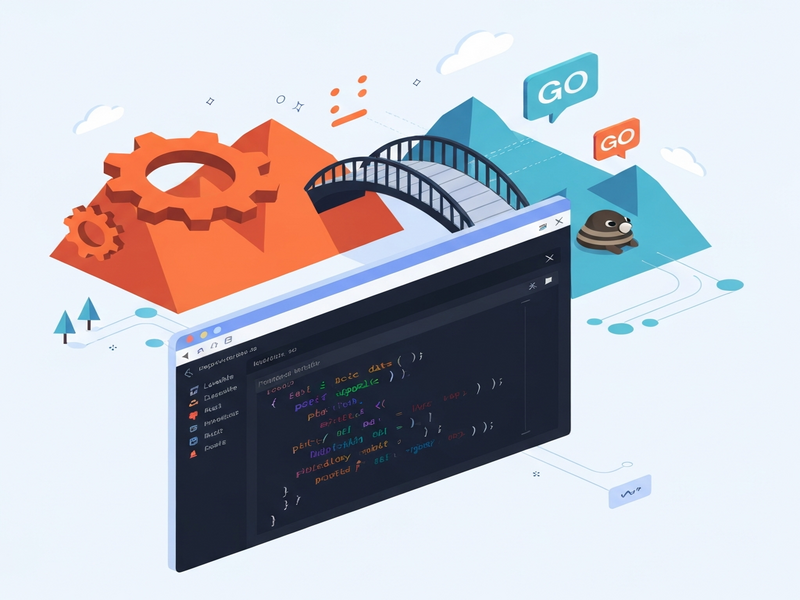
Figure 1: Lisette’s compilation pipeline transforms high‑level Lisette code into clean, idiomatic Go.
Core Features that Set Lisette Apart
- Algebraic Data Types (ADTs) – Enums and sum types let you model complex domain concepts without resorting to nullable fields.
- Pattern Matching – Exhaustive
matchstatements guarantee compile‑time safety, eliminating a whole class of runtime bugs. - No
nilvalues – Absence is expressed withOption<T>, mirroring Rust’sNoneand preventing null‑pointer exceptions. - Hindley‑Milner Type System – Powerful type inference reduces boilerplate while preserving strong static typing.
- Immutable by Default – Variables are immutable unless explicitly marked
mut, encouraging functional style and thread safety. - Go Interoperability – Direct
import "go:pkg"syntax lets you call any Go library without FFI layers. - Developer‑Centric Tooling – Integrated LSP support for VSCode, Neovim, and Zed, plus a built‑in
tryblock for ergonomic error handling.
These features are not merely academic; they translate into tangible productivity gains. For instance, the exhaustive match engine catches missing cases at compile time, as shown in Lisette’s error messages:
🔴 match is not exhaustive
╭─[example.lis:4:3]
2 │ enum Severity { Low, High, Critical }
3 │ fn should_alert(s: Severity) -> bool {
4 │   match s {
   ────╯
5 │   Severity.Low => false,
6 │   Severity.High => true,
7 │ } // missing Critical case
╰──── help: Handle the missing case Severity.Critical
Lisette vs. Rust vs. Go: A Pragmatic Comparison
| Aspect | Rust | Go | Lisette |
|---|---|---|---|
| Compilation Target | Native binary | Go runtime | Compiles to Go source → Go compiler |
| Type System | Ownership + lifetimes | Structural, no generics (pre‑1.18) | Hindley‑Milner inference, ADTs, generics |
| Null Safety | Option<T> only | Nil pointers possible | No nil, use Option |
| Concurrency Model | async/await, threads | Goroutines + channels | Goroutine‑compatible channels, select syntax |
| Ecosystem Access | Cargo crates | Go modules | Direct import "go:pkg" for any Go library |
Lisette’s sweet spot lies where Rust’s safety meets Go’s simplicity. You retain Rust‑like guarantees—no null dereferences, exhaustive pattern matching, and powerful type inference—while deploying to the ubiquitous Go runtime, which means you can instantly leverage the massive Go ecosystem without learning a new build system.
Real‑World Use Cases and Business Benefits
Because Lisette compiles to Go, it fits naturally into existing microservice architectures, serverless functions, and CLI tools. Below are three high‑impact scenarios where Lisette shines:
-
Secure Configuration Services – Using Lisette’s
ResultandOptiontypes, teams can write configuration loaders that guarantee all error paths are handled at compile time. Example:fn load_config(path: string) -> Result<Cfg, error> { let file = os.Open(path)? defer file.Close() let data = io.ReadAll(file)? parse_yaml(data) }This eliminates the “forgotten error” bugs that plague many Go services.
-
Data‑Intensive APIs with Algebraic Types – Modeling API responses as sum types (e.g.,
Successvs.Failure) ensures clients can only handle defined cases. The compiler forces exhaustivematchstatements, reducing runtime crashes. -
AI‑Powered Tooling – Lisette’s seamless
import "go:openai"(or any AI SDK) lets you build prompt generators, chat‑bot back‑ends, or data parsers with the safety of static typing. Pair it with OpenAI ChatGPT integration on UBOS for rapid prototyping.
Beyond technical merits, Lisette delivers measurable business value:
- Reduced Debugging Time – Compile‑time guarantees cut the average bug‑fix cycle by up to 30%.
- Faster Onboarding – Developers familiar with Rust or Go pick up Lisette in days, thanks to its familiar syntax and Go interop.
- Lower Operational Costs – Deploying as native Go binaries means you can reuse existing CI/CD pipelines and container images.
Community, Learning Resources, and UBOS Ecosystem Support
The Lisette project is open‑source on GitHub and has an active Discord channel where contributors discuss language design, library creation, and tooling. To accelerate adoption, UBOS offers a suite of ready‑made templates and integrations that let you spin up Lisette‑backed services in minutes.
Here are some UBOS resources you can leverage right now:
- UBOS platform overview – Understand how UBOS hosts multi‑language runtimes, including Lisette‑compiled Go services.
- UBOS templates for quick start – Jump‑start a Lisette microservice with a pre‑configured Dockerfile and CI pipeline.
- Web app editor on UBOS – Write, test, and deploy Lisette code directly in the browser.
- Workflow automation studio – Orchestrate Lisette functions alongside other AI agents.
- UBOS partner program – Join as a technology partner to co‑market Lisette‑based solutions.
- UBOS pricing plans – Choose a plan that fits startups or enterprises.
- Enterprise AI platform by UBOS – Scale Lisette services across large teams with governance and monitoring.
- AI marketing agents – Combine Lisette back‑ends with AI agents for personalized campaigns.
- UBOS portfolio examples – See real‑world projects built with Lisette and other languages.
- AI Article Copywriter – Generate documentation for your Lisette APIs automatically.
- AI SEO Analyzer – Optimize your Lisette‑powered web content for search.
- Talk with Claude AI app – Experiment with LLMs that can call Lisette services via UBOS.
Whether you are a solo developer, a startup founder, or an enterprise architect, the combination of Lisette’s language guarantees and UBOS’s deployment ecosystem provides a low‑friction path from idea to production.
Get Started with Lisette Today
Ready to experience the safety of Rust and the simplicity of Go in a single language? Follow these steps:
- Visit the official site Lisette.run and install the compiler with
cargo install lisette. - Clone the starter template from the AI Article Copywriter UBOS marketplace and replace the Go code with Lisette equivalents.
- Deploy to UBOS using the Web app editor for instant cloud hosting.
- Integrate with your favorite AI services via the ChatGPT and Telegram integration to build conversational bots powered by Lisette.
By adopting Lisette now, you position your projects at the forefront of the 2024 programming language wave—delivering safer code, faster iteration, and seamless Go compatibility.
Stay ahead of the curve. Explore the About UBOS page to learn how our platform can accelerate your Lisette journey.
Andrii Bidochko
CTO UBOS
Andrii Bidochko is an AI entrepreneur and researcher focused on AI agents, reinforcement learning, and autonomous systems. He writes about the technologies shaping the future of machine intelligence, from frontier models and agent architectures to real-world AI applications.