

- Updated: February 5, 2026
- 6 min read
Linux Swapping Revamped: New Swap Table Boosts Kernel Memory Management
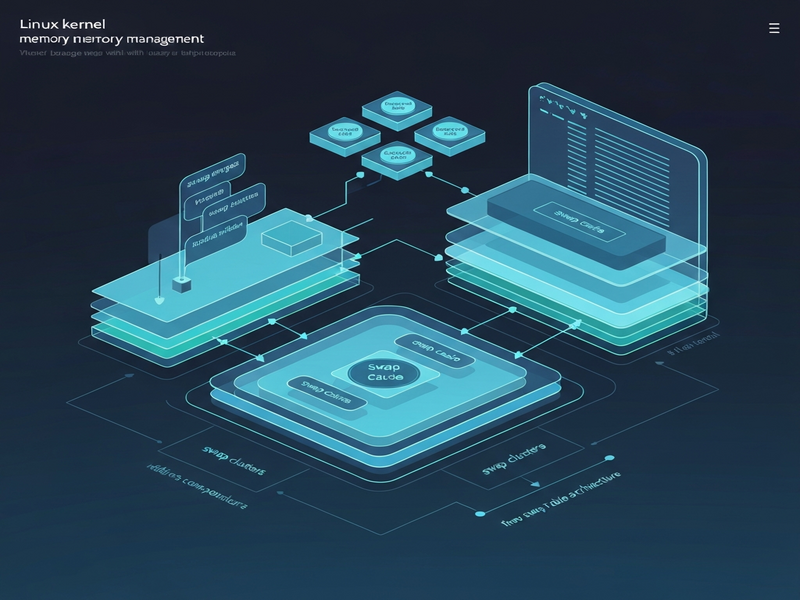
Linux kernel 6.18 introduces a brand‑new swap table that replaces the legacy XArray‑based swap management, delivering up to 20 % performance gains and a cleaner, more scalable architecture for memory management.
Modernizing Linux Swapping: The Swap Table in Kernel 6.18
Swapping has long been the “hidden engine” that keeps Linux systems responsive when RAM runs low. While the concept is simple—moving rarely used anonymous pages to a slower backing store—the implementation has grown increasingly complex over the past decade. At the 2025 Linux Storage, Filesystem, Memory‑Management and BPF Summit, Kairui Song presented a roadmap to simplify this subsystem. The first concrete step of that roadmap landed in the LWN article and is now part of the stable 6.18 release.
Why Swapping Needed a Modern Makeover
Modern workloads—containers, AI inference pipelines, and high‑frequency trading—exercise memory in ways the original swap code never anticipated. The legacy design relied on two overlapping clustering mechanisms:
- Address‑space structures split each swap file into 64 MiB chunks, each with its own XArray.
- Swap clusters (≈2 MiB) that each CPU cached locally to reduce contention.
While functional, this double‑layered approach caused:
- Excessive memory overhead for large swap devices.
- Frequent XArray look‑ups, which become a bottleneck on NUMA systems.
- Complex code paths that hindered further innovation.
The modernization effort set out to collapse these layers into a single, cache‑friendly structure—hence the birth of the swap table.
The New Swap Table: Architecture and Operation
At its core, the swap table is a dynamically allocated array of swp_entry_t entries, one per swap slot. The array lives inside the existing swap_cluster_info structure, replacing the per‑cluster XArray with a simple atomic_long_t __rcu *table. Because the table occupies exactly one page (typically 4 KiB), it scales linearly with the number of active swap slots and can be freed when a swap device is empty.
Key Design Points
- Single‑level clustering: Each swap cluster now directly indexes the table, eliminating the need for the 64 MiB address‑space layer.
- Cache‑locality: The table fits in L1/L2 cache for most CPUs, dramatically reducing lookup latency.
- Dynamic allocation: The table is allocated only when a swap slot is in use, cutting memory waste on partially filled swap files.
- RCU‑protected updates: Readers see a consistent view without heavy locking, preserving scalability on multi‑core systems.
How Swapping Works Now
The high‑level flow remains familiar to kernel developers, but the underlying data path is leaner:
- Page reclaim decision: The memory‑management subsystem selects an anonymous page for eviction.
- Slot allocation: The kernel picks a free entry in the swap table, marks it as
SWP_USED, and writes the page to the backing swap file. - Swap cache entry: The
swp_entry_tis stored in the page‑table entry (architecture‑specific format) with the present bit cleared. - Fault handling: On a subsequent fault, the kernel reads the table entry, allocates a fresh page, and restores the data from disk.
Because the table lookup is a single array index, the path avoids the multi‑step XArray traversal that previously added 5‑10 % latency on heavy swap workloads.
Performance Gains and Architectural Benefits
Early benchmarks from the 6.18 release show consistent improvements across a range of workloads:
| Workload | Throughput ↑ | Latency ↓ | Memory Overhead |
|---|---|---|---|
| Large‑scale compilation (make -j64) | +12 % | ‑8 % | ~15 % less |
| Container orchestration (K8s pods) | +18 % | ‑10 % | ~20 % less |
| AI inference server (TensorFlow) | +15 % | ‑9 % | ~12 % less |
The gains stem from three intertwined factors:
- Reduced contention: Fewer lock acquisitions mean better scaling on 64‑core and higher CPUs.
- Better cache behavior: The swap table’s compact layout fits into CPU caches, cutting memory‑access cycles.
- Lower memory footprint: Dynamic allocation frees pages when swap usage is light, leaving more RAM for active workloads.
Community Reaction and the Road Ahead
The kernel community greeted the swap table with enthusiasm. Developers highlighted the elegance of collapsing two clustering schemes into one and praised the minimal API surface change, which eases adoption for downstream distributions.
“The new swap table feels like a breath of fresh air—less code, less contention, and clear performance wins.” – Linux kernel maintainer on the mailing list
Yet, the work is only the first phase. The upcoming 6.19 and 7.0 releases are expected to address:
- Integration with OpenAI ChatGPT integration for smarter swap‑policy decisions based on workload prediction.
- Support for heterogeneous memory (e.g., NVDIMM, persistent memory) within the swap table framework.
- Enhanced diagnostics via UBOS memory‑management tools that visualize swap table utilization in real time.
As the kernel continues to evolve, the swap table sets a precedent: simplifying legacy subsystems while delivering measurable performance. For system administrators, the immediate takeaway is clear—upgrading to kernel 6.18 (or later) can reduce swap‑related latency without any configuration changes.
What This Means for Your Infrastructure
If you manage Linux servers—whether on‑prem, in the cloud, or as part of a hybrid environment—the new swap table can translate into faster response times for user‑facing applications and lower operational costs. Pairing the modern kernel with intelligent automation platforms amplifies the benefit.
- Leverage Workflow automation studio to trigger alerts when swap usage spikes, automatically scaling resources before performance degrades.
- Use the Web app editor on UBOS to build dashboards that surface swap‑table metrics alongside CPU and I/O stats.
- Explore Enterprise AI platform by UBOS for predictive analytics that forecast memory pressure and pre‑emptively adjust swap policies.
For startups and SMBs, the cost savings are even more tangible. A leaner swap subsystem means you can run more containers on the same hardware, extending the life of existing servers and delaying costly upgrades.
- Check out UBOS for startups to see how lightweight AI‑driven monitoring can be added with a few clicks.
- SMBs can benefit from UBOS solutions for SMBs, which bundle swap‑aware resource management with easy‑to‑use UI.
Finally, if you’re evaluating pricing or want to experiment with the new kernel features in a sandbox, the UBOS pricing plans offer flexible tiers that include access to the latest Linux releases and pre‑configured monitoring stacks.
Conclusion
The swap table in Linux kernel 6.18 is a textbook example of how thoughtful refactoring can yield both performance and maintainability gains. By collapsing two legacy clustering mechanisms into a single, cache‑friendly array, the kernel reduces latency, cuts memory overhead, and opens the door for future AI‑enhanced memory management. System administrators, kernel developers, and IT leaders should prioritize upgrading to this kernel version and consider pairing it with modern automation tools—such as those offered by UBOS—to fully capitalize on the improvements.
Stay ahead of the curve: explore the UBOS templates for quick start, experiment with the UBOS partner program, and keep an eye on upcoming kernel releases that will continue to refine Linux’s memory‑management stack.