

- Updated: November 26, 2025
- 5 min read
Li Auto Unveils First AI Smart Glasses, Expanding Multi‑Device Ecosystem
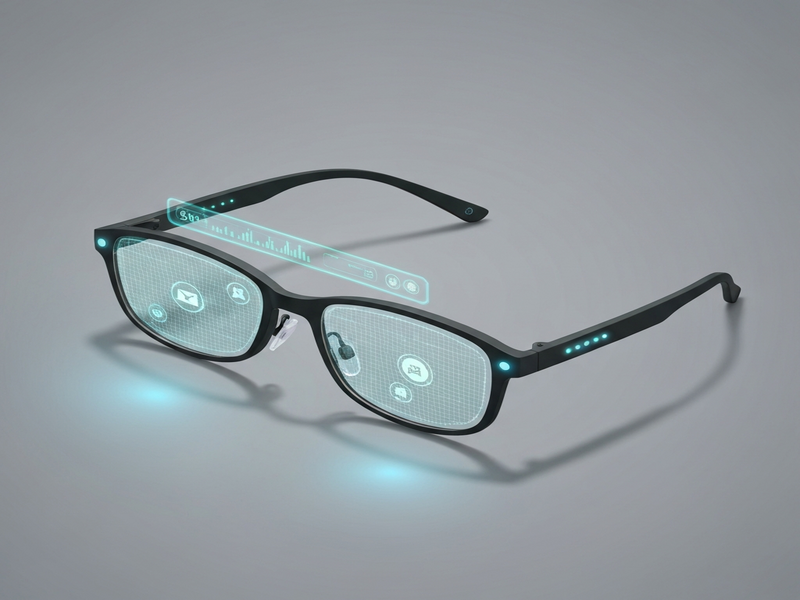
Li Auto is set to launch its first pair of AI smart glasses, positioning them as the company’s flagship AI accessory that will seamlessly blend augmented‑reality navigation, fatigue monitoring, and in‑car connectivity into a lightweight wearable.
Why Li Auto’s AI Smart Glasses Matter Now
In a market where wearables are evolving from fitness trackers to full‑blown augmented‑reality (AR) platforms, Li Auto’s entry signals a strategic shift toward a multi‑device ecosystem that unites vehicle intelligence, voice assistants, and visual computing. The glasses are expected to ship in early 2026, targeting tech‑savvy consumers who already trust Li Auto’s electric vehicles (EVs) for their daily commute.
Key Features, Design, and Underlying Technology
1. Ultra‑Light Frame & Premium Optics
- Carbon‑fiber reinforced temples keep the weight under 45 grams, comparable to premium sunglasses.
- High‑resolution waveguide display delivers 1080p per eye with a 40° field of view, ensuring crisp AR overlays even in bright daylight.
- Adjustable nose pads and interchangeable lenses cater to prescription users, expanding the market reach.
2. Integrated AI Processor
Li Auto is partnering with a leading Chinese semiconductor firm to embed a custom Neural Processing Unit (NPU) that runs on‑device inference for latency‑critical tasks such as:
- Real‑time lane‑keeping assistance visualized directly in the user’s line of sight.
- Driver fatigue detection using eye‑tracking and micro‑expression analysis.
- Voice‑activated commands that trigger vehicle functions without reaching for a dashboard.
3. Seamless Vehicle Integration
The glasses communicate with Li Auto’s smart devices ecosystem via a low‑latency 5G/Wi‑Fi 6E link, enabling:
- AR navigation that projects turn‑by‑turn directions onto the windshield view.
- Context‑aware climate control adjustments based on user gestures.
- Instant access to the vehicle’s infotainment system through a holographic UI.
4. AI‑Powered Voice Assistant
Built on the UBOS AI platform, the glasses feature a conversational agent that can:
- Answer queries about traffic, weather, and vehicle status.
- Translate spoken language in real time for cross‑border trips.
- Control smart home devices while parked, creating a true “smart‑home‑on‑the‑go” experience.
Market Context & Competitive Landscape
AI wearables have surged since 2022, with major players like Apple, Meta, and Xiaomi releasing AR‑focused glasses. However, most of these devices operate as standalone accessories, lacking deep integration with a vehicle’s telemetry. Li Auto’s approach differentiates itself by:
| Brand | Core Strength | Vehicle Integration |
|---|---|---|
| Apple Vision Pro | Premium display & ecosystem | None (requires iPhone) |
| Meta Ray‑Ban | Social AR features | None |
| Xiaomi Smart Glasses | Affordability | Limited (via smartphone) |
| Li Auto | Vehicle‑centric AI | Deep, real‑time cockpit sync |
By embedding the glasses within its platform overview, Li Auto can leverage vehicle sensor data (camera, lidar, CAN bus) to enrich AR content, a capability that competitors currently lack.
Integration with Li Auto’s Multi‑Device Ecosystem
Li Auto is not launching the glasses in isolation. The company announced a “wearable robot” unit that will also develop an AI smart speaker and a suite of connected services. This creates a three‑pronged ecosystem:
- Vehicle Cockpit – The central hub for navigation, driver assistance, and entertainment.
- Smart Glasses – The visual extension of the cockpit, delivering AR overlays and health monitoring.
- AI Speaker – A voice‑first interface for home and on‑the‑road commands, bridging the gap between the car and the user’s living space.
Through a unified UBOS‑powered API layer, developers can create cross‑device experiences. For example, a user could start a video conference on the smart speaker at home, then seamlessly transition to the glasses for a hands‑free view while driving.
User Experience Expectations & Industry Impact
Early adopters will likely value the following experience pillars:
- Safety First: Real‑time fatigue alerts reduce accident risk, aligning with regulatory trends that favor driver‑monitoring systems.
- Contextual Convenience: Voice commands combined with visual cues eliminate the need to glance at a phone or dashboard.
- Personalized Content: AI learns driving habits and preferences, curating news, music, and navigation routes on the fly.
From an industry perspective, Li Auto’s move could accelerate the convergence of automotive and consumer wearables, prompting OEMs to consider AR as a standard feature rather than a niche add‑on. Analysts predict that by 2028, at least 30 % of new EVs will ship with some form of AR eyewear integration.
Original Reporting
The announcement was first reported by Technode, which detailed Li Auto’s vision of a “wearable robot” unit and the planned launch timeline.
How UBOS AI and Smart Devices Complement Li Auto’s Vision
UBOS’s AI platform offers a modular architecture that can be embedded into automotive and wearable firmware. Companies looking to replicate Li Auto’s ecosystem can benefit from:
- AI marketing agents that personalize in‑car promotions based on driver behavior.
- Workflow automation studio for orchestrating cross‑device data pipelines.
- UBOS partner program which provides SDKs for seamless integration with vehicle CAN‑bus and AR displays.
- UBOS pricing plans that scale from startups to enterprise‑grade deployments.
- UBOS templates for quick start that include pre‑built AR navigation modules.
By leveraging these resources, developers can accelerate time‑to‑market for AI‑enhanced wearables, positioning themselves alongside Li Auto in the emerging smart‑device arena.
Conclusion: A Glimpse Into the Future of Connected Mobility
Li Auto’s AI smart glasses are more than a novelty; they represent a strategic convergence of AI, AR, and automotive engineering. As the smart device ecosystem expands, early adopters will enjoy safer, more intuitive journeys, while developers can tap into UBOS’s robust AI infrastructure to build the next generation of connected experiences.
Ready to explore how AI can power your own wearable or vehicle integration? Visit the UBOS homepage today and start prototyping with our AI‑ready tools.
Andrii Bidochko
CTO UBOS
Andrii Bidochko is an AI entrepreneur and researcher focused on AI agents, reinforcement learning, and autonomous systems. He writes about the technologies shaping the future of machine intelligence, from frontier models and agent architectures to real-world AI applications.