

- Updated: March 25, 2026
- 6 min read
Larry Fink warns $150 oil price could trigger global recession amid AI investment boom
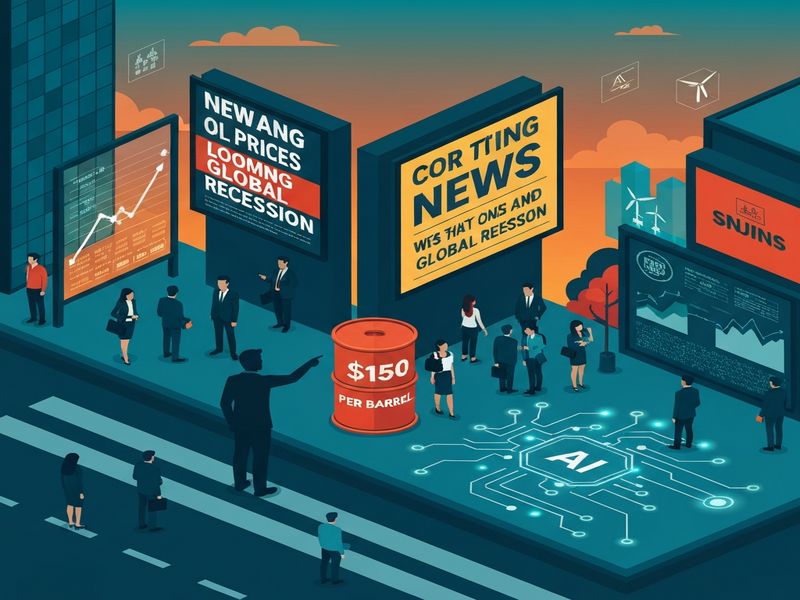
Larry Fink, CEO of BlackRock, warns that if oil prices climb to $150 per barrel, the world could slip into a global recession, while massive AI investment is reshaping the job market and accelerating demand for new tech‑driven business models.
Why the $150 Oil Forecast Matters – and What It Means for Investors
In a candid interview with the BBC, BlackRock’s founder‑CEO Larry Fink warned that sustained oil prices at $150 per barrel would likely trigger a “steep global recession.” His warning comes amid heightened geopolitical tension in the Middle East and a rapid surge in AI‑related capital flows. For financial analysts, energy‑sector professionals, and business journalists, the convergence of these two megatrends—energy price volatility and AI investment—creates a complex landscape that demands immediate attention.
Larry Fink’s Warning: Oil at $150/Barrel and Its Economic Shockwaves
Fink’s assessment is rooted in BlackRock’s $14 trillion asset base, giving him a panoramic view of global capital allocation. He outlined two possible scenarios:
- Resolution Scenario: If diplomatic channels de‑escalate the Iran conflict, oil could retreat below pre‑war levels, easing inflationary pressure.
- Prolonged Conflict Scenario: If tensions persist, oil could hover between $100‑$150 per barrel for years, driving up production costs, squeezing consumer spending, and forcing central banks into tighter monetary policy.
In the latter case, Fink predicts “years of above $100, closer to $150 oil, which has profound implications in the economy” and a “probably stark and steep recession.” He emphasizes that cheap energy is the cornerstone of growth, and without it, even the most resilient economies could falter.
For companies looking to navigate this turbulence, the UBOS platform overview offers a modular AI‑enabled infrastructure that can adapt to shifting cost structures and regulatory environments.
AI Investment Surge: From Billion‑Dollar Funding to New Job Archetypes
While oil prices dominate macro‑economic headlines, Fink also addressed the parallel surge in AI investment. He dismissed the notion of an “AI bubble,” noting that billions of dollars are flowing into generative models, data‑center acquisitions, and AI‑driven services. This capital influx is reshaping the labor market in three distinct ways:
- Technical Trades Boom: Demand for electricians, plumbers, and welders is rising as AI hardware—servers, cooling systems, and edge devices—requires physical installation and maintenance.
- AI‑Centric Roles: New positions such as prompt engineers, AI ethics officers, and model trainers are emerging, often requiring hybrid skill sets that blend domain expertise with data science.
- Office‑Job Realignment: Routine analytical and reporting tasks are increasingly automated, prompting a shift toward higher‑order strategic work.
Fink’s annual shareholder letter highlighted that “the boom in artificial intelligence risked widening inequality, but it will also create an enormous amount of jobs.” He urged educational systems to rebalance the emphasis on university degrees with vocational training, a sentiment echoed by many policymakers.
Businesses can leverage these trends through AI marketing agents, which automate campaign creation, audience segmentation, and performance analytics, freeing human talent for creative strategy.
Macro‑Economic Ripple Effects: Energy, AI, and the Global Outlook
When oil prices soar, the immediate impact is felt in three macro‑economic pillars:
Inflation Pressure
Higher fuel costs translate into increased transportation and manufacturing expenses, feeding into consumer price indices worldwide.
Monetary Tightening
Central banks may raise interest rates to combat inflation, which can dampen investment and slow GDP growth.
Fiscal Strain
Governments with subsidies for fuel or energy‑intensive industries could see budget deficits widen, limiting fiscal stimulus options.
Simultaneously, AI investment is acting as a counter‑balance. By automating processes, AI can reduce operational costs, offsetting some of the inflationary drag from high energy prices. Moreover, AI‑enhanced analytics enable firms to optimize supply chains, hedge commodity exposure, and identify new revenue streams.
Enterprises seeking to harness this dual‑edge advantage can explore the Enterprise AI platform by UBOS, which integrates data ingestion, model deployment, and real‑time monitoring in a single, secure environment.
Strategic Playbook for Investors and Energy Professionals
Given the intertwined risks of soaring oil and rapid AI adoption, investors should consider a diversified approach:
- Energy Diversification: Allocate to a mix of traditional oil & gas, renewable assets, and energy‑efficiency technologies.
- AI‑Enabled Funds: Target funds that invest in AI infrastructure, semiconductor manufacturers, and AI‑driven SaaS platforms.
- Skill‑Based Portfolio: Support companies that are upskilling their workforce for technical trades, as these firms are likely to benefit from the hardware rollout.
- Geopolitical Hedging: Use derivatives or sovereign bond exposure to mitigate region‑specific risk, especially in the Middle East.
For startups and SMBs looking to stay agile, the UBOS pricing plans provide scalable AI tools without heavy upfront CAPEX, allowing rapid experimentation in volatile markets.
Boosting Productivity with Ready‑Made AI Templates
UBOS’s Template Marketplace offers plug‑and‑play solutions that can accelerate AI adoption across sectors. A few standout templates include:
- AI SEO Analyzer – Optimizes website content for search engines using generative AI.
- AI Article Copywriter – Generates high‑quality drafts for blogs, reports, and whitepapers.
- Talk with Claude AI app – Provides conversational AI assistance for research and brainstorming.
- GPT‑Powered Telegram Bot – Automates alerts on oil price movements and AI market news.
- AI Video Generator – Creates explainer videos on complex topics like energy policy or AI ethics.
These templates reduce development time from months to days, enabling firms to respond swiftly to market shocks.
To orchestrate these tools, the Workflow automation studio lets users design end‑to‑end processes—such as ingesting real‑time oil price feeds, triggering AI‑driven risk models, and dispatching alerts to stakeholders.
Policy Implications: Balancing Energy Security and AI Innovation
Governments face a delicate balancing act. On one hand, they must ensure affordable energy to sustain growth; on the other, they need to foster AI ecosystems that can offset rising costs. Fink’s remarks highlight three policy levers:
- Strategic Energy Mix: Encourage domestic production while accelerating renewable deployment to reduce dependence on volatile imports.
- Incentivize AI Infrastructure: Tax credits for data‑center construction, especially those powered by clean energy, can lower AI operating costs.
- Workforce Reskilling Programs: Public‑private partnerships that fund vocational training for technical trades and AI‑related roles.
Organizations seeking partners in this transition can learn more about our mission on the About UBOS page.
Conclusion: Navigating the Twin Storms of Oil and AI
The convergence of a potential $150‑per‑barrel oil price and an unprecedented AI investment wave creates both risk and opportunity. Larry Fink’s warning serves as a clarion call for investors, energy executives, and policymakers to adopt a holistic strategy that blends energy security with AI‑driven efficiency.
By leveraging flexible platforms like the UBOS homepage, tapping into ready‑made templates, and upskilling the workforce, businesses can not only survive but thrive in this volatile environment.
Take action today: Explore the UBOS partner program to co‑create AI solutions, review our UBOS portfolio examples for inspiration, and stay ahead of the curve with our UBOS templates for quick start.
Andrii Bidochko
CTO UBOS
Andrii Bidochko is an AI entrepreneur and researcher focused on AI agents, reinforcement learning, and autonomous systems. He writes about the technologies shaping the future of machine intelligence, from frontier models and agent architectures to real-world AI applications.