

- Updated: February 22, 2026
- 6 min read
Kimwolf Botnet Floods I2P Network with 700,000 Nodes, Triggering Major Security Update
The Kimwolf botnet launched a massive Sybil attack on the I2P anonymity network on February 3 2026, flooding it with 700,000 hostile nodes—roughly 39 times the normal network size—and forcing the I2P team to release version 2.11.0 with post‑quantum encryption within a week.
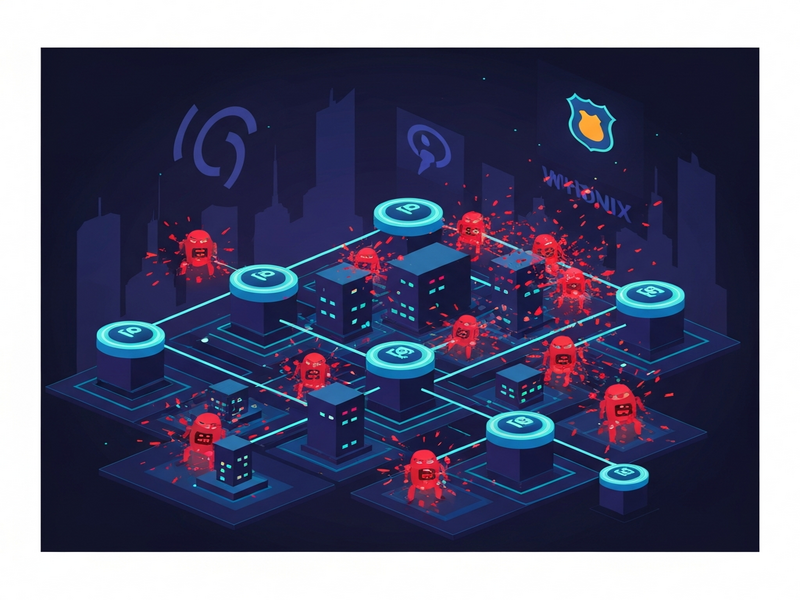
Kimwolf Botnet Sybil Attack Cripples I2P Anonymity Network
On February 3 2026, the I2P (Invisible Internet Project) network experienced one of the largest Sybil attacks ever recorded. An estimated 700,000 malicious nodes were injected, overwhelming the typical 15,000‑20,000 active peers. The assault, attributed to the Kimwolf IoT botnet, not only disrupted routing and floodfill services but also highlighted the urgent need for quantum‑resistant cryptography in anonymity networks.
Understanding I2P and the Threat Landscape
I2P is a decentralized, peer‑to‑peer overlay network designed to provide strong anonymity for web browsing, messaging, and file sharing. Unlike Tor, which relies on a limited set of volunteer relays, I2P’s strength lies in its large, constantly changing pool of router peers that act as both clients and servers.
Botnets—networks of compromised devices—have long targeted anonymity services for two main reasons:
- To use the network as a stealthy command‑and‑control (C2) channel.
- To launch denial‑of‑service attacks that degrade the network’s reliability.
The Enterprise AI platform by UBOS recently released a whitepaper describing how AI‑driven traffic analysis can detect abnormal node behavior, a technique that could have mitigated the Kimwolf surge if deployed earlier.
Kimwolf Botnet: Scale, Origin, and Motive
Scale. The attack introduced roughly 700,000 hostile nodes, a 39× increase over the network’s normal size. This unprecedented flood forced I2P’s routing tables to fill with bogus entries, causing legitimate traffic to be dropped or delayed.
Origin. Kimwolf is an IoT‑focused botnet that emerged in late 2025, compromising millions of consumer routers, streaming boxes, and smart home hubs. Its most infamous prior operation was a 31.4 Tbps DDoS attack in December 2025, which set a new record for bandwidth‑intensive assaults.
Motive. According to leaked Discord chats, the botnet operators were attempting to repurpose I2P as a backup C2 infrastructure after security researchers dismantled over 550 of their primary servers. The accidental overload was not a targeted sabotage of I2P but a side‑effect of their emergency migration.
The attackers themselves admitted the mistake, stating: “We tried to use I2P as a fallback, but we didn’t anticipate the network’s capacity limits.” This candid confession underscores the growing overlap between IoT botnets and anonymity platforms.
Immediate Fallout: Service Disruption and User Experience
Within hours of the flood, I2P users reported:
- Severe latency spikes in eepsite loading times.
- Frequent tunnel failures due to overloaded floodfill routers.
- Increased error rates for the SAMv3 API, affecting third‑party applications.
The network’s built‑in Sybil‑resistance mechanisms—such as bandwidth‑based reputation scoring—were overwhelmed because the malicious nodes mimicked legitimate traffic patterns. As a result, the I2P community experienced a temporary loss of confidence, prompting many privacy‑focused services to switch to alternative overlays.
In response, the I2P development team issued an emergency advisory and began work on a rapid patch. Their Workflow automation studio was leveraged to coordinate code reviews, testing, and deployment across the global contributor base.
I2P 2.11.0: Post‑Quantum Encryption and New Sybil Defenses
Just six days after the attack began, the I2P team released version 2.11.0, a milestone that introduced several groundbreaking security features:
- Hybrid ML‑KEM + X25519 post‑quantum encryption enabled by default, making I2P one of the first production anonymity networks to adopt quantum‑resistant cryptography.
- Enhanced Sybil mitigation through adaptive bandwidth throttling and node reputation decay.
- Upgraded SAMv3 API with stricter authentication and rate‑limiting.
- Improved floodfill router verification using Chroma DB integration for fast, vector‑based similarity checks.
The post‑quantum upgrade leverages the ML‑KEM algorithm, a NIST‑selected key‑encapsulation mechanism, paired with the classic X25519 curve for backward compatibility. This hybrid approach ensures that even if future quantum computers break traditional elliptic‑curve cryptography, I2P traffic remains confidential.
Security analysts have praised the rapid response, noting that the UBOS pricing plans for enterprise‑grade security services now include post‑quantum modules that can be integrated into similar anonymity projects.
What This Means for the Future of Anonymity and IoT Security
Anonymity networks must anticipate botnet scale. The Kimwolf incident proves that IoT botnets can generate node counts far beyond traditional threat models. Networks like Tor, I2P, and newer mesh‑based systems will need to embed AI‑driven anomaly detection—such as the AI marketing agents that can be repurposed for security analytics—to stay ahead.
Post‑quantum cryptography is no longer optional. With quantum‑capable adversaries on the horizon, integrating hybrid schemes early reduces migration risk. The I2P 2.11.0 release serves as a blueprint for other privacy‑preserving platforms.
IoT botnet hygiene is critical. The Kimwolf botnet leveraged insecure consumer routers and streaming devices—hardware that often ships with default credentials. Enterprises should consider deploying solutions like the ElevenLabs AI voice integration for real‑time device health monitoring.
Furthermore, the incident underscores the importance of coordinated disclosure. The rapid public acknowledgment by the botnet operators, albeit accidental, allowed the I2P community to react faster than in previous Sybil events (2023‑2024).
Conclusion: A Turning Point for Secure Anonymous Communication
The 2026 Kimwolf Sybil attack stands as a watershed moment for anonymity networks. By exposing the fragility of traditional Sybil defenses and accelerating the adoption of post‑quantum encryption, the incident has forced the privacy community to rethink both architecture and operational hygiene.
Looking ahead, we can expect:
- Wider deployment of hybrid quantum‑resistant cryptography across Tor, I2P, and emerging mesh networks.
- Integration of AI‑powered traffic analysis tools—similar to the Web app editor on UBOS—to automatically flag Sybil‑like behavior.
- Greater collaboration between IoT manufacturers and security researchers to close the firmware update gap.
- Continued growth of the UBOS partner program, which now offers specialized modules for anonymity‑network hardening.
For security professionals and network administrators, the key takeaway is clear: proactive, quantum‑ready defenses combined with AI‑driven monitoring are essential to safeguard the next generation of privacy‑preserving infrastructure.
Read the original report on the Kimwolf botnet attack here.
Andrii Bidochko
CTO UBOS
Andrii Bidochko is an AI entrepreneur and researcher focused on AI agents, reinforcement learning, and autonomous systems. He writes about the technologies shaping the future of machine intelligence, from frontier models and agent architectures to real-world AI applications.