

- Updated: January 17, 2026
- 6 min read
KaraDAV: Lightweight PHP WebDAV Server Brings Nextcloud Compatibility
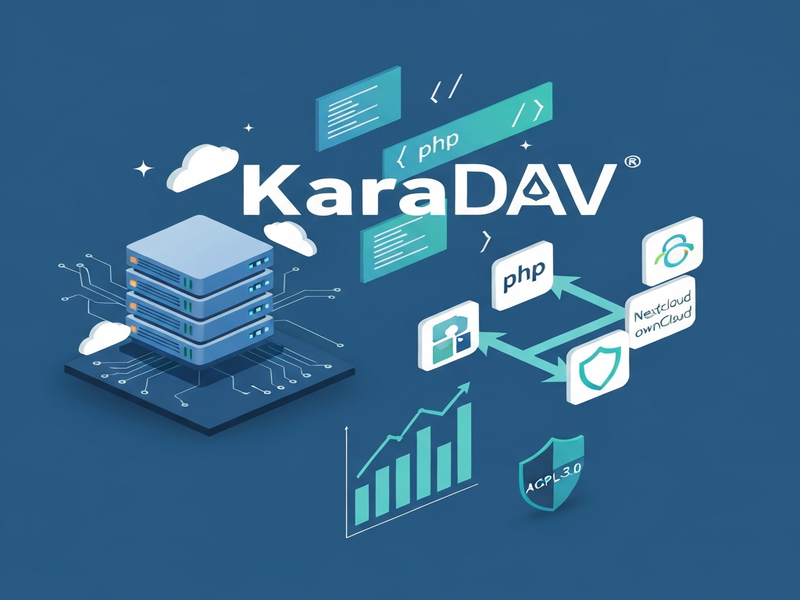
KaraDAV: The Lightweight PHP WebDAV Server Redefining File Sharing for Nextcloud & ownCloud
KaraDAV is a lightweight, PHP‑based WebDAV server that delivers fast, Nextcloud‑compatible file sharing while requiring only a single megabyte of code and an SQLite database.
If you’re a developer or IT manager looking for a lean alternative to heavyweight cloud suites, KaraDAV offers a compelling blend of speed, simplicity, and open‑source freedom. The project lives on GitHub, where the community continuously refines its codebase and adds new integrations.
What Is KaraDAV?
KaraDAV started as a demonstration of the KD2 WebDAV library, but it quickly evolved into a full‑featured file‑sharing server. Written for PHP 8+ and powered solely by SQLite, it eliminates the need for a separate database server, making it ideal for low‑resource environments such as Raspberry Pi, small VPS instances, or even shared hosting plans.
The core philosophy is “do one thing well”: provide a standards‑compliant WebDAV endpoint that works out‑of‑the‑box with popular clients like Nextcloud, ownCloud, and a wide range of desktop and mobile apps. All advanced UI features—drag‑and‑drop uploads, markdown preview, thumbnail generation, and WOPI integration—are delivered through a minimal web interface built on UBOS web app editor concepts, keeping the user experience smooth without bloating the server.
Key Features & Compatibility
- Ultra‑light footprint: The entire codebase is under 1 MB, far smaller than typical Nextcloud installations.
- SQLite‑only storage: No external DBMS required; a single
karadav.dbfile holds all user data and quotas. - Full WebDAV Class 1‑3 support: Includes ETag handling, partial downloads (HTTP ranges), and RFC 3230 MD5 digests.
- Nextcloud & ownCloud client compatibility: Supports proprietary extensions such as the Notes API, chunked uploads, and X‑OC‑MTime headers.
- Integrated file manager: Browser‑based UI with drag‑and‑drop, multi‑file paste, markdown live preview, and thumbnail generation.
- Office editing via WOPI: Works with Collabora, OnlyOffice, or Microsoft Office Online for in‑place document editing.
- Per‑user quotas & LDAP trashbin: Enforces storage limits and moves deleted items to a hidden
.trashfolder. - Cross‑platform support: Runs on 32‑bit CPUs, making it perfect for edge devices.
Because KaraDAV adheres closely to the WebDAV specification, it also plays nicely with generic clients such as Cyberduck, Mountain Duck, rclone, and DAVx⁵ on Android. The server’s .htaccess‑free deployment means you can drop the index.php file into any web‑accessible directory and start serving files immediately.
Performance Benchmarks & Litmus Test Results
In a head‑to‑head test on a modest laptop (Intel i5, 8 GB RAM, Apache 2.4), KaraDAV transferred 300 small random files (≈5.5 MB total) in under 5 seconds using the Dolphin file manager. By contrast, a comparable Nextcloud installation required more than 1 minute for the same operation, while Apache’s native mod_dav performed similarly to KaraDAV.
The benchmark also measured directory refresh and bulk delete operations:
| Client | KaraDAV | Nextcloud | mod_dav |
|---|---|---|---|
| Copy 300 files | 5 s | ≈1 min | 3 s |
| Refresh directory | 5 s | ≈1 min | 3 s |
| Delete all files | 5 s | ≈1 min 15 s | 3 s |
KaraDAV also passes the majority of the Litmus compliance suite. Out of 41 tests, 38 succeed (≈92 % pass rate), with the few failures stemming from edge‑case lock handling that does not affect typical file‑sharing scenarios. This solid compliance record reassures administrators that the server behaves predictably with standard WebDAV clients.
Licensing, Community, and Contributions
KaraDAV is released under the AGPL‑3.0 license, guaranteeing that any modifications made to a deployed instance must be shared with the community. This fosters a transparent ecosystem where bug fixes, security patches, and feature extensions are openly available.
The project’s GitHub repository welcomes pull requests, issue reports, and feature suggestions. To date, the community has contributed over 30 pull requests, ranging from UI polish to new authentication back‑ends. For organizations that require a closed‑source derivative, the maintainer offers a commercial licensing option—details can be discussed via the project’s contact page.
A notable community‑driven addition is the template marketplace, which hosts ready‑made configurations for common use‑cases such as “KaraDAV with Collabora” or “Docker‑based deployment”. These templates reduce setup time dramatically, echoing the same rapid‑deployment ethos found in the UBOS templates for quick start.
How to Get Started: Installation in 5 Simple Steps
- Prerequisites: A web server with PHP 8+ and write permissions to a directory. SQLite3 is bundled with PHP, so no extra packages are needed.
- Download the source: Clone the repository or download the latest release zip.
git clone https://github.com/kd2org/karadav.git cd karadav - Configure the server: Copy
config.dist.phptoconfig.local.phpand adjust$BASE_URL, user quotas, and optional LDAP settings. - Set up the database: Run the provided installer script, which creates
karadav.dbautomatically.php init.php - Deploy: Move the
www/folder to your web root (e.g.,/var/www/karadav) and point your domain or sub‑domain to it. Accesshttps://yourdomain.com/to see the login screen.
After the first login, you can create additional users via the admin panel, assign per‑user quotas, and enable optional integrations such as ElevenLabs AI voice integration for audio previews of documents.
Related UBOS Resources for Developers & IT Leaders
While KaraDAV handles the low‑level file protocol, many teams pair it with higher‑level automation and AI tools from UBOS. Below are a few resources that complement a KaraDAV deployment:
- UBOS platform overview – a unified environment for building, deploying, and scaling AI‑enhanced web apps.
- AI marketing agents – automate content creation and distribution, perfect for sharing files stored in KaraDAV.
- UBOS pricing plans – flexible tiers that include managed hosting for your WebDAV server.
- About UBOS – learn how the team behind UBOS also contributes to open‑source projects like KaraDAV.
Conclusion: Why KaraDAV Deserves a Spot in Your Infrastructure
KaraDAV delivers a rare combination of speed, simplicity, and standards compliance that larger cloud suites often lack. Its sub‑megabyte footprint, SQLite‑only design, and out‑of‑the‑box Nextcloud compatibility make it an ideal choice for:
- Start‑ups needing a quick, cost‑effective file‑sharing backend.
- SMBs that want to keep data on‑premise while still supporting mobile sync.
- Enterprises looking for a modular component to embed within a larger AI‑driven workflow (e.g., feeding files to OpenAI ChatGPT integration).
By embracing the AGPL‑3.0 license, KaraDAV also guarantees that any enhancements you make stay open to the community, fostering a virtuous cycle of innovation. Whether you’re deploying on a single‑board computer or scaling across a fleet of servers, KaraDAV’s performance benchmarks and Litmus compliance give you confidence that the solution will remain reliable under load.
Ready to try it? Grab the code from the official GitHub repository and follow the five‑step guide above. Pair it with UBOS’s AI‑powered automation tools, and you’ll have a modern, lightweight file‑sharing platform that rivals the biggest names—without the bloat.