

- Updated: February 15, 2026
- 7 min read
Introducing VOOG: An Open‑Source Virtual Analog Synthesizer
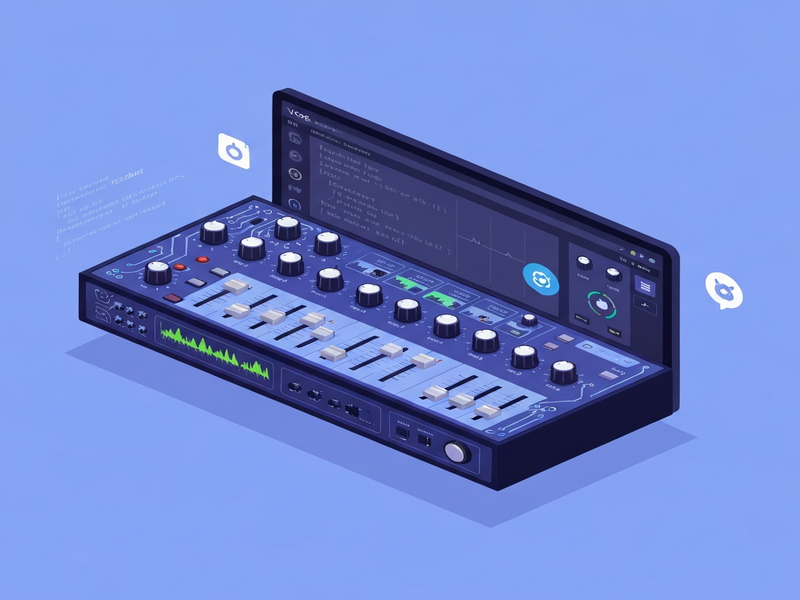
VOOG is an open‑source virtual analog synthesizer that delivers Moog‑style polyphonic tones, a fully featured GUI, and Python‑based extensibility for music producers, synth enthusiasts, and developers.
Why VOOG Is the Next Big Thing for DIY Synth Builders
In a landscape crowded with commercial VSTs and proprietary plugins, the VOOG virtual analog synthesizer stands out as a community‑driven, freely available tool that combines classic analog warmth with modern development practices. Whether you’re crafting bass‑heavy tracks, soaring leads, or experimental soundscapes, VOOG gives you the flexibility of a hardware synth without the price tag.
Project Overview: Purpose and Vision
Created by gpasquero on GitHub, VOOG aims to democratize access to high‑quality analog synthesis. Built entirely in Python and powered by tkinter, the synth mimics the tactile feel of a hardware unit while remaining fully scriptable. Its purpose is threefold:
- Education: Provide a transparent codebase for learning DSP concepts.
- Creativity: Offer a versatile sound engine for music production.
- Extensibility: Enable developers to integrate VOOG into larger audio pipelines or AI‑driven workflows.
Because the project is open source, anyone can fork, modify, or contribute new features, ensuring the synth evolves with the community’s needs.
Key Features of the Virtual Analog Synthesizer
Three Powerful Oscillators
Each voice contains three independent oscillators with selectable waveforms—sine, saw, square, and triangle. The UI mirrors the iconic Subsequent 37 layout, giving you octave and semitone controls for precise pitch shaping.
Moog‑Style Ladder Filter
The 24 dB/octave ladder filter includes resonance, envelope modulation, and key tracking, delivering that classic “wet” analog character. It’s modeled after the Huovilainen algorithm for authentic response.
Dual ADSR Envelopes
Separate amplitude and filter envelopes let you sculpt the attack, decay, sustain, and release of each voice independently, opening up a world of dynamic timbres.
Versatile LFO
Four LFO waveforms (sine, square, triangle, random) can modulate filter cutoff, pitch, or amplitude, with adjustable rate and depth for subtle movement or aggressive wobble effects.
Multitimbral & Polyphonic Engine
VOOG supports four multitimbral channels, each offering eight‑voice polyphony. This architecture lets you layer pads, basses, leads, and effects simultaneously.
Noise Generator & Glide
White and pink noise sources add percussive texture, while glide/portamento modes (off, always, legato) enable smooth pitch transitions for classic synth lines.
Beyond the core sound engine, VOOG ships with 19 factory presets—ranging from deep sub‑bass to screaming leads—plus a patch‑save system that stores user creations in ~/.synth_patches/. The rotary‑knob GUI, inspired by the Subsequent 37’s dark theme, provides an intuitive visual workflow for both beginners and seasoned producers.
Development Background, Community Contributions, and Licensing
VOOG’s codebase lives under the permissive MIT License, encouraging unrestricted reuse. Since its first commit in early 2024, the project has attracted over ten stars on GitHub and a growing base of contributors who add features such as MIDI support, additional waveforms, and UI refinements.
The development philosophy follows a modular, test‑driven approach. Core DSP modules reside in the dsp/ directory, while the gui/ layer handles the user interface. This separation makes it easy for developers to replace or extend individual components without breaking the whole system.
“Open‑source synths like VOOG empower musicians to understand and shape their own sound engines, something that closed‑source plugins rarely allow.” – Audio Development Community
Community contributions are tracked through GitHub pull requests, and the project maintains a clear CONTRIBUTING.md guide that outlines coding standards, testing procedures, and documentation expectations. This openness not only accelerates feature development but also ensures high code quality.
How to Install, Use, and Contribute to VOOG
Prerequisites
VOOG requires Python 3.13+ and the tkinter GUI library. On macOS, you may need to install python‑tk@3.13 via Homebrew. Optional MIDI support adds mido and python‑rtmidi packages.
Step‑by‑Step Installation
# Clone the repository
git clone https://github.com/gpasquero/voog.git
cd voog

# Create a virtual environment
python3.13 -m venv .venv
source .venv/bin/activate

# Install core dependencies
pip install numpy sounddevice

# Optional: MIDI support
pip install mido python-rtmidi

# macOS Tkinter (if missing)
brew install python-tk@3.13
Launching the Synthesizer
- GUI Mode:
python -m synth --guiopens the full rotary‑knob interface. - CLI REPL Mode:
python -m synthdrops you into an interactive console for quick testing. - Loading a Patch:
--patch "Bass Voog"starts the synth with a preset.
Playing Notes
VOOG supports three input methods:
- Mouse‑click and drag on the on‑screen keyboard.
- QWERTY mapping (e.g.,
W E T Y U O Pfor black keys,A S D F G H J K Lfor white keys). - External MIDI controllers (if the optional MIDI package is installed).
Contributing Your Own Code
To become a contributor, follow these steps:
- Fork the VOOG repository on GitHub.
- Create a feature branch (e.g.,
feature/new‑waveform). - Write unit tests in
test_audio.pyto cover your changes. - Submit a pull request with a clear description of the enhancement.
All contributions are reviewed for coding style, documentation completeness, and adherence to the existing modular architecture.
Leveraging VOOG Within the UBOS AI Platform
Developers looking to embed VOOG into larger AI‑driven workflows can take advantage of the UBOS platform overview. The platform’s low‑code Web app editor on UBOS lets you wrap VOOG’s Python engine inside a web‑based audio service, exposing it via REST or WebSocket APIs.
For example, you could combine VOOG with the OpenAI ChatGPT integration to generate patch names or suggest parameter tweaks based on textual prompts. Pairing it with the Chroma DB integration enables fast similarity search across saved patches, turning your synth library into an intelligent, searchable asset.
Marketing teams can also use AI marketing agents to automatically create demo videos of new VOOG presets, while the Workflow automation studio can schedule batch rendering of audio stems for batch testing.
Get Started with VOOG Today
Ready to explore the world of open‑source synthesis? Follow these quick steps:
- Visit the VOOG GitHub repository and clone the code.
- Read the About UBOS page to understand how the broader ecosystem can amplify your synth projects.
- Check out the UBOS pricing plans if you need scalable cloud resources for collaborative music production.
- Explore the UBOS templates for quick start to spin up a ready‑made audio‑processing pipeline that includes VOOG.
- Join the UBOS partner program to get early access to new AI‑audio integrations and co‑marketing opportunities.
If you’re a startup looking for a cost‑effective synth engine, the UBOS for startups page outlines how you can leverage VOOG alongside other AI tools to accelerate product development. For SMBs, the UBOS solutions for SMBs provide a managed environment that handles scaling, security, and compliance.
Need inspiration? Browse the UBOS portfolio examples to see how other creators have integrated open‑source audio engines into interactive web experiences, podcasts, and even AI‑generated video content.
Further Reading & Tools
To deepen your knowledge of AI‑enhanced music production, explore these UBOS resources:
- AI SEO Analyzer – Optimize your synth‑related web pages for search visibility.
- AI Article Copywriter – Generate documentation or blog posts about your new patches.
- AI YouTube Comment Analysis tool – Gauge listener feedback on demo videos of VOOG presets.
- AI Video Generator – Create visualizers that react to VOOG’s output in real time.
Conclusion: A Synth for the Modern Creator
VOOG exemplifies how open‑source principles can revive classic analog synthesis in a fully programmable, AI‑ready environment. Its modular Python architecture, rich feature set, and permissive MIT license make it an ideal foundation for musicians, developers, and AI enthusiasts alike. By integrating VOOG with the broader Enterprise AI platform by UBOS, you can unlock new workflows—automated patch generation, intelligent preset recommendation, and cloud‑based collaborative sessions.
Whether you’re chasing that vintage Moog growl or experimenting with generative sound design, VOOG gives you the tools to create, share, and evolve without barriers. Dive into the code, join the community, and let your next track be powered by the freedom of open‑source synthesis.