

- Updated: February 1, 2026
- 7 min read
Introducing Sightline: Open‑Source OSINT Mapping Tool
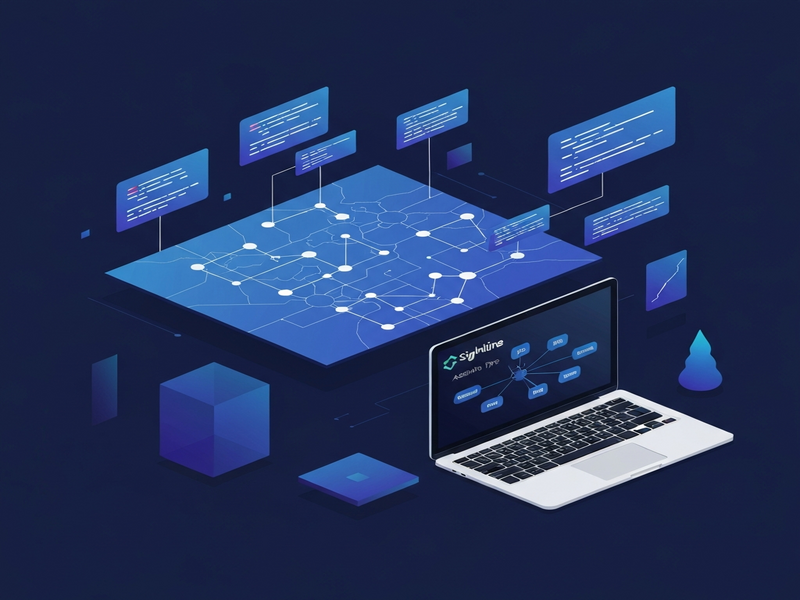
Sightline is an open‑source OSINT (Open‑Source Intelligence) mapping tool that uses OpenStreetMap data to discover, visualize, and analyze real‑world infrastructure assets for cybersecurity, asset‑mapping, and intelligence‑gathering purposes.
Sightline OSINT Mapping Tool: A Quick Overview
In the rapidly evolving world of open‑source intelligence, analysts need a reliable, extensible platform that can turn raw geospatial data into actionable insights. Sightline answers that call by providing a searchable, filter‑rich interface built on top of OpenStreetMap (OSM). Whether you are a security analyst tracking critical infrastructure, a developer building a custom asset‑monitoring solution, or a researcher mapping public facilities, Sightline offers a ready‑made, MIT‑licensed codebase that can be self‑hosted or deployed to the cloud.
Why Sightline Exists: Purpose and Vision
The primary goal of Sightline is to democratize geospatial intelligence by turning the massive, crowd‑sourced OSM dataset into a focused search engine for physical‑world assets. Traditional GIS platforms often require expensive licenses and steep learning curves. Sightline removes those barriers, offering:
- A single‑page web UI that lets users type natural‑language queries (e.g., “telecom towers in Karnataka”).
- Real‑time map visualizations powered by Leaflet.js.
- Extensible back‑end services that can be integrated with other AI tools, such as AI marketing agents for automated reporting.
By providing a free, community‑driven platform, Sightline encourages collaboration across cybersecurity teams, municipal planners, and academic researchers, fostering a shared knowledge base of critical infrastructure.
Key Features & Architecture
Feature Highlights
- Natural‑Language Query Parsing: Uses a lightweight NLP parser to translate user input into Overpass API queries.
- Geocoding with Nominatim: Converts place names into precise latitude/longitude bounding boxes.
- Rich Asset Catalog: Supports 20+ categories and 150+ specific asset types, from power plants to embassies.
- Interactive Map View: Real‑time rendering with clustering, pop‑ups, and filter controls.
- Cache Layer: In‑memory caching reduces API load and improves response times.
- Extensible API: REST endpoints can be called from external scripts, CI pipelines, or AI agents.
Technical Architecture
Frontend (Next.js + Tailwind)
│
├─ SearchBar.tsx          // User query input
├─ Filters.tsx            // Sidebar filters (type, region, radius)
├─ ResultList.tsx         // Tabular results
└─ MapView.tsx            // Leaflet map component

Backend (Node.js/TypeScript)
│
├─ route.ts               // API entry point
├─ parser.ts              // NLP → Overpass query conversion
├─ geo.ts                 // Nominatim integration
├─ overpass.ts            // Overpass API request builder
└─ cache.ts               // Simple in‑memory cache

External Services
│
├─ Nominatim (geocoding)
└─ Overpass API (OSM data)
The separation of concerns (frontend, backend, external services) follows the MECE principle, making the codebase easy to extend. For example, you could replace the Overpass layer with a private OSM dump for offline analysis, or plug in a vector‑tile server for higher‑resolution rendering.
Supported Asset Types & Real‑World Use Cases
Asset Taxonomy at a Glance
| Category | Example Types |
|---|---|
| Energy & Power | power_plant, substation, solar, wind |
| Telecommunications | telecom tower, antenna, cell_tower |
| Water & Utilities | water_tower, dam, pumping_station |
| Aviation | airport, helipad, runway |
| Maritime | port, harbour, lighthouse |
| Government & Public Safety | embassy, police_station, fire_station |
| Healthcare | hospital, clinic, pharmacy |
| Education & Research | school, university, library |
Practical Use Cases
- Cyber‑Physical Threat Modeling: Security teams can map power substations and telecom towers to assess exposure to ransomware or supply‑chain attacks.
- Disaster Response Planning: Emergency managers locate hospitals, fire stations, and shelters within a radius of a predicted hazard zone.
- Supply‑Chain Auditing: Auditors verify the physical locations of manufacturing plants, warehouses, and ports referenced in procurement contracts.
- Competitive Intelligence: Market analysts track new data‑center builds or renewable‑energy installations of rival firms.
- Academic Research: Geographers and urban planners extract datasets for studies on infrastructure density and urban sprawl.
Because Sightline pulls directly from OSM, the data is as up‑to‑date as the community contributions. However, analysts should always cross‑verify critical assets with official sources, especially for compliance or legal investigations.
Installation & Setup: Step‑by‑Step Guide
Prerequisites
- Node.js 18+ (recommended LTS)
- npm ≥ 8
- Git client for cloning the repository
- Internet access for Nominatim and Overpass API calls
Installation Steps
# 1. Clone the repository
git clone https://github.com/ni5arga/sightline.git
cd sightline

# 2. Install dependencies
npm install

# 3. Run the development server
npm run dev

# 4. Open your browser
http://localhost:3000
The app will launch on localhost:3000 with hot‑reloading enabled. For production, you can deploy to Vercel, Netlify, or any Node‑compatible host. The official docs recommend the Vercel CLI:
# Install Vercel globally
npm install -g vercel

# Deploy
vercel
Configuration Tips
- Rate‑Limit Awareness: Nominatim allows 1 request per second; implement client‑side throttling if you expect heavy traffic.
- Cache Warm‑up: Pre‑populate
cache.tswith frequently queried regions to reduce API calls. - Environment Variables: No secret keys are required for the public OSM services, but you may add
NEXT_PUBLIC_API_URLfor custom back‑ends.
If you need a more robust CI/CD pipeline, consider integrating the Workflow automation studio from UBOS to automate testing, linting, and deployment.
Licensing, Community, and How to Contribute
Sightline is released under the permissive MIT license. This means you can:
- Use the software commercially without royalty fees.
- Modify the source code to fit your internal workflows.
- Redistribute your customized version under the same license.
The project welcomes contributions in the form of:
- Bug fixes and performance improvements.
- New asset type definitions or query shortcuts.
- UI enhancements, such as dark‑mode support.
- Integration modules for AI services (e.g., linking with OpenAI ChatGPT integration).
To contribute, fork the repository, create a feature branch, and submit a pull request. The maintainers follow a lightweight review process, focusing on code quality, test coverage, and adherence to the existing architecture.
Get Started with Sightline Today
If you’re ready to incorporate geospatial OSINT into your security stack, the first step is to clone the repo and spin up a local instance. For organizations looking for a managed solution, consider leveraging the Enterprise AI platform by UBOS, which can host Sightline alongside other AI‑driven tools, providing unified authentication, scaling, and monitoring.
Need a quick prototype? The UBOS templates for quick start include a pre‑configured Sightline‑like mapping app that you can launch in minutes. Pair it with the AI marketing agents to automatically generate briefing reports for stakeholders.
For startups, the UBOS for startups program offers discounted pricing and dedicated support, ensuring you can focus on building intelligence workflows rather than infrastructure.
SMBs can explore the UBOS solutions for SMBs, which include a managed version of Sightline with SLA‑backed uptime.
Curious about pricing? Review the UBOS pricing plans to find a tier that matches your usage patterns.
Explore real‑world implementations in the UBOS portfolio examples to see how other organizations have integrated OSINT mapping into their threat‑intel pipelines.
Finally, join the UBOS partner program if you want to co‑develop custom extensions or become a certified implementation partner for Sightline and other UBOS AI services.
Conclusion
Sightline stands out as a free, community‑driven OSINT mapping tool that transforms OpenStreetMap data into a powerful asset‑discovery engine. Its modular architecture, natural‑language query support, and seamless integration potential make it an ideal foundation for cybersecurity teams, disaster‑response units, and developers building next‑generation intelligence applications.
By deploying Sightline on your own infrastructure—or by leveraging UBOS’s managed AI platform—you gain immediate visibility into critical physical assets, reduce reliance on proprietary GIS solutions, and open the door to AI‑enhanced analysis pipelines.
Start exploring today: clone the repo, spin up the demo, and let the data guide your security decisions.