

- Updated: March 11, 2026
- 5 min read
Google to Provide Pentagon with AI Agents for Unclassified Work – Ubos Tech Analysis
Google is supplying custom AI agents to the U.S. Pentagon for unclassified work, creating a landmark government‑AI partnership that could reshape how the defense sector leverages generative intelligence.
Why the Pentagon is Turning to Google’s AI Agents
In early 2026, the Department of Defense announced a multi‑year contract with Google to develop and operate AI agents that assist analysts, logisticians, and planners on tasks that do not involve classified data. The move follows a broader federal push to modernize the military’s digital toolkit, as highlighted in the Bloomberg article covering the deal.
For technology enthusiasts and defense industry analysts, this partnership signals a shift from traditional rule‑based automation toward conversational, generative AI that can synthesize reports, draft briefings, and even suggest procurement strategies—all while staying within strict unclassified boundaries.
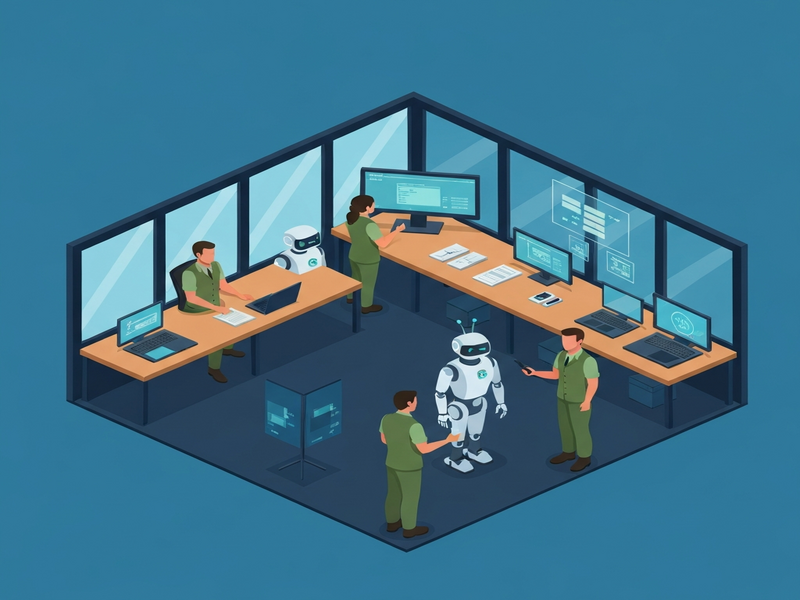
Google‑Pentagon AI Agents Agreement: The Core Elements
The contract, valued at an estimated $250 million over five years, outlines several key deliverables:
- Deployment of customizable AI agents built on Google’s Gemini and PaLM models.
- Integration with existing DoD data lakes, ensuring agents can query unclassified datasets in real time.
- Continuous monitoring for bias, security, and compliance with the DoD’s AI Ethics Framework.
- Training programs for Pentagon staff to fine‑tune agents for specific mission sets.
Google will host the agents on its secure cloud infrastructure, leveraging UBOS platform overview for rapid prototyping and scaling. The partnership also includes a joint research lab that will explore next‑generation AI safety mechanisms.
Implications for Unclassified Work and AI Ethics
While the Pentagon has long used AI for classified missions, this agreement focuses exclusively on unclassified workloads, raising several strategic and ethical considerations:
Operational Efficiency
AI agents can automate repetitive analysis, freeing human analysts for higher‑order decision‑making. Expected efficiency gains include:
- 30‑40% reduction in report generation time.
- Improved data‑driven forecasting for logistics and supply chain management.
- Real‑time synthesis of open‑source intelligence (OSINT) from public feeds.
Ethical Guardrails
Google has committed to embedding ethical guardrails that align with the DoD’s About UBOS principles of transparency, fairness, and accountability. Specific measures include:
- Automated bias detection across training data.
- Human‑in‑the‑loop review for any content flagged as potentially misleading.
- Audit logs stored in immutable, tamper‑proof ledgers.
Regulatory Compliance
The partnership must navigate a complex web of regulations, from the Federal Acquisition Regulation (FAR) to emerging AI governance frameworks. Google’s compliance team will work closely with the Pentagon’s Enterprise AI platform by UBOS to ensure all deployments meet federal standards.
Industry Reactions and Official Quotes
“This collaboration marks a pivotal moment where commercial AI expertise directly supports national security objectives without compromising data classification boundaries,” said Sundar Pichai, CEO of Google.
“We are excited to leverage Google’s cutting‑edge agents to accelerate our unclassified analytical capabilities while upholding the highest ethical standards,” noted a senior Pentagon spokesperson.
Analysts at the Center for Strategic AI predict that similar contracts could expand to other agencies, such as the Department of Energy, within the next two years. Meanwhile, privacy advocates caution that even unclassified data can reveal sensitive patterns, urging continuous oversight.
Future Outlook: Scaling AI Across Government
Looking ahead, the Google‑Pentagon partnership could serve as a blueprint for broader government adoption of generative AI. Key trends to watch include:
- Cross‑agency AI marketplaces: A shared repository of vetted AI agents could enable rapid deployment across the federal ecosystem.
- Hybrid human‑AI teams: Combining AI agents with domain experts to co‑author policy briefs and strategic plans.
- Enhanced AI ethics councils: Institutionalizing oversight bodies that include technologists, ethicists, and legal experts.
For businesses eyeing similar contracts, the success of this initiative underscores the importance of robust, low‑code platforms that accelerate AI development. Companies can explore solutions like the Workflow automation studio to prototype government‑grade agents quickly.
Conclusion
The Pentagon’s decision to partner with Google for unclassified AI agents represents a strategic leap toward modernizing defense operations while navigating the delicate balance of AI ethics and security. As the collaboration unfolds, it will likely set new standards for how public institutions harness generative AI responsibly.
For readers interested in building AI‑driven solutions, UBOS offers a suite of tools that can accelerate development:
- AI news hub for the latest industry updates.
- AI Email Marketing to automate outreach.
- AI Image Generator for visual content creation.
- AI SEO Analyzer to optimize your digital presence.
- AI Chatbot template for interactive support.
- AI Video Generator for dynamic media.
- AI Survey Generator to collect stakeholder feedback.
- AI Article Copywriter for high‑quality content at scale.
- AI Voice Assistant for hands‑free interactions.
- AI File Manager to organize project assets.
Explore the full range of capabilities on the UBOS homepage and discover how AI can transform both public and private sector workflows.
Read the full story on Bloomberg for additional context and expert commentary.
Andrii Bidochko
CTO UBOS
Andrii Bidochko is an AI entrepreneur and researcher focused on AI agents, reinforcement learning, and autonomous systems. He writes about the technologies shaping the future of machine intelligence, from frontier models and agent architectures to real-world AI applications.