

- Updated: February 26, 2026
- 5 min read
Google invests $1 billion in Form Energy’s 100‑hour iron‑air battery
Google is investing $1 billion in Form Energy’s 100‑hour iron‑air battery to power its upcoming Minnesota data center, marking a major step toward long‑duration renewable energy storage.
Key News at a Glance
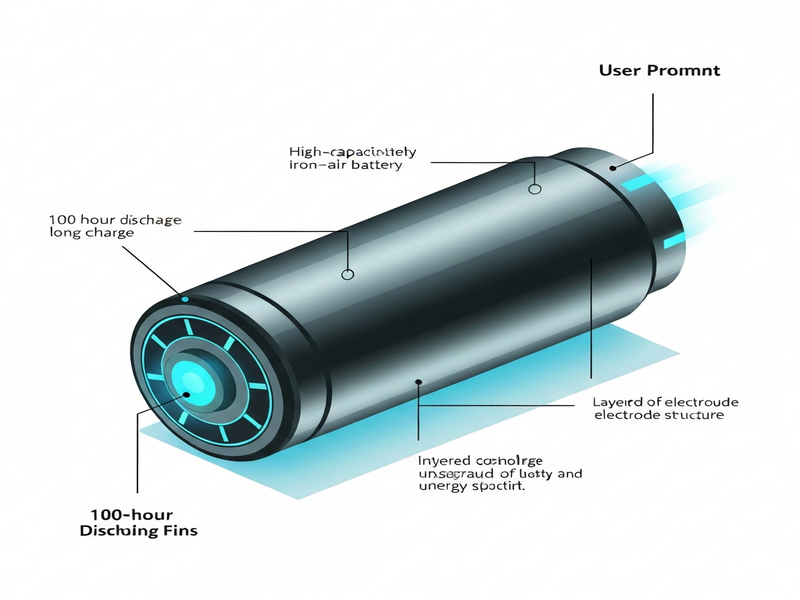
On February 26, 2026, Google announced a $1 billion investment in Form Energy, a startup that has engineered a 100‑hour iron‑air battery capable of delivering 300 MW continuously. The funding will underwrite the deployment of the battery at Google’s new data center in Minnesota, which will be powered by a hybrid mix of wind, solar, and this groundbreaking storage solution.
This partnership not only secures a major customer for Form Energy but also signals a broader industry shift toward long‑duration storage that can smooth the intermittency of renewable power sources.
Google’s $1 B Investment & Form Energy’s Iron‑Air Battery
Google’s commitment, reported by TechCrunch, is structured as a combination of equity, long‑term purchase agreements, and research funding. The capital will be allocated to:
- Scale up production at Form Energy’s West Virginia factory.
- Accelerate the engineering of next‑generation cell chemistries.
- Integrate the battery system with Google’s data‑center power management software.
The iron‑air chemistry works by “breathing” oxygen into iron electrodes, forming rust that releases electrons—a reversible process that stores energy at a fraction of the cost of lithium‑ion. Key specifications include:
| Parameter | Value |
|---|---|
| Energy Capacity | 300 MW for 100 hours (30 GWh) |
| Chemistry | Iron‑air (reversible rusting) |
| Cost per kWh | Estimated <$50/kWh |
| Lifetime | 20+ years with minimal degradation |
By pairing this battery with 1.4 GW of wind and 200 MW of solar capacity, Google aims to achieve a near‑zero‑carbon data‑center operation that can run uninterrupted for days during low‑wind periods.
Why Long‑Duration Storage Matters in 2026
The global energy‑storage market is projected to exceed 1,200 GWh by 2030, driven by the rapid adoption of renewables and the need for grid stability. However, most commercial batteries today—primarily lithium‑ion—are optimized for 2‑4 hour discharge cycles, which are insufficient for multi‑day smoothing.
Form Energy’s iron‑air solution addresses this gap:
- Cost Efficiency: Iron and air are abundant, driving down material costs.
- Scalability: Modular cell stacks can be assembled into gigawatt‑scale farms.
- Environmental Impact: No toxic metals, minimal recycling challenges.
Industry analysts estimate that long‑duration storage could capture up to 30 % of new storage deployments by 2028, especially in regions with high renewable penetration such as the Midwest United States.
Executive Insights & Strategic Implications
“Our partnership with Form Energy is a testament to Google’s commitment to building a carbon‑free future for our data centers,” said Thomas Kurian, CEO of Google Cloud.
“The $1 billion investment validates the commercial viability of iron‑air chemistry and accelerates the transition from short‑duration to multi‑day storage,” noted Mateo Jaramillo, CEO of Form Energy.
These statements highlight two converging trends:
- Corporate Sustainability: Tech giants are leveraging capital to lock in renewable power contracts and secure long‑term storage, reducing exposure to carbon‑pricing mechanisms.
- Capital Allocation Shift: Venture capital and corporate venture arms are increasingly favoring deep‑tech energy startups that promise grid‑scale impact.
For investors, the deal signals a potential upside for companies that can deliver cost‑effective, multi‑day storage solutions. For policymakers, it underscores the importance of supportive regulatory frameworks that recognize the value of long‑duration assets in grid planning.
Read the Full Story
For a comprehensive breakdown of Google’s investment and Form Energy’s technology, refer to the original TechCrunch article.
Related UBOS Resources for Energy‑Tech Innovators
Companies building next‑generation energy solutions can accelerate development with UBOS’s low‑code platform. Explore the following resources:
- UBOS homepage – Overview of the AI‑first development environment.
- UBOS platform overview – Deep dive into the modular architecture that powers rapid prototyping.
- AI marketing agents – Automate go‑to‑market campaigns for new hardware launches.
- UBOS for startups – Tailored pricing and support for early‑stage innovators.
- UBOS solutions for SMBs – Scalable tools for small‑to‑medium enterprises entering the energy‑storage market.
- Enterprise AI platform by UBOS – Enterprise‑grade security and compliance for critical infrastructure.
- Web app editor on UBOS – Drag‑and‑drop UI builder for monitoring dashboards.
- Workflow automation studio – Orchestrate data pipelines from sensor ingestion to predictive analytics.
- UBOS pricing plans – Transparent, usage‑based pricing that scales with your battery fleet.
- UBOS portfolio examples – Real‑world case studies of AI‑driven energy management.
- UBOS templates for quick start – Pre‑built templates for energy‑storage analytics.
- AI SEO Analyzer – Optimize your product pages for search visibility.
- AI Article Copywriter – Generate technical documentation at scale.
- AI Video Generator – Create demo videos for investor pitches.
- AI Image Generator – Produce high‑resolution renders of battery modules.
By leveraging these tools, energy‑tech firms can reduce time‑to‑market, improve data‑driven decision making, and align with sustainability goals similar to Google’s.
Conclusion: A Milestone for Renewable Energy Storage
Google’s $1 billion investment in Form Energy’s 100‑hour iron‑air battery marks a pivotal moment for long‑duration storage. The partnership demonstrates that large‑scale, cost‑effective, multi‑day batteries are no longer a laboratory curiosity but a commercial reality capable of powering data‑intensive operations.
For investors, policymakers, and technology builders, the deal offers a clear signal: the future grid will rely heavily on solutions that can store energy for days, not just hours. Companies that can integrate such storage with AI‑driven analytics—like those built on the UBOS platform—will be best positioned to capture the emerging market share.
As the renewable transition accelerates, expect more tech giants to follow Google’s lead, turning long‑duration storage from a niche product into a cornerstone of global energy infrastructure.
Andrii Bidochko
CTO UBOS
Andrii Bidochko is an AI entrepreneur and researcher focused on AI agents, reinforcement learning, and autonomous systems. He writes about the technologies shaping the future of machine intelligence, from frontier models and agent architectures to real-world AI applications.