

- Updated: February 24, 2026
- 5 min read
Google Gemini Unveils AI DJ – Revolutionary Music Recommendation and AI Music Assistant
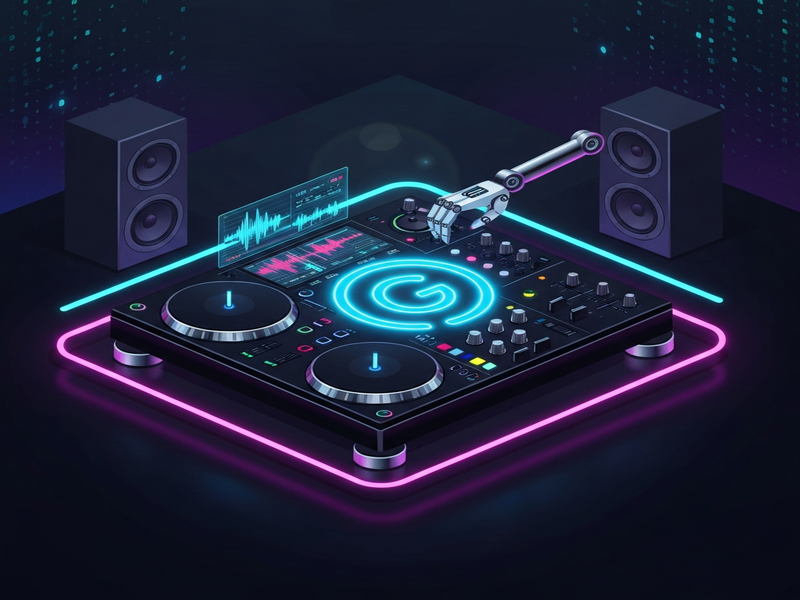
Google Gemini now works as an AI DJ, delivering real‑time music recommendations, seamless mixes, and personalized playlists powered by generative AI.
In a bold move that blurs the line between search and entertainment, Google unveiled Gemini’s new AI DJ mode this week. The feature taps into Gemini’s large‑language‑model capabilities to analyze listening habits, mood, and contextual cues, then curates a continuous soundtrack that adapts on the fly. Early testers report a “radio‑like” experience that feels both intuitive and surprisingly human‑like, positioning Gemini as a direct competitor to traditional music assistants.
How Gemini Works as an AI DJ
Core technology and user experience
Gemini leverages Google’s generative AI engine to interpret natural‑language prompts such as “Play something upbeat for a workout” or “Set a chill vibe for studying.” The model then queries multiple music catalogs, evaluates tempo, key, and lyrical sentiment, and stitches tracks together in a way that mimics a professional DJ’s flow.
- Context‑aware selection: Gemini reads the user’s calendar, location, and even ambient sound to match the right mood.
- Live remixing: Using on‑device processing, the AI can cross‑fade, beat‑match, and add subtle effects without noticeable latency.
- Voice‑first interaction: Users can tweak the set by speaking, e.g., “More jazz, less pop,” and Gemini adjusts instantly.
- Multi‑platform sync: The DJ mode works across Android, Chrome, and Nest speakers, keeping the playlist consistent.
“Gemini is officially a better DJ than I am, and I’m okay with it,” the Android Police team wrote after a 30‑minute trial. Read the full review.
Comparison with Existing Music Assistants
While Spotify’s “Blend” and Apple Music’s “Radio” offer curated streams, Gemini’s AI DJ distinguishes itself through deeper contextual awareness and real‑time remix capabilities.
- Dynamic mood detection: Unlike static playlists, Gemini reacts to changes in ambient noise and user activity.
- Cross‑service flexibility: Gemini can pull tracks from YouTube Music, SoundCloud, and local libraries simultaneously.
- Generative commentary: The AI can introduce tracks with short, personalized narrations, turning a playlist into a radio show.
- Zero‑click discovery: Users simply state a vibe; Gemini does the heavy lifting without manual search.
Real‑World Use Cases & User Reactions
Early adopters have integrated Gemini’s DJ mode into a variety of scenarios:
- Home workouts: A fitness enthusiast reported that Gemini’s beat‑matched mixes kept heart‑rate zones stable, reducing the need to manually skip songs.
- Co‑working spaces: Small businesses use the AI DJ to maintain a low‑volume, focus‑enhancing soundtrack that shifts to upbeat tracks during breaks.
- Live events: Event organizers experimented with Gemini on Nest speakers to provide background music that adapts to crowd energy levels.
User sentiment on social platforms is overwhelmingly positive. One Reddit thread highlighted the “effortless vibe‑switching” as a game‑changer for remote teams. Another comment praised the AI assistants ecosystem for inspiring similar innovations in other domains.
For developers interested in building complementary experiences, Google’s Gemini API can be paired with UBOS platform overview to create custom dashboards that visualize listening trends.
Marketers can leverage AI marketing agents to push personalized event invitations based on the current playlist mood.
Startups looking to prototype music‑related SaaS products may find the UBOS for startups toolkit useful for rapid iteration.
SMBs can explore UBOS solutions for SMBs to embed Gemini‑style recommendations directly into their customer‑facing apps.
Enterprises interested in scaling AI‑driven experiences should review the Enterprise AI platform by UBOS, which offers robust security and compliance features.
Developers can accelerate UI creation with the Web app editor on UBOS, allowing drag‑and‑drop integration of Gemini’s music streams.
Automation enthusiasts may automate playlist updates using the Workflow automation studio, linking calendar events to specific music moods.
Pricing transparency is key; explore the UBOS pricing plans to understand cost structures for AI‑enhanced services.
For inspiration, browse the UBOS portfolio examples, which showcase AI‑powered products across industries.
Quickly spin up a prototype with the UBOS templates for quick start, many of which include pre‑built music‑assistant modules.
Developers interested in voice interaction can integrate ElevenLabs AI voice integration to give Gemini a natural‑sounding announcer.
Data‑rich recommendations benefit from Chroma DB integration, enabling fast similarity searches across large music libraries.
For messaging‑centric experiences, pair Gemini with the Telegram integration on UBOS to deliver daily mix suggestions directly to chat groups.
Combine conversational AI using the ChatGPT and Telegram integration for a seamless music‑request bot.
Leverage the OpenAI ChatGPT integration to enrich Gemini’s natural‑language understanding.
Finally, join the UBOS partner program to co‑market AI‑driven music solutions and access exclusive technical support.
What This Means for the Future of Music Tech
Google’s Gemini AI DJ is more than a novelty; it signals a shift toward context‑first audio experiences. As generative models become better at interpreting emotional cues, we can expect:
- Hyper‑personalized radio stations that evolve with the listener’s day.
- Seamless integration of music with smart‑home routines (e.g., “Dim lights, play lo‑fi”).
- New revenue models for artists through AI‑curated micro‑playlists.
- Cross‑industry collaborations where music AI powers retail, hospitality, and wellness sectors.
Developers and product teams should watch the music tech space closely, as platforms like UBOS are already providing the building blocks to embed AI DJ capabilities into bespoke applications.
Andrii Bidochko
CTO UBOS
Andrii Bidochko is an AI entrepreneur and researcher focused on AI agents, reinforcement learning, and autonomous systems. He writes about the technologies shaping the future of machine intelligence, from frontier models and agent architectures to real-world AI applications.