

- Updated: February 18, 2026
- 5 min read
Google Gemini Adds AI Music Generation – New Feature Enables Text, Image & Video‑Based Song Creation
Google has launched a new Gemini music‑generation feature, powered by DeepMind’s Lyria 3 model, that lets anyone create original songs from simple text prompts, images, or video clips.
Introduction
On February 18, 2026, Google announced that the Gemini app now supports AI‑powered music generation. The feature, still in beta, is built on DeepMind’s latest Lyria 3 model and promises creators a fast, intuitive way to turn ideas into melodies, complete with lyrics, cover art, and even vocal styles. This move expands Google’s generative‑AI portfolio and directly competes with emerging music‑AI tools from startups and other tech giants.
Feature Overview
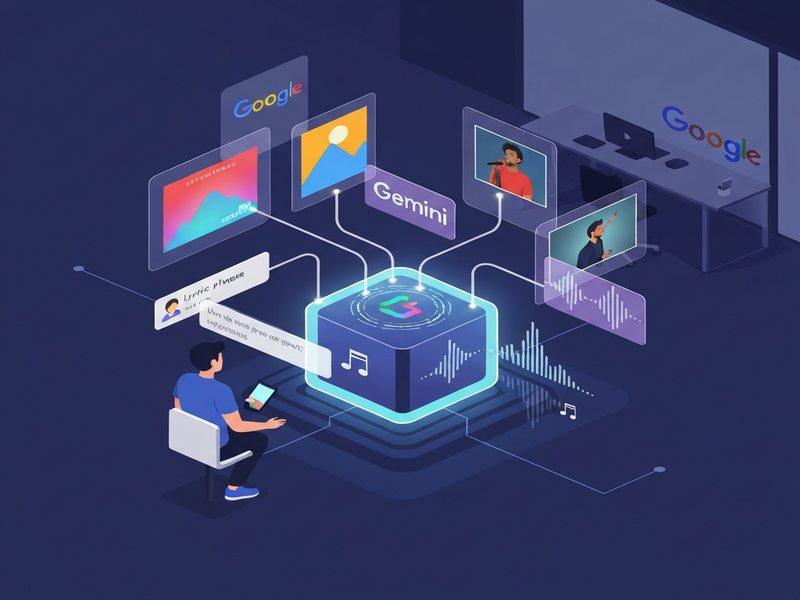
Gemini’s music‑generation capability is a multi‑modal experience:
- Enter a textual description (e.g., “a comical R&B slow‑jam about a sock finding its match”).
- Upload an image or short video; Gemini reads the visual mood and composes a matching track.
- Adjust style, tempo, vocal type, and instrumentation on the fly.
- Receive a 30‑second (or longer) audio file, generated lyrics, and AI‑crafted cover art.
All outputs carry a SynthID watermark that identifies the content as AI‑generated, helping platforms enforce attribution policies.
How It Works
Text‑Based Prompts
Users type a natural‑language description of the desired song. Gemini parses the prompt, maps it to musical concepts (genre, mood, instrumentation), and feeds the request to Lyria 3. The model then synthesizes a waveform, generates lyrics using a language model, and returns a ready‑to‑play MP3.
Image & Video Inputs
When an image or video is supplied, Gemini extracts visual cues—color palette, motion, facial expressions—and translates them into musical attributes. For example, a sunset photo might yield a mellow acoustic track, while a fast‑paced sports clip could produce an energetic electronic beat.
Fine‑Tuning Controls
After the initial generation, creators can tweak:
- Style: Pop, jazz, lo‑fi, orchestral, etc.
- Vocals: Male, female, choir, synthetic.
- Tempo: BPM range from 60 to 180.
- Instrumentation: Add or remove drums, synths, strings.
Technical Details
Lyria 3 – The Core Music Model
Lyria 3 is DeepMind’s third‑generation music‑generation engine. Compared with its predecessor, it produces longer‑form structures, richer harmonic progressions, and more realistic timbres. The model was trained on a curated dataset of public‑domain recordings and royalty‑free stems, ensuring compliance with copyright standards.
SynthID – Provenance & Attribution
Every track generated by Lyria 3 embeds a cryptographic SynthID watermark. This invisible signature can be read by Google’s detection tools to verify whether a piece of audio originated from the AI model, helping platforms like YouTube and Spotify flag AI‑created content.
Dream Track – Extending to YouTube Creators
Alongside Gemini, Google is rolling out the Dream Track feature on YouTube. Creators can request AI‑generated backing tracks directly within the YouTube Studio interface, streamlining video production workflows. Initially limited to the United States, Dream Track is now available globally, aligning with the broader Gemini rollout.
Release Timeline and Availability
| Milestone | Date | Details |
|---|---|---|
| Beta Launch | Feb 18 2026 | Open to all Gemini users aged 18+ worldwide. |
| Language Expansion | Q2 2026 | Support added for English, German, Spanish, French, Hindi, Japanese, Korean, Portuguese. |
| Dream Track Global Rollout | Q3 2026 | Available to all YouTube creators via the AI news hub. |
Implications for Creators and the Industry
The introduction of Gemini’s music‑generation tool reshapes several aspects of the creative ecosystem:
Empowering Independent Musicians
Solo artists and indie producers can prototype melodies in seconds, reducing the cost of hiring session musicians or expensive DAWs. The ability to generate a full arrangement from a single sentence accelerates the songwriting process and encourages rapid experimentation.
New Revenue Streams for Platforms
Streaming services can license AI‑generated tracks, while advertisers may use custom jingles created on‑the‑fly for campaigns. Google’s own Enterprise AI platform could integrate Gemini music as a plug‑in for brand‑specific audio branding.
Legal & Ethical Considerations
Although Google blocks direct imitation of copyrighted artists, the “style‑inspired” approach raises gray‑area questions about derivative works. The SynthID watermark aims to mitigate misuse, but regulators and rights‑holders are still debating how to enforce attribution across global markets.
Competitive Landscape
Other AI music startups—such as AI Video Generator and AI Image Generator—now face a heavyweight competitor with Google’s massive data infrastructure and integration pathways.
Quotes and Reactions
“Music generation with Lyria 3 is designed for original expression, not for mimicking existing artists. If your prompt names a specific artist, Gemini will take this as broad creative inspiration and create a track that shares a similar style or mood.” – Google AI Blog
Industry observers are cautiously optimistic. MusicTech noted that “the speed of iteration could democratize composition, but the real test will be how rights‑management frameworks evolve.” Meanwhile, a group of independent musicians on Reddit expressed excitement about “finally having a tool that can give me a rough demo in under a minute.”
SEO Meta Description
Meta Description: Google adds AI music‑generation to Gemini, powered by DeepMind’s Lyria 3, letting creators craft songs from text, images or video – a breakthrough for musicians and digital creators.
Conclusion
Google’s Gemini music‑generation feature marks a pivotal step toward fully integrated creative AI. By combining multimodal inputs, a powerful Lyria 3 engine, and provenance‑tracking via SynthID, the platform offers both flexibility and responsibility. Creators—from bedroom producers to enterprise marketers—can now experiment with sound at unprecedented speed, while the industry grapples with the legal nuances of AI‑crafted music.
For ongoing updates on this story and other AI breakthroughs, follow our Gemini updates page. To explore how AI can amplify your own marketing or product workflows, check out the AI marketing agents or the Workflow automation studio on UBOS.
Read the original announcement on TechCrunch for full details.
Explore more AI tools on the UBOS homepage, discover UBOS templates for quick start, or learn about the UBOS partner program to bring AI innovations to your business.