

- Updated: January 28, 2026
- 6 min read
Global De-dollarization Trends Challenge US Dollar Dominance
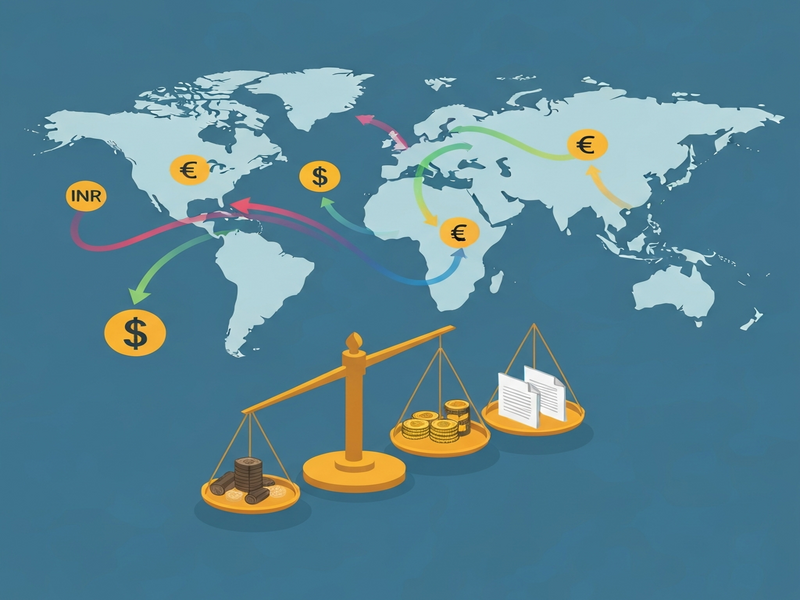
De‑dollarization is the systematic reduction of the U.S. dollar’s role in international trade, reserves, and financing, a trend now quantified by JPMorgan’s latest research.
As central banks, corporations, and investors reassess the greenback’s dominance, the global financial architecture is shifting. This article breaks down the forces behind de‑dollarization, examines its impact on the U.S. dollar, and highlights emerging‑market case studies—all backed by JPMorgan’s data and enriched with actionable insights for finance professionals.
What Is De‑Dollarization and Why It Matters
A concise definition
De‑dollarization refers to a measurable decline in the use of the U.S. dollar for cross‑border trade invoicing, sovereign reserve holdings, debt issuance, and commodity pricing. Unlike short‑term fluctuations driven by market sentiment, de‑dollarization signals a structural shift in the global demand for the greenback as a reserve and transaction currency.
Key drivers identified by JPMorgan
- Geopolitical realignment: Sanctions, trade wars, and shifting alliances have prompted countries to seek alternatives to the dollar to reduce exposure to U.S. policy risk.
- Rise of competing currencies: The Chinese yuan, the euro, and a basket of emerging‑market currencies are gaining traction in bilateral trade agreements.
- Digital and tokenized assets: Central bank digital currencies (CBDCs) and stablecoins provide new avenues for non‑dollar settlement.
- Commodity‑price diversification: Energy‑rich nations are pricing oil, gas, and minerals in local or third‑party currencies to capture premium pricing.
- Domestic financial stability: Nations with high inflation or fiscal deficits are diversifying reserves into gold and other hard assets to hedge against dollar volatility.
How De‑Dollarization Erodes U.S. Dollar Dominance
FX reserves are rebalancing
JPMorgan’s data shows the U.S. dollar’s share of global foreign‑exchange reserves has slipped below 60%, the lowest level in two decades. While the dollar remains the top reserve currency, central banks are reallocating a growing slice to the yuan, the euro, and gold. For example, emerging‑market central banks have doubled their gold holdings from 4% to over 9% of total reserves in the past ten years.
Bond markets feel the pressure
Foreign ownership of U.S. Treasury securities has declined from a peak of 55% during the Global Financial Crisis to roughly 30% in early 2025. This trend reduces the “safe‑haven” demand that traditionally kept Treasury yields low. JPMorgan estimates that a 1‑percentage‑point drop in foreign holdings could push yields up by more than 33 basis points, tightening financing conditions for the U.S. government and corporate borrowers.
Commodity pricing is diversifying
Energy contracts, historically dollar‑denominated, are increasingly settled in yuan, euros, or local currencies. Russia’s pivot to non‑dollar oil sales, India’s yuan‑priced coal imports, and Saudi Arabia’s exploratory yuan‑futures illustrate a broader shift. This diversification reduces the dollar’s “petrodollar” advantage and frees up capital for non‑U.S. economies.
FX transaction volumes remain robust—yet evolving
Despite the structural shifts, the dollar still accounts for about 88% of daily FX turnover, according to the Bank for International Settlements. However, the share of the yuan in cross‑border transactions is rising, especially in Asia‑Pacific trade corridors.
Emerging‑Market Perspectives: Regional Case Studies
Asia: China’s strategic push
China’s “dual‑circulation” policy encourages the use of the yuan in both domestic and international trade. Bilateral swap lines with over 30 countries and the rapid growth of the Cross‑Border Interbank Payment System (CIPS) have accelerated yuan‑denominated invoicing. Moreover, the People’s Bank of China’s inclusion of the yuan in the IMF’s Special Drawing Rights basket signals growing confidence among reserve managers.
Latin America: Dollar‑tightening in Brazil and Argentina
Brazil’s central bank has increased its holdings of euros and gold, while Argentina’s high inflation has driven households and firms to hold more dollars in private deposits—a paradoxical form of “deposit dollarization.” Yet, both nations are experimenting with crypto‑stablecoins and regional payment rails to reduce reliance on the greenback for trade settlements.
Europe & Middle East: Diversification through Euro and Gold
European central banks, led by the European Central Bank, have modestly increased euro holdings in reserves, while the Middle East—particularly Saudi Arabia and the United Arab Emirates—has explored yuan‑linked oil contracts and expanded gold purchases to hedge against dollar volatility.
Case study snapshot table
| Region | Key De‑Dollarization Move | Impact on Dollar Share |
|---|---|---|
| Asia (China) | CIPS expansion, yuan‑denominated trade | ‑2.1% YoY in dollar‑FX reserves |
| Latin America (Brazil) | Euro & gold reserve increase | ‑1.4% YoY in dollar‑FX reserves |
| Middle East (Saudi Arabia) | Yuan‑linked oil futures pilot | ‑0.8% YoY in dollar‑FX reserves |
Future Outlook: What Finance Professionals Should Anticipate
JPMorgan’s research suggests three plausible trajectories for the next decade:
- Gradual diversification: The dollar remains dominant but its share falls to 55% of global reserves, with gold and a basket of currencies filling the gap.
- Accelerated shift: Geopolitical shocks (e.g., major sanctions) trigger a rapid move to alternative currencies, pushing the dollar below 50% of reserves and reducing its share of global FX turnover to under 80%.
- Digital‑currency disruption: Widespread adoption of CBDCs and stablecoins creates a parallel settlement layer that bypasses traditional fiat, potentially eroding the dollar’s role in real‑time payments.
Strategic implications for investors
- Rebalance sovereign‑bond portfolios to include non‑U.S. government debt, especially euro‑zone and emerging‑market issuances.
- Increase exposure to gold and other hard assets as a hedge against dollar depreciation.
- Consider multi‑currency cash management solutions to mitigate FX risk in emerging markets.
- Leverage AI‑driven analytics—such as AI marketing agents—to monitor real‑time sentiment shifts around reserve allocations.
Operational steps for corporates
- Adopt multi‑currency invoicing platforms to reduce conversion costs.
- Explore ChatGPT and Telegram integration for automated FX rate alerts.
- Utilize the Workflow automation studio to streamline treasury operations across currencies.
Conclusion: Navigating a Multi‑Currency Future
De‑dollarization is no longer a speculative narrative; it is a measurable, data‑driven shift reshaping global finance. While the U.S. dollar will likely retain a leading role, its monopoly is eroding across reserves, bond markets, and commodity pricing. Finance professionals who proactively adjust portfolios, adopt multi‑currency tools, and stay informed through reliable research will be best positioned to thrive.
Stay ahead of the curve by exploring our latest finance trends and deep‑dive currency market analysis. For a comprehensive view of the original JPMorgan findings, visit the JPMorgan de‑dollarization report.
Ready to future‑proof your treasury strategy? Discover the UBOS platform overview and start building AI‑enhanced financial workflows today.