

- Updated: July 11, 2025
- 3 min read
From Perception to Action: The Role of World Models in Embodied AI Systems
Unveiling the Role of World Models in Embodied AI Systems
In the rapidly evolving landscape of artificial intelligence, the concept of embodied AI has emerged as a transformative force, reshaping how machines interact with the physical world. Central to this evolution are world models, which provide AI systems with a framework to understand and navigate their environments. But what exactly are world models, and how do they influence the future of AI?
Understanding World Models in Embodied AI
World models in the context of embodied AI refer to the internal representations that AI systems develop to simulate and predict the dynamics of the real world. These models enable AI agents to make informed decisions, anticipate future states, and perform tasks with a degree of autonomy that was previously unattainable. By leveraging world models, AI systems can effectively bridge the gap between perception and action, leading to more sophisticated and adaptable machines.
Key Insights from Recent Developments
Recent advancements in AI have highlighted the significance of world models in enhancing the capabilities of AI systems. According to a recent study, integrating world models into AI frameworks has led to notable improvements in areas such as robotics, autonomous vehicles, and virtual assistants. These models empower AI systems to process complex sensory inputs, learn from interactions, and adapt to new scenarios with minimal human intervention.
The Implications and Future of Embodied AI
The implications of world models in embodied AI are profound, paving the way for a future where AI systems can seamlessly integrate into various industries. From healthcare to manufacturing, the potential applications are vast. For instance, in healthcare, AI-powered robotic assistants equipped with world models could assist in surgeries, monitor patient vitals, and even provide personalized care.
Moreover, the integration of world models in AI systems is expected to revolutionize industries by enhancing efficiency and reducing operational costs. In manufacturing, AI-driven robots can optimize production lines, minimize waste, and ensure quality control, leading to increased productivity and sustainability.
Exploring the Role of AI in Business Transformation
As businesses strive to harness the power of AI, platforms like UBOS are at the forefront, offering innovative solutions to integrate AI into various business processes. The Enterprise AI platform by UBOS provides companies with the tools to develop and deploy AI applications that leverage world models, ensuring a competitive edge in the market.
Furthermore, the AI agents for enterprises offered by UBOS are designed to streamline operations, improve decision-making, and drive business growth. These agents utilize world models to understand and predict market trends, customer behavior, and operational challenges, enabling businesses to make data-driven decisions with confidence.
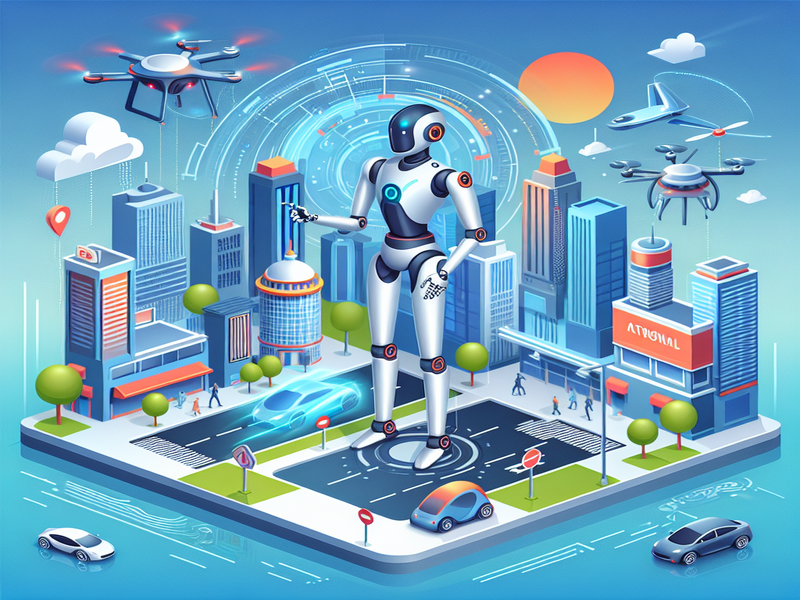
Integrating the Generated Image
Conclusion: Embracing the Future of AI
In conclusion, the integration of world models in embodied AI systems represents a significant leap forward in the realm of artificial intelligence. As these models continue to evolve, they will undoubtedly play a pivotal role in shaping the future of AI, driving innovation across industries and enhancing the capabilities of machines.
For businesses and technology enthusiasts eager to explore the potential of AI, platforms like UBOS offer a comprehensive suite of tools and solutions to unlock new opportunities. By embracing these advancements, organizations can position themselves at the forefront of the AI revolution, ready to capitalize on the transformative power of world models and embodied AI.
For more insights into the role of AI in business transformation, check out our article on embracing AI agents and autonomous organizations.