

- Updated: December 30, 2025
- 6 min read
Everything-as-Code Monorepo: Unified Development for Frontend, Backend, and More

Kasava’s Everything‑as‑Code monorepo consolidates all product assets—including frontend, backend, marketing pages, documentation, external services, and CI/CD pipelines—into a single Git repository, enabling atomic, cross‑domain changes that are instantly reflected everywhere.
Everything‑as‑Code: The New Paradigm for Modern Software Teams
The term “Everything‑as‑Code” extends the classic “Infrastructure‑as‑Code” mantra to every artifact that powers a product. Instead of juggling separate repositories for UI, APIs, marketing copy, and docs, teams store all of these items as version‑controlled code. This creates a single source of truth, eliminates synchronization headaches, and lets AI assistants operate on a complete, up‑to‑date knowledge base.
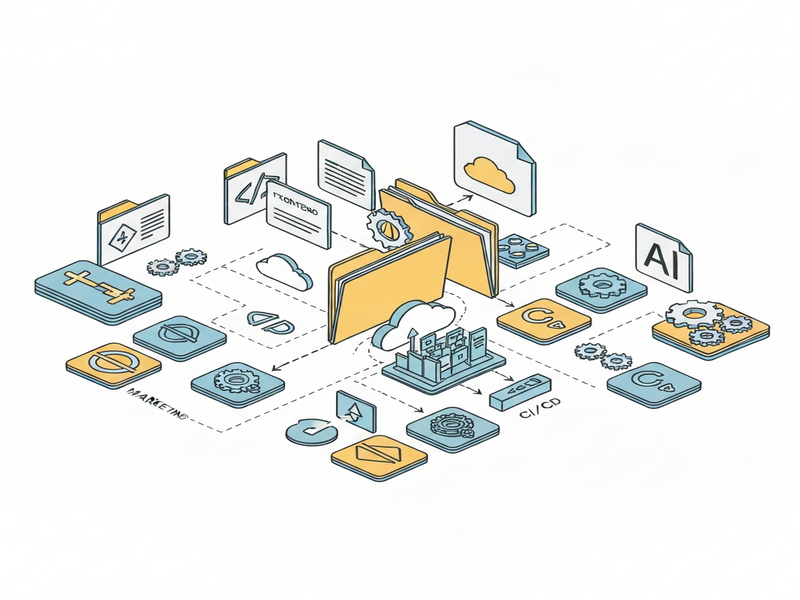
Kasava’s Monorepo Structure: A Deep Dive
Kasava’s monorepo is a living example of the Everything‑as‑Code philosophy. Below is a MECE‑organized breakdown of its top‑level directories and the responsibilities they own.
Frontend – The Customer‑Facing Experience
The frontend/ folder houses a Web app editor on UBOS‑style Next.js 16 application built with React 19 and Tailwind CSS. All UI components, route definitions, and type‑safe API contracts live side‑by‑side, so a change to a data model instantly propagates to the UI layer without a separate release cycle.
Backend – Edge‑Native Business Logic
The backend/ directory contains Cloudflare Workers written in TypeScript, orchestrated by the Enterprise AI platform by UBOS. Services, durable objects, and AI‑driven workflows are versioned together with the frontend, guaranteeing that API contracts and implementations never diverge.
Marketing Site – Code‑First Branding
The website/ folder is a Next.js site that powers the public marketing experience. Pricing tables, feature lists, and landing‑page copy are generated from the same JSON configuration files used by the backend, ensuring that what a prospect reads is always accurate. This approach eliminates the classic “marketing‑dev hand‑off” bottleneck.
Documentation – Living Knowledge Base
Public docs live under docs/ (Mintlify MDX) while internal architecture guides sit in docs‑internal/. Because they share the same repository, AI‑powered assistants can cross‑reference code snippets with their documentation in real time, delivering up‑to‑date help without manual sync.
External Services – Plugins & Integrations
The external/ directory hosts a Chrome extension, Google Docs add‑on, and various cloud functions. Each integration follows the same linting, testing, and CI pipelines as the core product, making it trivial to add new third‑party connectors without spawning a new repo.
Infrastructure & CI/CD – Automated Delivery
Scripts for deployment, test harnesses, and mock services live in scripts/, infra‑tester/, and github‑simulator/. The monorepo leverages Workflow automation studio to trigger targeted GitHub Actions based on path filters, so only the affected pipelines run on each commit.
Why Development Teams Love This Monorepo
- Atomic Cross‑Domain Changes: A single pull request can update API logic, UI components, marketing copy, and documentation simultaneously.
- Single Source of Truth: Configuration files (e.g.,
billing‑plans.json) are read by backend, frontend, and the website, eliminating version drift. - AI‑Ready Context: Large language models can scan the entire repo, providing accurate code suggestions, doc generation, and fact‑checking.
- Reduced Coordination Overhead: No need for multi‑repo release schedules, feature flags, or manual sync steps.
- Consistent Tooling: Shared ESLint, Prettier, and TypeScript configs enforce uniform code quality across all sub‑projects.
- Scalable CI/CD: Path‑based workflows keep build times low while preserving full test coverage.
Monorepo vs. Multi‑Repo: A Side‑by‑Side Comparison
| Aspect | Monorepo (Kasava) | Traditional Multi‑Repo |
|---|---|---|
| Change Scope | One PR updates code, UI, docs, and marketing. | Multiple PRs across repos; high coordination cost. |
| CI/CD Complexity | Path‑filtered workflows; only affected services rebuild. | Separate pipelines per repo; duplicated configuration. |
| Developer Onboarding | Single clone, unified tooling, consistent linting. | Multiple clones, varied toolchains, steep learning curve. |
| AI Integration | LLMs see the whole product, enabling accurate suggestions. | AI sees fragmented pieces; higher risk of stale context. |
How UBOS Can Help You Replicate This Success
UBOS offers a suite of tools that make building and managing an Everything‑as‑Code monorepo straightforward, even for organizations that are just starting out.
- UBOS platform overview provides a unified development environment where code, AI agents, and CI pipelines coexist.
- The UBOS partner program connects you with experts who can help migrate legacy services into a single repo.
- Leverage the AI marketing agents to keep your website copy and product messaging in lockstep with code changes.
- Use the UBOS templates for quick start such as the AI SEO Analyzer or AI Article Copywriter to bootstrap documentation and content pipelines.
- For startups, the UBOS for startups plan offers scalable pricing and built‑in governance.
- SMBs can adopt the UBOS solutions for SMBs, which include pre‑configured monorepo templates and CI/CD best practices.
- Enterprise teams benefit from the Enterprise AI platform by UBOS, delivering role‑based access, audit trails, and advanced AI‑assisted code reviews.
- Review the UBOS pricing plans to find a tier that matches your repo size and automation needs.
Real‑World Use Cases Powered by Everything‑as‑Code
Companies that have adopted a monorepo similar to Kasava report measurable gains:
- Feature Velocity: A new payment gateway integration required changes in API, UI, docs, and the pricing page. With a monorepo, the team shipped all updates in a single 30‑minute PR.
- AI‑Driven QA: An internal LLM automatically scanned the repo after each merge, flagging mismatched pricing values before they reached production.
- Reduced Ops Cost: Consolidated CI pipelines cut build minutes by 40 % and eliminated duplicate environment configuration.
Getting Started: Practical Steps to Build Your Own Everything‑as‑Code Monorepo
Follow this MECE‑aligned checklist to avoid common pitfalls:
- Define a Unified Directory Layout: Separate logical domains (frontend, backend, marketing, docs, external) but keep them under a single root.
- Adopt Shared Tooling: Use a single
.eslintrc,.prettierrc, andtsconfig.jsonat the repo root. - Implement Path‑Based CI/CD: Configure GitHub Actions (or your CI of choice) to trigger only when files under a specific folder change.
- Introduce Configuration‑as‑Code: Store feature flags, pricing tables, and environment variables in JSON/YAML files that are imported by all layers.
- Enable AI Assistants: Add
CLAUDE.mdstyle metadata files to each sub‑project so LLMs understand context (e.g., tech stack, entry points). - Document the Process: Keep internal docs alongside code; use MDX to render them directly in your docs site.
- Iterate Gradually: Start with a small subset (e.g., frontend + docs) and expand as the team gains confidence.
Conclusion: Embrace Everything‑as‑Code for Future‑Ready Development
Kasava’s monorepo demonstrates that when every artifact lives in code, teams gain unprecedented speed, consistency, and AI‑readiness. By eliminating the silos that traditionally separate engineering, marketing, and documentation, organizations can ship features faster, reduce errors, and empower AI assistants to act as true co‑developers.
Ready to transform your development workflow? Explore the UBOS homepage for a free trial, or contact our experts via the UBOS contact page. For a deeper dive into Kasava’s approach, read the original announcement here.
© 2025 UBOS Technologies. All rights reserved.