

- Updated: February 27, 2026
- 5 min read
Dyson Settles Forced‑Labour Lawsuit in UK Court, Setting New Supply‑Chain Precedent
Answer: Dyson has agreed to a confidential settlement in the UK forced‑labour lawsuit brought by 24 migrant workers, ending a landmark case that clarified how British courts can hold multinational supply‑chains accountable for alleged abuses abroad.
Dyson Settles Forced‑Labour Lawsuit in Landmark UK Court Decision
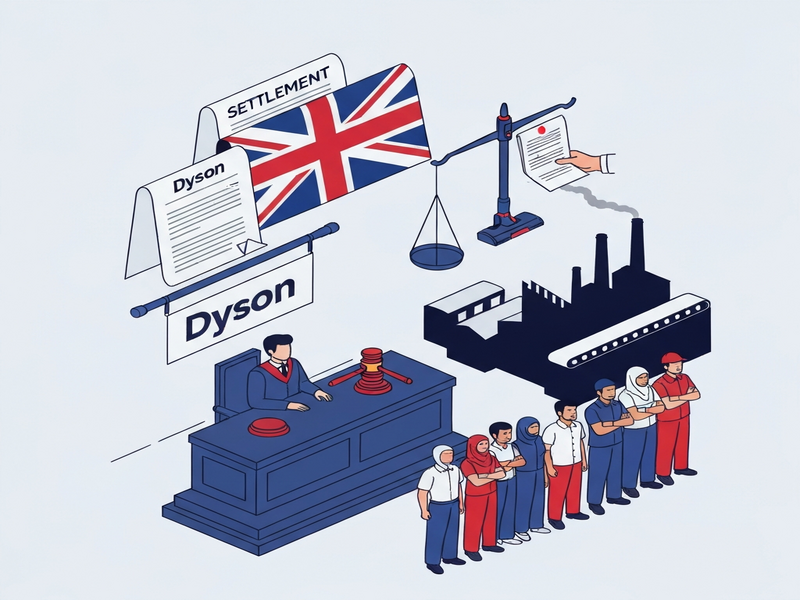
Key Facts at a Glance
- Case filed in 2022 by 24 workers from Nepal and Bangladesh.
- Allegations: passport confiscation, unpaid overtime, physical intimidation.
- UK High Court ruled the claim could be heard in England, setting a precedent.
- Dyson denied liability but agreed to a confidential settlement.
- Settlement terms remain undisclosed; both parties stress “no admission of liability.”
Background of the Forced‑Labour Lawsuit
In early 2022, a group of 24 migrant workers employed at a Malaysian factory that manufactures components for Dyson‑branded appliances filed a civil claim in the UK High Court. The claim, brought by the law firm Leigh Day, alleged that the workers were subjected to conditions that amounted to modern‑day slavery, including:
- Being forced to work up to 12‑hour shifts without toilet breaks.
- Having passports and identity documents withheld to restrict movement.
- Physical threats and beatings for perceived infractions.
- Living in unsanitary dormitories with limited access to clean water.
The plaintiffs argued that, although the alleged abuses occurred in Malaysia, Dyson—as the ultimate brand owner and UK‑based corporation—should be held accountable under British law. Dyson countered that the case should be heard in Malaysia and that any liability rested with its local supplier.
The legal battle escalated to the Supreme Court, which affirmed that English courts have jurisdiction over claims involving foreign‑based suppliers when the claimant is a UK consumer or resident. This ruling created a new pathway for UK‑based companies to be sued for supply‑chain violations occurring abroad.
Settlement Details and Confidentiality
After months of litigation, Dyson and the claimants reached a settlement in early 2024. While the exact financial figure remains confidential, both parties released joint statements emphasizing the “benefits of settlement” and the “expenses of litigation.” The settlement includes:
- A confidential monetary payment to the 24 workers.
- Commitments from Dyson to conduct an independent audit of its supply‑chain practices.
- Implementation of a new UBOS platform overview‑based monitoring system to track labour standards across all third‑party manufacturers.
- Public reporting of audit findings on Dyson’s corporate responsibility website.
Both Dyson and Leigh Day stressed that the settlement does not constitute an admission of liability. Nevertheless, the agreement signals a shift toward proactive compliance and transparency in global manufacturing networks.
Implications for Dyson and the Wider Supply‑Chain Industry
The settlement carries several strategic and operational implications:
Reputational Impact
Dyson’s brand, built on premium design and engineering, now faces heightened scrutiny from ethically‑focused consumers. The company’s swift settlement and commitment to audit processes aim to restore trust.
Legal Precedent
The UK High Court’s jurisdictional ruling empowers activists and workers worldwide to bring similar claims against multinational brands, potentially increasing litigation risk for companies with complex overseas supply chains.
Operational Changes
Dyson is expected to integrate advanced compliance tools, such as the Workflow automation studio, to enforce real‑time monitoring of labour standards.
Industry Ripple Effect
Competitors in the consumer‑electronics space are likely to reassess their own supplier contracts, adopting stricter ethical clauses and leveraging AI‑driven audit platforms.
For marketing managers and SEO specialists, the case underscores the growing importance of integrating business ethics into brand storytelling. Highlighting compliance initiatives can improve organic rankings for keywords like “ethical manufacturing” and “supply‑chain transparency.”
Expert Commentary
“The Dyson settlement is a watershed moment for UK‑based corporations. It demonstrates that courts are willing to hold brands accountable for the actions of distant suppliers, compelling companies to embed ethical safeguards at every tier of the supply chain.” – Dr. Amelia Patel, Professor of International Business Law, London School of Economics
Dr. Patel adds that the decision will likely accelerate adoption of AI‑powered compliance solutions. “Platforms that can automatically parse contracts, flag irregularities, and generate audit trails—such as the Enterprise AI platform by UBOS—will become indispensable for multinational manufacturers seeking to mitigate legal exposure.”
From a technology perspective, integrating conversational AI tools can streamline worker grievance reporting. For instance, the ChatGPT and Telegram integration enables real‑time, multilingual communication between factory staff and compliance officers, reducing the risk of undocumented abuses.
Conclusion & Call to Action
The Dyson forced‑labour lawsuit settlement marks a pivotal shift toward greater corporate accountability in global supply chains. While Dyson has avoided an admission of liability, the confidential settlement and subsequent audit commitments signal a new era where ethical manufacturing is not just a moral imperative but a legal necessity.
For businesses looking to stay ahead of regulatory trends, the following steps are recommended:
- Audit your supply‑chain contracts using AI‑driven tools like the Web app editor on UBOS.
- Implement real‑time monitoring dashboards via the AI marketing agents to surface compliance risks.
- Leverage the UBOS templates for quick start to deploy ethical‑compliance workflows without extensive coding.
- Explore voice‑enabled reporting with the ElevenLabs AI voice integration for multilingual worker feedback.
By proactively embedding these technologies, companies can not only protect their brand reputation but also contribute to a more humane global manufacturing ecosystem.
Stay informed on the latest developments in ethical supply‑chain management and AI‑enabled compliance by subscribing to our newsletter and exploring the UBOS partner program for exclusive resources.
Further Reading
For the original reporting, see the BBC article on Dyson’s forced‑labour settlement.
Andrii Bidochko
CTO UBOS
Andrii Bidochko is an AI entrepreneur and researcher focused on AI agents, reinforcement learning, and autonomous systems. He writes about the technologies shaping the future of machine intelligence, from frontier models and agent architectures to real-world AI applications.