

- Updated: February 25, 2026
- 5 min read
Denmark’s Digital Agency Chooses LibreOffice Over Microsoft for Digital Sovereignty
Denmark’s Digitalisation Agency will replace Microsoft Office with the open‑source suite LibreOffice, a decisive step toward greater digital sovereignty.
Why Denmark is Turning Away from Microsoft
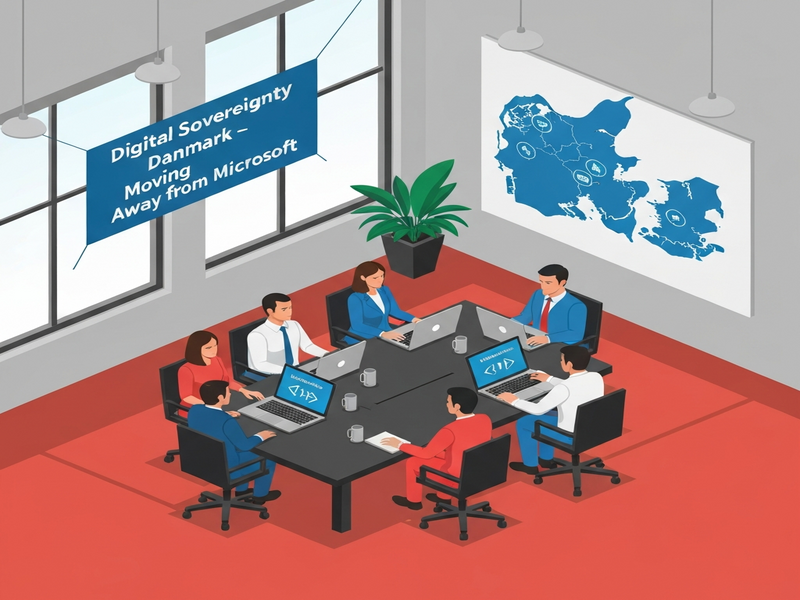
In early 2026 the Danish government announced a bold migration plan that will see thousands of civil servants switch from Microsoft Office to LibreOffice. The move is part of a broader national strategy to reduce reliance on U.S. technology providers, cut licensing costs, and secure data under Danish jurisdiction. For IT decision‑makers and policy makers across Europe, this development signals a tangible shift from proprietary software to community‑driven, open‑source alternatives.
Read more about the About UBOS and how open‑source platforms are reshaping enterprise technology.
The Migration Blueprint
Caroline Stage Olsen, Denmark’s Minister for Digitalisation, confirmed to Politiken that the transition will begin next month, with over half of the ministry’s staff moving to LibreOffice immediately. The full rollout is slated for completion by the end of the calendar year, aligning with the October sunset of Windows 10 support.
- Phase 1 (Month 1‑3): Pilot groups in the legal and finance departments adopt LibreOffice on Windows and macOS.
- Phase 2 (Month 4‑6): Expansion to all internal communication tools, including integration with the agency’s document management system.
- Phase 3 (Month 7‑12): Full migration, de‑commissioning of legacy Microsoft licenses, and training programs for all employees.
The agency has also earmarked a contingency budget to revert to Microsoft products if critical compatibility issues arise, underscoring a pragmatic approach to digital transformation.
For organisations looking to automate similar migrations, the Workflow automation studio offers low‑code pipelines that can orchestrate software roll‑outs at scale.
LibreOffice: What Makes It a Viable Alternative?
LibreOffice, maintained by The Document Foundation, provides a full suite of productivity tools—Writer, Calc, Impress, Draw, Base, and Math—compatible with the most common file formats (DOCX, XLSX, PPTX). Its open‑source licence grants organisations the freedom to modify, audit, and redistribute the software without vendor lock‑in.
Key Advantages
- Cost Savings: No per‑seat licensing fees, reducing annual IT spend by an estimated 30‑40% for large agencies.
- Data Sovereignty: Source code is publicly available, enabling thorough security audits and compliance with GDPR.
- Cross‑Platform Flexibility: Runs natively on Windows, macOS, Linux, and even mobile via third‑party ports.
- Community Support: A global network of contributors continuously improves features and patches vulnerabilities.
Businesses seeking to leverage AI within LibreOffice documents can explore the OpenAI ChatGPT integration, which adds generative assistance for drafting, summarising, and translating content directly inside the suite.
Additionally, the Chroma DB integration enables semantic search across large document repositories, a feature that aligns perfectly with the agency’s need for searchable public records.
A Pan‑European Wave of Digital Independence
Denmark is not alone. Several European jurisdictions have announced comparable open‑source migrations:
| Country / Region | Targeted Software | Timeline |
|---|---|---|
| Germany – Schleswig‑Holstein | LibreOffice + Linux OS | Complete by 2027 |
| France – Île‑de‑France | LibreOffice, Nextcloud | Phased 2025‑2028 |
| Netherlands – City of Amsterdam | LibreOffice, OnlyOffice | Pilot 2024, Full 2026 |
These initiatives share a common goal: to reclaim control over public sector IT ecosystems. The Enterprise AI platform by UBOS is already being trialled in several municipalities to provide AI‑enhanced document workflows while staying within sovereign data boundaries.
For startups interested in building similar solutions, the UBOS for startups program offers cloud credits and technical mentorship.
Official Voices on the Transition
“If everything goes as expected, all employees will be on an open‑source solution during the autumn,” said Minister Caroline Stage Olsen during a press briefing. “This is not just a cost‑saving measure; it is a statement of digital independence for Denmark.”
Henrik Appel Espersen, chair of Copenhagen’s audit committee, added, “Our city’s earlier switch to LibreOffice proved that open‑source can meet the rigorous standards of public administration while protecting citizen data from foreign jurisdictional overreach.”
These statements echo the sentiment behind the UBOS partner program, which encourages public‑sector partners to co‑develop sovereign‑first solutions.
What This Means for Digital Sovereignty
Adopting LibreOffice is a tangible manifestation of Denmark’s digital sovereignty agenda. The implications extend beyond software licensing:
- Regulatory Alignment: Open‑source tools simplify compliance with GDPR and national data‑protection statutes.
- Strategic Autonomy: Reducing dependence on U.S. vendors mitigates geopolitical risk, especially in times of diplomatic tension.
- Innovation Ecosystem: Local developers can contribute to the codebase, fostering a home‑grown tech talent pool.
- Economic Efficiency: Savings on licensing can be redirected to AI research, such as the AI marketing agents that automate content creation for public campaigns.
For organisations looking to evaluate the ROI of open‑source migration, the UBOS templates for quick start include a pre‑built Cost‑Benefit Calculator that integrates with LibreOffice’s budgeting module.
Moreover, the Web app editor on UBOS enables rapid prototyping of citizen‑facing portals that run entirely on open‑source stacks, ensuring end‑to‑end data control.
Looking Ahead
Denmark’s transition to LibreOffice marks a watershed moment for European digital policy. As more governments adopt open‑source solutions, the continent moves closer to a unified, sovereign digital infrastructure.
IT leaders and policy makers who wish to stay ahead of this trend should explore how open‑source platforms can be integrated with AI‑driven workflows. UBOS offers a comprehensive suite—from the pricing plans that fit public‑sector budgets to the portfolio examples showcasing successful migrations.
Read the original announcement and detailed interview on Record Media for full context.
Ready to start your own open‑source journey? Visit the UBOS homepage and discover tools that empower digital independence.
Andrii Bidochko
CTO UBOS
Andrii Bidochko is an AI entrepreneur and researcher focused on AI agents, reinforcement learning, and autonomous systems. He writes about the technologies shaping the future of machine intelligence, from frontier models and agent architectures to real-world AI applications.