

- Updated: April 1, 2026
- 6 min read
Claude Code Leak Raises Compliance Challenges for Regulated Industries
The Claude code leak exposed the complete source of Anthropic’s Claude developer tool, creating immediate data‑security concerns and prompting regulated enterprises to reassess AI compliance under the EU AI Act.
Why the Claude Code Leak Matters for Compliance Officers
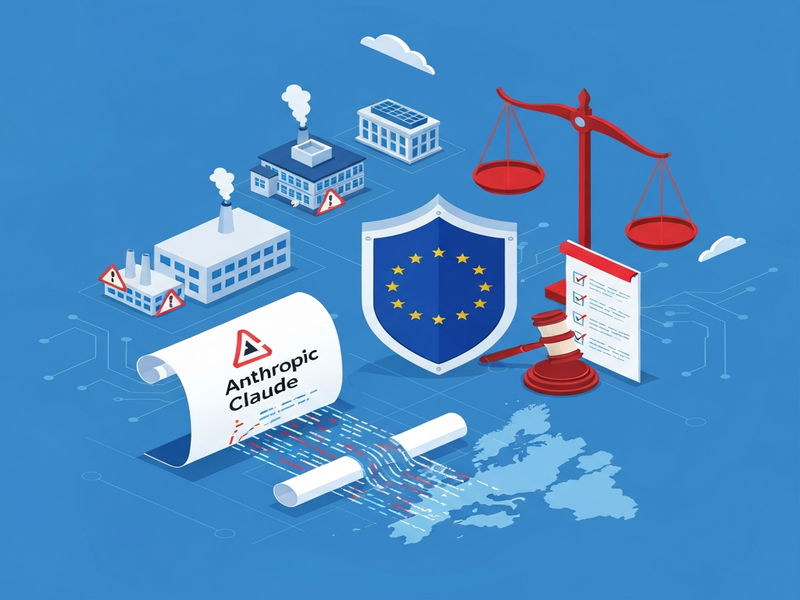
On 31 March 2026 a missing .npmignore entry caused the entire Claude codebase to be published on the public npm registry. Within hours the 59.8 MB source‑map was forked thousands of times, dissected by security researchers, and turned into a headline that still reverberates across regulated sectors. For compliance officers, legal advisors, AI product managers, and tech journalists, the incident is more than a technical curiosity—it is a concrete illustration of how supply‑chain vulnerabilities can jeopardize AI compliance, data security, and the obligations set out by the EU AI Act.
What Exactly Was Leaked?
Anthropic’s Claude Code CLI is a TypeScript‑based developer assistant that generates code, writes commit messages, and automates pull‑request workflows. Version 2.1.88 unintentionally shipped a source‑map file (claude-code.map) that contained:
- Full, readable TypeScript source of the CLI.
- Hidden features such as “Undercover Mode” that strips AI attribution from commit messages.
- Prototype of an autonomous agent called KAIROS with daemon workers and scheduled tasks.
- Anti‑distillation mechanisms, frustration‑detection regexes, and native client attestation written in Zig.
Security researchers quickly catalogued these components, while product analysts mapped unreleased roadmap items. The leak also revealed a glaring absence of automated test suites and a build pipeline that failed to block source‑map publishing—a classic supply‑chain oversight.
Regulated Industries Feel the Shockwaves
Enterprises in finance, healthcare, pharmaceuticals, and critical infrastructure often rely on Claude Code to accelerate development of AI‑enabled services. The leak raises three concrete concerns for these sectors:
- Supply‑chain risk: The source‑map exposure proves that even well‑funded AI vendors can suffer basic release‑engineering failures, expanding the attack surface of downstream systems.
- Provenance gaps: “Undercover Mode” demonstrates that Anthropic can generate code without any AI attribution, contradicting emerging open‑source norms that require disclosure of AI‑generated contributions.
- Quality‑assurance uncertainty: The missing test coverage means that bugs—like the autoCompact failure that burned ~250 K API calls per day—can persist unnoticed, jeopardizing the reliability guarantees demanded by regulators.
For organizations bound by the EU AI Act, these issues translate into heightened scrutiny of the entire AI value chain, not just the final high‑risk model.
EU AI Act: What the Leak Triggers (and What It Doesn’t)
The EU AI Act distinguishes between high‑risk AI systems (Annex III) and general‑purpose AI tools. Claude Code is classified as a developer tool, not a high‑risk system, so the Act does not directly regulate its source code. However, several Articles become relevant when the tool is part of a regulated product’s development pipeline:
| Article | Relevance to Claude Code Leak |
|---|---|
| Article 9 – Risk Management System | Requires a documented risk assessment for the entire AI lifecycle. The leak adds a supply‑chain risk that must be captured in the risk register. |
| Article 15 – Accuracy, Robustness & Cybersecurity | Mandates safeguards against vulnerabilities. The source‑map exposure is a cybersecurity incident that must be reported under Article 55(1)(d) if it affects the model’s integrity. |
| Article 17 – Quality Management System | Obliges organizations to verify that upstream tools meet internal quality standards. Lack of test coverage in Claude Code triggers a compensating control requirement. |
| Article 25 – Responsibilities Along the AI Value Chain | Places duties on downstream deployers to ensure that any third‑party component does not compromise compliance. |
In short, the leak does not constitute a direct violation of the EU AI Act, but it creates a compliance signal that must be addressed through internal governance, risk management, and documentation.
Practical Steps for Compliance Officers
Below is a MECE‑structured checklist that aligns with both the EU AI Act and industry‑best security practices.
1. Strengthen Your AI Toolchain Threat Model
- Map every third‑party AI component (e.g., Claude Code, OpenAI APIs, Chroma DB).
- Document version pins, checksum verification, and update monitoring.
- Include the Chroma DB integration as a case study for vector‑store security.
2. Enforce Provenance and Attribution Policies
- Require “Generated‑by:” tags on all AI‑produced code, mirroring Apache’s practice.
- Audit repositories for hidden “Undercover Mode” patterns; the ChatGPT and Telegram integration demonstrates transparent attribution in messaging bots.
3. Compensate for Missing Test Coverage
- Implement mandatory code‑review gates for any AI‑generated pull request.
- Run integration tests that execute the generated code in a sandboxed environment.
- Leverage the Workflow automation studio to orchestrate automated validation pipelines.
4. Update Your Risk Register and Documentation
- Log the Claude code leak as a “Supply‑chain breach” with severity rating.
- Reference the EU AI Act articles in your compliance dossier (see the table above).
- Use the Enterprise AI platform by UBOS to centralize risk artifacts.
5. Communicate with Vendors
- Request a post‑mortem and remediation roadmap from Anthropic.
- Assess vendor maturity using the UBOS partner program criteria for security and compliance.
6. Leverage AI‑Powered Governance Tools
UBOS offers several ready‑made solutions that can accelerate the above steps:
- AI marketing agents for automated policy enforcement.
- UBOS templates for quick start such as the AI SEO Analyzer to ensure documentation stays searchable.
- The Web app editor on UBOS lets you build internal dashboards for compliance tracking without writing code.
Read the Full Technical Breakdown
For a deep dive into the technical findings, see the original investigative piece published by TechSec Daily. The article includes the interactive explorer and raw source‑map analysis referenced throughout this post.
How UBOS Helps Regulated Enterprises Stay Compliant
UBOS provides a full stack of AI‑centric services designed for highly regulated environments:
- UBOS homepage – your entry point to a secure AI ecosystem.
- About UBOS – learn about our commitment to data protection and compliance.
- UBOS platform overview – a modular architecture that isolates third‑party AI components.
- UBOS for startups – fast‑track compliance from day one.
- UBOS solutions for SMBs – affordable governance tools for smaller firms.
- UBOS pricing plans – transparent pricing that aligns with compliance budgets.
- UBOS portfolio examples – case studies from finance, health, and energy sectors.
- AI compliance hub – curated resources on the EU AI Act and beyond.
Explore our marketplace for ready‑made AI applications that already embed best‑practice governance:
- AI Article Copywriter – generates compliant documentation with built‑in citation tracking.
- AI Video Generator – creates training videos while enforcing watermarking for provenance.
- GPT‑Powered Telegram Bot – demonstrates secure bot deployment with the Telegram integration on UBOS.
- AI Chatbot template – a sandboxed conversational agent that respects data‑privacy flags.
Bottom Line
The Claude code leak is a stark reminder that AI supply‑chain security is a core pillar of regulatory compliance. While the EU AI Act does not label Claude Code as a high‑risk system, the incident forces regulated enterprises to tighten risk‑management processes, enforce provenance, and adopt robust testing regimes. By integrating dedicated governance platforms—such as those offered by UBOS—organizations can transform a reactive response into a proactive compliance strategy that safeguards both data security and regulatory standing.
Andrii Bidochko
CTO UBOS
Andrii Bidochko is an AI entrepreneur and researcher focused on AI agents, reinforcement learning, and autonomous systems. He writes about the technologies shaping the future of machine intelligence, from frontier models and agent architectures to real-world AI applications.