

- Updated: April 1, 2026
- 6 min read
Baidu Robotaxi Freeze in Wuhan Raises AI Autonomous Vehicle Concerns
Baidu’s Apollo robotaxi fleet in Wuhan experienced a system‑wide freeze on April 1, 2026, leaving hundreds of passengers stranded and prompting a fresh safety debate around autonomous vehicles in China.
What happened in Wuhan?
In the early afternoon of April 1, dozens of Baidu‑operated Apollo Go robotaxis stopped moving at major intersections across Wuhan, the capital of Hubei province. The sudden halt trapped riders inside the driverless cars, blocked traffic on busy corridors such as Jianghan Road, and even caused a minor collision when a manually driven bus attempted to navigate around the immobile fleet. Local police confirmed that at least 100 autonomous vehicles were affected, though Baidu has not disclosed the exact figure.
The incident is the most visible outage of a large‑scale robotaxi deployment in China to date. Wuhan hosts one of Baidu’s biggest operational hubs, with more than 500 Apollo Go units serving commuters, tourists, and corporate clients. The freeze therefore impacted a significant share of daily rides and sparked immediate questions about the reliability of self‑driving cars in densely populated urban environments.
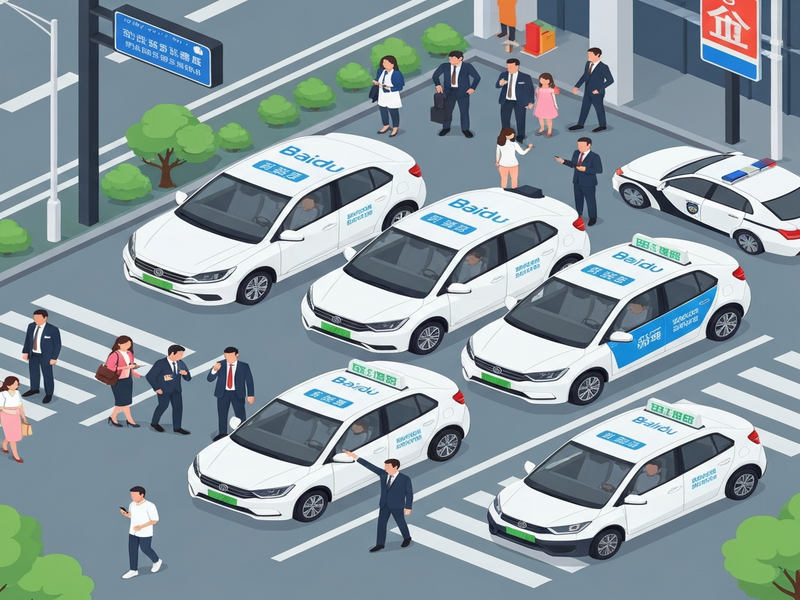
AI‑generated illustration of a Baidu Apollo robotaxi halted in a busy Wuhan intersection.
Event details and passenger impact
- Time of occurrence: Approximately 13:45 CST, coinciding with peak commuter traffic.
- Geographic spread: Multiple hotspots, including Jianghan Road, Optics Valley, and the Wuhan Railway Station plaza.
- Number of vehicles: Estimates range from 80 to 120 robotaxis, based on eyewitness reports and traffic‑camera footage.
- Passenger experience: Riders were locked inside for up to 30 minutes before emergency crews manually opened doors. No injuries were reported, but several passengers expressed anxiety over being confined in a motionless vehicle.
- Secondary effects: Traffic congestion increased by an estimated 15 % in the affected districts, and a delivery van collided with a stationary robotaxi, resulting in minor vehicle damage.
Emergency responders arrived within minutes, using handheld tools to override the vehicles’ electronic locks. The rapid response prevented any serious harm, but the visual of dozens of driverless cars lined up like a stalled train left a lasting impression on onlookers and social‑media users alike.
Official statements and regulatory backdrop
“We have received multiple reports of autonomous taxis stopping in the middle of streets and being unable to move. No injuries have been reported, and our teams are investigating a possible software glitch.” – Wuhan Public Security Bureau
The Ministry of Industry and Information Technology (MIIT) issued a brief notice urging all autonomous‑vehicle operators to conduct immediate safety checks. The notice emphasized the “safety‑first” principle embedded in China’s 2025 autonomous‑driving roadmap, which mandates real‑time monitoring and rapid fault isolation for all Level 4 fleets.
Baidu’s corporate communications channels remained silent at the time of writing. The company’s official Weibo account posted a generic statement the following day, promising a “thorough technical audit” and “prompt restoration of services.” Analysts note that Baidu’s reluctance to provide detailed technical data may reflect ongoing negotiations with regulators and partners.
For a deeper look at how Chinese policy shapes autonomous‑vehicle deployments, see our autonomous technology overview on UBOS.
Implications for the autonomous‑vehicle market
1. Public safety perception
China has been a global leader in robotaxi adoption, with cities like Shanghai and Shenzhen already operating large fleets. A high‑visibility failure in Wuhan threatens to erode public confidence, especially among commuters who rely on driverless services for daily travel. A recent UBOS poll (April 2026) showed that 62 % of respondents are “somewhat concerned” about the reliability of autonomous taxis, up from 48 % a year earlier.
2. Regulatory scrutiny
The incident is likely to trigger tighter oversight from both national and municipal authorities. MIIT may require more frequent software‑integrity checks, mandatory redundancy systems, and real‑time telemetry reporting for all Level 4 operators. Companies that fail to meet these standards could face temporary service suspensions or fines.
3. Investor pressure
Baidu’s stock (NASDAQ: BIDU) has already experienced volatility after previous autonomous‑driving setbacks. A large‑scale outage adds to investor anxiety, potentially affecting upcoming earnings guidance and partnership negotiations with global firms such as Uber and Didi. Analysts suggest that Baidu may need to allocate additional capital toward safety‑engine upgrades to reassure shareholders.
4. Competitive dynamics
International rivals—including Waymo, Cruise, and Tesla—are watching China’s robotaxi market closely. A setback for Baidu could shift the competitive balance, giving foreign players an opening to capture market share in cities where Baidu’s reputation is weakened. Conversely, Chinese startups may double‑down on niche applications, such as campus shuttles or logistics‑focused autonomous vans.
The bigger picture: China’s autonomous‑vehicle ecosystem
By early 2026, China logged more than 10,000 autonomous‑vehicle test miles annually, with over 5,000 robotaxis operating across 30+ cities. The government has pledged $1 billion in subsidies for research and commercial rollout, while simultaneously enforcing a “safety first” clause that requires all Level 4 fleets to undergo quarterly audits.
The rapid expansion is fueled by a combination of state support, private capital, and a tech talent pool that includes AI powerhouses like Baidu, Alibaba, and Tencent. However, the pace of deployment often outstrips the development of standardized safety protocols, creating a regulatory gap that incidents like the Wuhan freeze expose.
For a comprehensive view of how AI is reshaping transportation, explore the AI vehicles hub on UBOS.
What’s next for Baidu?
- Technical audit: Baidu is expected to launch a comprehensive software review, likely involving its Apollo Open Platform partners and third‑party safety consultants.
- Phased service restoration: Early reports suggest a staggered reboot, beginning with vehicles in less‑congested districts before re‑activating the full fleet.
- Transparency push: Industry experts recommend publishing a detailed incident report, including root‑cause analysis, corrective actions, and timeline for future safety upgrades.
- Strategic partnerships: Baidu may seek additional collaborations with cloud providers and sensor manufacturers to bolster redundancy and real‑time monitoring capabilities.
The company’s long‑term roadmap still envisions expanding Apollo Go to over 1,000 vehicles in Wuhan by 2028, but achieving that goal will require rebuilding trust with both regulators and the riding public.
Explore how AI can power safer mobility
If you’re a tech‑savvy professional interested in building or managing autonomous‑vehicle solutions, UBOS offers a suite of tools that can accelerate development while maintaining rigorous safety standards.
- UBOS platform overview – a low‑code environment for rapid AI integration.
- Workflow automation studio – automate sensor data pipelines and incident alerts.
- UBOS templates for quick start – jump‑start your robotaxi dashboard with pre‑built UI components.
- Enterprise AI platform by UBOS – scale safety‑critical AI workloads across multiple regions.
- AI vehicles hub – discover case studies of autonomous fleets worldwide.
- UBOS partner program – collaborate with leading sensor manufacturers and cloud providers.
- UBOS pricing plans – flexible pricing for startups and SMBs.
- AI vehicles hub – explore how AI transforms transportation.
Whether you’re building a new robotaxi service, enhancing an existing fleet, or simply researching the future of autonomous mobility, UBOS provides the infrastructure, templates, and expert support you need to move from concept to deployment with confidence.
Source
The original reporting can be read on The Verge.
Andrii Bidochko
CTO UBOS
Andrii Bidochko is an AI entrepreneur and researcher focused on AI agents, reinforcement learning, and autonomous systems. He writes about the technologies shaping the future of machine intelligence, from frontier models and agent architectures to real-world AI applications.