

- Updated: February 22, 2026
- 6 min read
China’s BCI Industry Accelerates: Massive Funding, Policy Support, and a $17 Billion Market Outlook
China’s Brain‑Computer Interface Industry Accelerates Toward a Multibillion‑Dollar Future
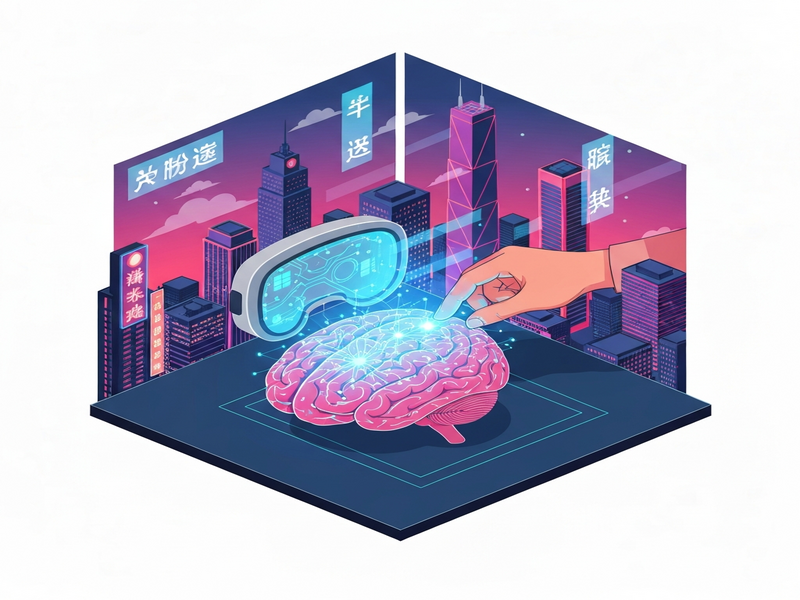
Answer: China’s brain‑computer interface (BCI) market is expanding rapidly, driven by strong government backing, a surge of innovative startups, and sizable investments that together project the sector to exceed 120 billion yuan (≈ US$16.5 billion) by 2040, with healthcare applications leading the commercial rollout.
Why China Is the New Epicenter of BCI Innovation
While Western headlines often spotlight Elon Musk’s Neuralink, the original TechCrunch report reveals that China has quietly moved from academic labs to large‑scale commercialization. The country’s approach blends policy, capital, and a massive clinical ecosystem, creating a fertile ground for both invasive and non‑invasive BCI solutions.
Policy Powerhouses: Funding and Regulation
- In December 2025, the Shenzhen BCI & Human‑Computer Interaction Expo announced an 11.6 billion yuan (≈ US$165 million) “brain science fund” to shepherd projects from prototype to market.
- Provincial health bureaus in Sichuan, Hubei, and Zhejiang have already set reimbursement rates, integrating BCI therapies into the national medical insurance system.
- The 2025 national roadmap targets unified technical standards by 2027 and a full domestic supply chain by 2030.
Capital Surge: From State‑Led Funds to Private Ventures
Strategic capital is flowing from both government‑backed funds and venture firms. Notable deals include:
- StairMed Technology’s US$48 million Series B round (Feb 2025).
- BrainCo’s pre‑IPO fundraising of US$287 million, positioning it for a Hong Kong listing.
- Gestalt’s upcoming angel round, aimed at scaling its ultrasound‑based non‑invasive BCI platform.
Market Size & Growth Trajectory
According to industry analysts, the Chinese BCI market was valued at 3.2 billion yuan in 2024 and is projected to reach 3.8 billion yuan in 2025. More aggressive forecasts anticipate a compound annual growth rate (CAGR) of over 30 % through 2030, culminating in a market worth >120 billion yuan by 2040. The near‑term focus remains on healthcare—stroke rehabilitation, chronic pain, and motor‑function restoration—where insurance coverage accelerates adoption.
Key Domestic Players and Their Strategies
China’s BCI ecosystem is populated by a mix of invasive‑device specialists and non‑invasive innovators:
- NeuroXess – Flexible implantable electrodes targeting precise motor‑control decoding.
- Neuracle – Hybrid platforms that combine EEG with AI‑driven signal enhancement.
- NeuralMatrix – Focused on spinal‑cord reconstruction via closed‑loop stimulation.
- BrainCo – Leader in consumer‑grade non‑invasive BCIs and bionic limb control.
- Gestala – Pioneering ultrasound‑based BCIs for pain management and depression.
- Zhiran Medical – Flexible, high‑throughput implant designs that reduce inflammation.
Technological Advances: Invasive vs. Non‑Invasive
Invasive Electrophysiological BCIs
These devices embed micro‑electrodes directly onto cortical tissue, delivering the highest signal‑to‑noise ratio. Recent milestones include:
- Over 50 flexible implant trials completed by mid‑2025, demonstrating reliable motor and language decoding.
- Successful wireless, fully implanted trials that enable paralyzed patients to control external devices without external hardware.
Non‑Invasive Frontiers
Non‑invasive solutions trade some precision for safety and scalability. Emerging modalities include:
- Ultrasound BCIs – Focused acoustic waves modulate neural activity without skin penetration (e.g., Gestala).
- Magnetoencephalography (MEG) – High‑resolution magnetic field mapping for real‑time brain‑state detection.
- Optical Imaging – Near‑infrared spectroscopy (NIRS) for portable, low‑cost brain monitoring.
- Hybrid Systems – Combining EEG with AI‑enhanced signal processing to boost accuracy.
Investment Landscape & Funding Trends
Investment in Chinese BCI startups has outpaced global averages. According to UBOS partner program data, AI‑related health tech attracted over US$2 billion in venture capital across 2024‑2025, with BCI accounting for roughly 15 % of that pool.
State‑run funds, such as the brain science fund, prioritize projects that demonstrate clear pathways to clinical adoption, while private VCs focus on scalable non‑invasive platforms that can be commercialized within 3‑5 years.
Regulatory & Ethical Challenges
Rapid growth brings scrutiny:
- Regulatory Alignment – Chinese authorities are tightening oversight of invasive devices, mirroring IEC/ISO standards, while streamlining approvals for non‑invasive technologies.
- Data Sovereignty – BCI data is highly sensitive; new policies require localized storage and strict consent protocols.
- Ethical Governance – Informed‑consent frameworks are expanding beyond medical contexts to include augmentation use‑cases.
Future Outlook: From Therapy to Augmentation
Experts predict a three‑phase evolution:
- Therapeutic Dominance (2025‑2028) – Focus on stroke, chronic pain, and motor‑function restoration, driven by insurance reimbursement.
- Hybrid Expansion (2029‑2033) – Integration of invasive precision with non‑invasive convenience, enabling broader consumer applications.
- Human Augmentation (2034+) – High‑bandwidth brain‑AI interfaces that enhance cognition, creativity, and productivity, aligning with the vision of “bridging carbon‑based and silicon‑based intelligence.”
China’s ambition to rival global leaders like Neuralink is evident in its coordinated policy, manufacturing capacity, and talent pipeline. By 2030, the country aims to host a self‑sufficient BCI supply chain, from semiconductor chips to AI‑driven signal analytics.
Implications for Tech‑Savvy Professionals and Investors
For investors, the BCI sector offers a high‑growth, high‑impact opportunity. Key considerations include:
- Prioritizing non‑invasive platforms with clear regulatory pathways.
- Evaluating startups that leverage existing AI ecosystems—such as AI innovation frameworks—to accelerate data processing.
- Monitoring policy shifts that could unlock or restrict market access.
For technology professionals, mastering BCI‑related AI models (e.g., OpenAI ChatGPT integration) and data‑privacy best practices will be essential to building compliant, market‑ready solutions.
How UBOS Supports the BCI Revolution
UBOS provides a suite of tools that accelerate BCI product development and deployment:
- UBOS platform overview – A low‑code environment for rapid prototyping of AI‑driven brain‑interface apps.
- Web app editor on UBOS – Enables clinicians to create custom dashboards for real‑time BCI data visualization.
- Workflow automation studio – Automates patient onboarding, consent management, and data pipelines.
- AI marketing agents – Drive targeted outreach for BCI therapies and consumer products.
- UBOS pricing plans – Flexible subscription tiers that scale from startups to enterprise deployments.
- Enterprise AI platform by UBOS – Handles massive neural data streams with built‑in compliance.
- UBOS for startups – Accelerates time‑to‑market for early‑stage BCI innovators.
- UBOS solutions for SMBs – Provides affordable AI infrastructure for small‑scale clinical trials.
- UBOS portfolio examples – Showcases successful BCI‑related deployments across health tech.
- UBOS templates for quick start – Ready‑made BCI data pipelines and UI components.
Template Marketplace Highlights for BCI Developers
UBOS’s marketplace offers specialized templates that can be repurposed for BCI applications:
- AI SEO Analyzer – Optimize BCI product landing pages for discoverability.
- AI Video Generator – Create patient education videos that explain BCI procedures.
- AI Chatbot template – Deploy 24/7 support for BCI users.
- AI Audio Transcription and Analysis – Convert neuro‑feedback sessions into actionable reports.
Conclusion: A Strategic Moment for Stakeholders
China’s BCI industry stands at a strategic inflection point where policy, capital, and technology converge. The sector’s projected growth to over 120 billion yuan by 2040 signals a lucrative horizon for investors, while the clinical focus ensures that early adopters can deliver tangible health benefits. As regulatory frameworks mature and ethical standards solidify, the pathway from therapeutic devices to cognitive augmentation will become clearer.
For professionals seeking to ride this wave, aligning with platforms like UBOS—leveraging low‑code development, AI integration, and compliance tooling—offers a decisive advantage. The next decade will likely see BCI transition from niche medical labs to mainstream consumer ecosystems, fulfilling the promise of a seamless brain‑AI bridge.
© 2026 UBOS Technology. All rights reserved.
Andrii Bidochko
CTO UBOS
Andrii Bidochko is an AI entrepreneur and researcher focused on AI agents, reinforcement learning, and autonomous systems. He writes about the technologies shaping the future of machine intelligence, from frontier models and agent architectures to real-world AI applications.