

Character.AI is an AI‑driven chatbot platform that recently drew attention after Android Police documented a two‑week trial that left users feeling uneasy and highlighted both the promise and the pitfalls of conversational AI.
Android Police’s Deep Dive into Character.AI: What the Two‑Week Test Reveals About Modern Chatbots
What is Character.AI and Why It Matters
Character.AI is a rapidly growing platform that lets anyone create and interact with AI‑powered personalities, ranging from fictional characters to expert advisors. Its appeal lies in the ability to generate human‑like dialogue without needing deep technical expertise. As AI chatbots become integral to customer support, entertainment, and personal productivity, understanding how they behave in real‑world usage is crucial for both developers and end‑users.
For tech enthusiasts and AI chatbot users, the Android Police story offers a rare, candid look at the strengths and blind spots of a popular conversational AI after an intensive two‑week trial.
Key Takeaways from the Android Police Report
- Initial excitement: The first few days felt like a breakthrough in natural language interaction, with characters responding contextually and with personality.
- Gradual degradation: Over time, the chatbot’s responses grew repetitive, occasionally nonsensical, and sometimes displayed unsettling “creepy” behavior.
- Privacy concerns: The article highlighted ambiguous data‑handling policies, prompting questions about how user conversations are stored and used.
- Feature gaps: Missing integrations with popular tools (e.g., voice synthesis, workflow automation) limited the platform’s utility for power users.
- Community feedback loop: Users reported that the platform’s community‑driven improvement process was slow, leaving many bugs unfixed for weeks.
Analyzing the Chatbot Experience: Promise vs. Reality
The Android Police narrative underscores a classic MECE (Mutually Exclusive, Collectively Exhaustive) breakdown of chatbot performance: Engagement, Reliability, Privacy, and Extensibility. Let’s explore each dimension and its broader implications for the AI industry.
1. Engagement – The Human‑like Factor
Character.AI’s early success hinged on its ability to simulate personality. This aligns with the growing demand for AI marketing agents that can hold nuanced conversations. However, the decline in novelty after a few interactions suggests that without continuous learning loops, even the most sophisticated language models can become stale.
2. Reliability – Consistency Over Time
Reliability is the backbone of any enterprise‑grade AI solution. The observed “creepy” moments—where the bot repeated phrases or generated off‑topic answers—highlight the need for robust monitoring. Platforms like the Enterprise AI platform by UBOS address this by offering real‑time performance dashboards and automated fallback mechanisms.
3. Privacy – Data Governance Matters
Android Police raised legitimate concerns about how conversational data is stored. In regulated industries, compliance is non‑negotiable. UBOS tackles this with end‑to‑end encryption and granular consent controls, as detailed on the About UBOS page.
4. Extensibility – Integrations Drive Value
One glaring omission in Character.AI’s ecosystem is native integration with voice and data tools. UBOS’s ElevenLabs AI voice integration and Chroma DB integration illustrate how adding speech synthesis and vector databases can transform a static chatbot into a dynamic assistant.
“A chatbot that can’t evolve with its users quickly becomes a novelty rather than a tool.” – AI industry analyst
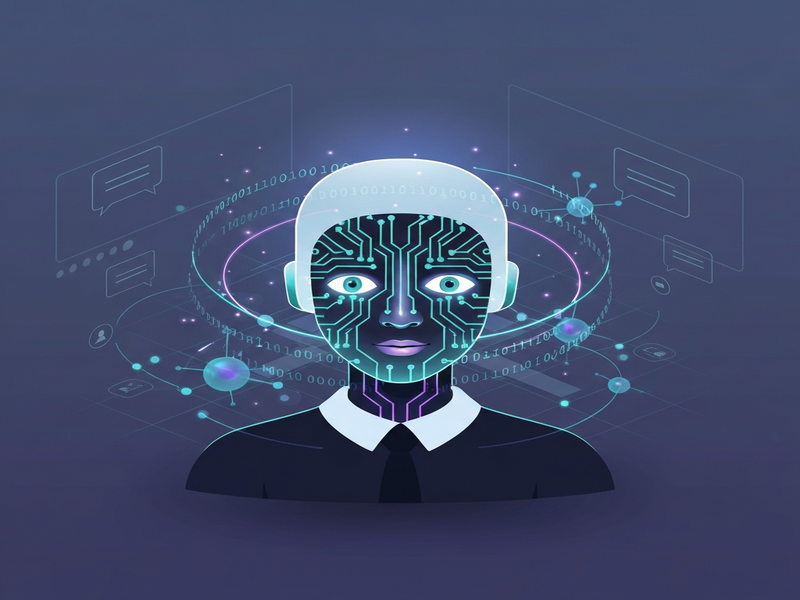
Visual Snapshot: The Two‑Week Journey
The illustration below, generated by UBOS’s AI image engine, captures the emotional arc of a typical user—from excitement to uncertainty.
How UBOS Enhances the AI Chatbot Landscape
While Character.AI offers a glimpse of what conversational AI can achieve, UBOS provides a full‑stack environment that addresses the gaps highlighted by Android Police.
- Start quickly with UBOS templates for quick start, including ready‑made chatbot blueprints.
- Leverage the Web app editor on UBOS to customize UI without writing code.
- Automate complex workflows using the Workflow automation studio, linking chat responses to downstream actions.
- Integrate voice capabilities via the ChatGPT and Telegram integration for real‑time, multi‑modal interactions.
- Scale responsibly with transparent pricing—see the UBOS pricing plans for flexible tiers.
- Explore case studies in the UBOS portfolio examples to see how enterprises have turned chatbots into revenue generators.
Ready‑Made UBOS Templates That Solve Character.AI’s Pain Points
UBOS’s marketplace offers dozens of AI‑powered templates that can be deployed in minutes. Below are a few that directly address the shortcomings noted in the Android Police review.
| Template | Key Benefit |
|---|---|
| AI Chatbot template | Pre‑trained conversational flow with built‑in fallback handling. |
| AI Article Copywriter | Generates content on‑the‑fly, reducing repetitive responses. |
| AI SEO Analyzer | Optimizes chatbot scripts for search visibility. |
| AI Video Generator | Adds multimedia responses, making interactions richer. |
| AI LinkedIn Post Optimization | Ensures professional tone for B2B chatbot use cases. |
What This Means for the Future of AI Chatbots
Android Police’s deep dive serves as a cautionary tale and a roadmap for improvement. Key trends emerging from the analysis include:
- Hybrid multimodal experiences: Voice, text, and visual outputs will become standard, as seen in UBOS’s OpenAI ChatGPT integration and Telegram integration on UBOS.
- Continuous learning pipelines: Real‑time feedback loops reduce the “creepy” stagnation reported by users.
- Transparent data policies: Trust will be earned through clear consent mechanisms and audit trails.
- Plug‑and‑play ecosystems: Marketplaces like the UBOS Template Marketplace accelerate deployment, lowering the barrier for startups and SMBs (UBOS for startups, UBOS solutions for SMBs).
Conclusion: Balancing Innovation with Reliability
Character.AI’s two‑week experiment, as chronicled by Android Police, highlights both the excitement and the challenges of consumer‑facing conversational AI. While the platform showcases the potential for engaging, personality‑rich bots, it also reveals gaps in consistency, privacy, and extensibility that can erode user trust.
For organizations seeking a more robust solution, UBOS offers a comprehensive suite that addresses these shortcomings—from secure data handling and scalable architecture to a rich ecosystem of integrations and ready‑made templates. By leveraging such platforms, developers can focus on crafting meaningful dialogues rather than wrestling with underlying infrastructure.
As AI continues to reshape how we interact with software, the lessons from this story will guide the next generation of chatbots toward being not just novel, but truly useful and trustworthy.