

- Updated: January 6, 2026
- 6 min read
CES 2026 Unveils Wi‑Fi 8: Asus ROG NeoCore Router, Broadcom & MediaTek Chipsets Lead the Future
Wi‑Fi 8 made its first public appearance at CES 2026, with Asus showcasing the ROG NeoCore concept router and chip giants Broadcom and MediaTek unveiling early‑stage Wi‑Fi 8 silicon that could hit consumer markets as early as 2027, well before the IEEE finalizes the standard in 2028.
Why CES 2026 Matters for Wireless Networking
The Consumer Electronics Show has long been the launchpad for breakthrough connectivity tech. This year, the spotlight turned to the next generation of Wi‑Fi, dubbed “Wi‑Fi 8.” While Wi‑Fi 7 is still rolling out in homes, manufacturers are already racing to prototype the successor, promising not just higher raw speeds but smarter, more resilient connections for the ever‑growing ecosystem of smart devices.
For tech enthusiasts, IT professionals, and anyone who relies on a stable home or office network, understanding the new features, the players involved, and the realistic rollout timeline is crucial. Below we break down the announcements, the hardware that’s emerging, and what you should expect in the next 12‑24 months.
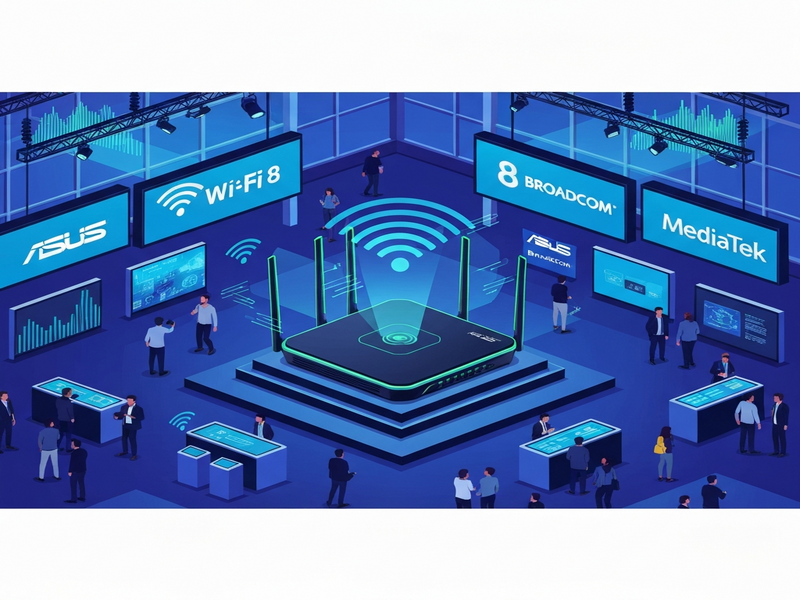
Asus ROG NeoCore: A Glimpse of the Future Router
Asus surprised the crowd with the ROG NeoCore – a bold, antenna‑free concept that looks more like a 20‑sided die than a traditional router. The design signals a shift toward integrated, high‑gain antenna arrays hidden within the chassis, reducing visual clutter while maximizing signal directionality.
According to Asus, the production version will deliver the same peak data rates as Wi‑Fi 7 (up to 30 Gbps) but with higher throughput, lower latency, and superior peer‑to‑peer efficiency. In practice, this means smoother gaming sessions, fewer video stalls, and more reliable connections for devices that move around the house.
- Polyhedral chassis with hidden antenna array.
- Built‑in AI‑driven traffic shaping for real‑time gaming.
- Support for upcoming Wi‑Fi 8 features such as Multi‑Link Operation 2.0.
While the mock‑up broke during a hands‑on demo (a moment that drew laughs from the audience), the underlying technology is solid. Asus plans to ship the first Wi‑Fi 8‑ready units later this year, leveraging a draft of the IEEE 802.11bn specification.
If you’re curious how AI can further enhance network management, explore our AI marketing agents that automate performance monitoring and predictive bandwidth allocation.
Broadcom & MediaTek: The Silicon Engines Powering Wi‑Fi 8
Two of the world’s leading chipset manufacturers unveiled their Wi‑Fi 8 solutions at CES:
Broadcom’s Portfolio
Broadcom introduced the BCM4918 APU alongside dual‑band radios BCM6714 and BCM6719. These chips are designed for both residential routers and carrier‑grade gateways, offering:
- Integrated AI acceleration for on‑device packet inspection.
- Enhanced power‑efficiency, extending the battery life of mesh nodes.
- Support for 320 MHz channel bandwidth and 16‑spatial‑stream MIMO.
MediaTek’s Filogic 8000 Family
MediaTek’s Filogic 8000 series targets “premium and flagship” devices, from enterprise APs to smartphones and smart‑home hubs. Key highlights include:
- Dynamic spectrum sharing across 2.4 GHz, 5 GHz, and 6 GHz bands.
- Low‑latency Multi‑User MIMO for AR/VR streaming.
- Built‑in security modules that meet upcoming WPA4 requirements.
Both companies emphasized that their silicon is already being integrated into prototype devices slated for a 2027 launch, even though the final IEEE standard is expected in mid‑2028.
Developers looking to prototype Wi‑Fi 8‑enabled applications can leverage the UBOS platform overview, which now includes pre‑built modules for handling high‑throughput data streams.
Industry Expectations and Rollout Timeline
The excitement around Wi‑Fi 8 is palpable, but realistic expectations are essential. Here’s a concise timeline based on the announcements and the IEEE roadmap:
| Milestone | Estimated Date | Key Players |
|---|---|---|
| First prototype demos (e.g., TP‑Link, Asus) | Q4 2025 | Asus, TP‑Link |
| Early‑access silicon shipments (Broadcom, MediaTek) | Q2 2026 | Broadcom, MediaTek |
| Consumer‑grade router launches (Asus NeoCore, others) | Late 2026 – Early 2027 | Asus, TP‑Link, Netgear |
| IEEE 802.11bn ratification | Mid‑2028 | Wi‑Fi Alliance, IEEE |
| Broad adoption in enterprise & smart‑home devices | 2029‑2030 | All major OEMs |
The Wi‑Fi Alliance has already signaled that early‑stage features—such as Multi‑Link Operation 2.0, enhanced OFDMA, and AI‑assisted beamforming—will be part of the Wi‑Fi 8 certification path. However, early adopters should anticipate firmware updates once the final spec is locked.
For businesses evaluating the cost impact, our UBOS pricing plans include tiered options that can accommodate the higher hardware costs of next‑gen routers while still delivering ROI through automation.
Future Outlook: What Should You Do Now?
Even though Wi‑Fi 8 is not yet final, the momentum is undeniable. Here are three actionable steps for tech‑savvy readers:
- Audit your current network. Identify devices that will benefit most from higher throughput (e.g., 8K streaming, VR, AI‑driven IoT).
- Start prototyping with sandbox environments. Use the Web app editor on UBOS to build low‑latency data pipelines that will later run on Wi‑Fi 8 hardware.
- Stay informed. Follow the CES 2026 highlights and subscribe to our newsletter for early‑access beta programs.
If you’re a startup or SMB looking to differentiate with cutting‑edge connectivity, explore our UBOS for startups and UBOS solutions for SMBs. Both programs provide ready‑made templates—like the AI SEO Analyzer—that can be paired with high‑speed Wi‑Fi 8 to deliver lightning‑fast analytics dashboards.
For the full original coverage, read the original Verge article.
Conclusion: Wi‑Fi 8 Is Arriving—Are You Ready?
CES 2026 proved that Wi‑Fi 8 is no longer a distant concept. With Asus’s daring NeoCore design, Broadcom’s power‑efficient APUs, and MediaTek’s versatile Filogic 8000 family, the ecosystem is already shaping up for a 2027 consumer launch. While the official IEEE ratification won’t happen until 2028, early adopters can gain a competitive edge by preparing their networks, testing AI‑enhanced workflows, and leveraging platforms like UBOS to accelerate development.
The next wave of wireless connectivity promises not just faster speeds, but smarter, more reliable experiences for gaming, remote work, and the exploding Internet of Things. Stay ahead of the curve—start planning your Wi‑Fi 8 transition today.