

- Updated: February 5, 2026
- 6 min read
BMW’s Logo‑Shaped Middle Finger Screw Sparks Right‑to‑Repair Debate
BMW’s newest anti‑repair device is a screw shaped like its logo, deliberately engineered to block DIY repairs and force owners to rely on authorized service centers.
BMW’s Logo‑Shaped Middle‑Finger Screw Sparks Right‑to‑Repair Outrage
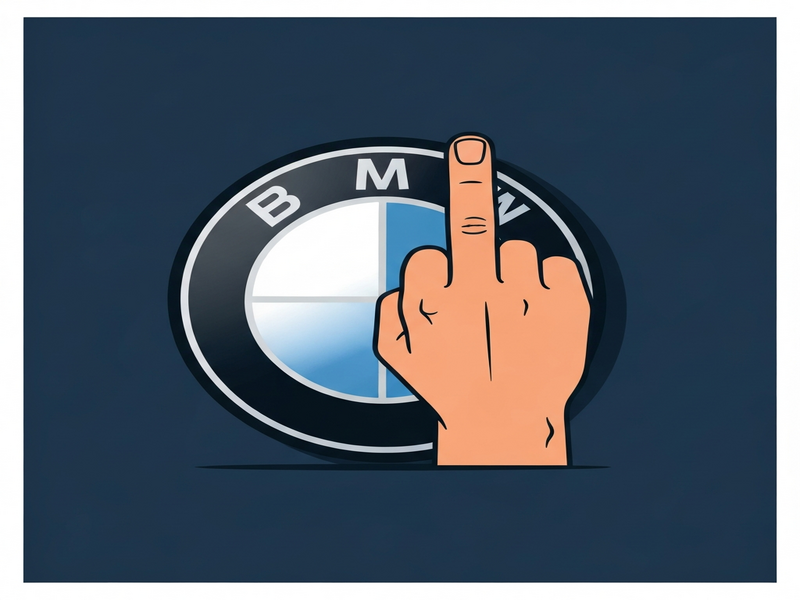
In a move that feels more like a branding stunt than an engineering breakthrough, BMW has introduced a proprietary security screw whose head mirrors the iconic round‑elbow logo. The design, which resembles a “middle‑finger” to the right‑to‑repair community, is explicitly patented to prevent standard tools from loosening or tightening it. For DIY car enthusiasts, this means another hurdle on the path to independent maintenance.
The Right‑to‑Repair Movement: A Brief Overview
The right‑to‑repair movement began as a response to manufacturers locking consumers out of their own products. From smartphones to farm equipment, legislation in the U.S., EU, and Australia now pushes for mandatory access to repair manuals, diagnostic tools, and spare parts. Automotive enthusiasts have been at the forefront, arguing that vehicle owners should be able to perform routine maintenance—oil changes, brake pad replacements, or battery swaps—without a dealer’s permission.
Key milestones include:
- 2020: The EU’s Ecodesign Directive required manufacturers to make spare parts available for up to 10 years.
- 2022: Massachusetts passed the first U.S. “Right‑to‑Repair” law for automobiles.
- 2023‑2024: A wave of state‑level bills targeting “proprietary screws” and “software locks” entered legislatures.
Despite progress, many automakers continue to embed anti‑repair mechanisms. BMW’s latest screw is a textbook example of how design can be weaponized against the DIY community.
Inside BMW’s Proprietary Security Screw and Patent
BMW filed a patent (WO2025/018945) that describes a “fastening element with a logo‑shaped head” intended to prevent being loosened or tightened by unauthorized individuals (see Section [0006] of the filing). The key technical details are:
- Logo‑shaped head: The screw head replicates the BMW round‑elbow emblem, making it incompatible with standard Torx, Hex, or Phillips bits.
- Reduced torque tolerance: The geometry sacrifices mechanical strength for brand visibility, causing standard bits to strip or break under normal torque.
- Patented dimensions: Exact measurements are disclosed, enabling third parties to 3D‑print matching bits—though this requires specialized equipment.
BMW’s own marketing frames the screw as a “security feature” to protect vehicle integrity. In reality, the design functions as a gatekeeper, nudging owners toward dealership service contracts.
What This Means for DIY Enthusiasts and Independent Shops
For the average car owner, the immediate impact is simple: a standard toolbox is now useless for a handful of routine tasks—such as replacing a brake caliper or accessing a battery module—if those components are secured with the logo‑shaped screw.
Independent repair shops face a different set of challenges:
- Increased labor time: Technicians must order specialized tools or resort to destructive methods, inflating repair costs.
- Supply‑chain friction: OEM‑only tools are often sold at premium prices, limiting the profitability of small garages.
- Legal exposure: Some jurisdictions consider bypassing proprietary fasteners a violation of intellectual property, creating legal gray areas.
These barriers directly contradict the spirit of the original iFixit report that highlighted the screw as a “middle‑finger” to the repair community.
How BMW’s Approach Stacks Up Against Competitors
BMW is not alone in using proprietary fasteners. Below is a quick comparison of major automakers:
| Manufacturer | Fastener Type | Public Reaction |
|---|---|---|
| BMW | Logo‑shaped proprietary screw | Widespread criticism; seen as a branding stunt |
| Apple (iPhone) | Pentalobe screws | Long‑standing debate; third‑party tools now common |
| Tesla | Custom Torx‑plus screws & software locks | Legal battles over software updates and parts access |
| Ford | Standard Torx with proprietary software | Less hardware‑centric, but still restrictive via software |
While many brands rely on software restrictions, BMW’s hardware‑only approach is a stark reminder that physical design can be just as effective at limiting repair freedom.
What You Can Do: Leverage UBOS Tools to Navigate the Repair Landscape
Facing a proprietary screw doesn’t have to mean surrendering to the dealer. UBOS offers a suite of AI‑powered resources that empower DIYers and small shops to stay ahead of manufacturer roadblocks.
- Explore the UBOS homepage for a quick overview of AI‑driven repair guides.
- Get a holistic view of the platform with the UBOS platform overview, which includes step‑by‑step tutorials for creating custom diagnostic tools.
- Start a project with pre‑built templates like the UBOS templates for quick start, ideal for building a repair‑assistant chatbot.
- For startups aiming to disrupt the automotive service market, see how UBOS for startups can accelerate development.
- SMBs can benefit from UBOS solutions for SMBs, which include low‑cost automation of parts ordering.
- Leverage the Workflow automation studio to design a custom workflow that flags proprietary fasteners and suggests alternative tools.
- Use the Web app editor on UBOS to build a searchable database of repair manuals that comply with emerging repair legislation.
- Check out the UBOS pricing plans to find a tier that fits your budget, whether you’re an individual hobbyist or a multi‑shop franchise.
- Browse real‑world case studies in the UBOS portfolio examples to see how other users have tackled similar OEM restrictions.
- Boost your marketing with AI marketing agents that can promote your repair services to a wider audience.
Additionally, UBOS’s marketplace offers ready‑made AI applications that can streamline your repair workflow:
- AI Article Copywriter – generate clear service reports for customers.
- AI SEO Analyzer – ensure your shop’s website ranks for “BMW repair” and “right to repair”.
- AI Video Generator – create quick tutorial videos on how to bypass proprietary screws safely.
- AI Chatbot template – set up a 24/7 support bot that answers “Can I replace this BMW screw myself?”
- Keywords Extraction with ChatGPT – discover the most searched repair queries to tailor your content.
By integrating these tools, you can transform a restrictive hardware design into an opportunity to showcase expertise, attract customers, and champion the right‑to‑repair cause.
Conclusion: A Branding Gimmick That Fuels the Repair Debate
BMW’s logo‑shaped middle‑finger screw is more than a novelty; it’s a deliberate barrier that underscores the growing clash between OEM control and consumer autonomy. While the right‑to‑repair movement continues to gain legislative traction, manufacturers like BMW are still finding ways to protect their revenue streams through clever engineering.
For DIY enthusiasts, the message is clear: stay informed, leverage community‑driven solutions, and use AI‑powered platforms like UBOS to circumvent unnecessary roadblocks. The battle over who gets to fix what is far from over, but with the right tools and knowledge, the middle finger can be turned into a fist of resistance.
Ready to take control of your BMW repairs? Visit the UBOS homepage and start building your own repair assistant today.