

- Updated: February 23, 2026
- 6 min read
Anthropic Claude Faces Defense Secretary Scrutiny Over Military AI and Supply‑Chain Risk
U.S. Defense Secretary Flags Anthropic’s Claude as Potential Supply‑Chain‑Risk, Raising Military AI Concerns
Answer: The U.S. Defense Secretary has warned that Anthropic’s Claude could be designated a supply‑chain‑risk, a move that would jeopardize the company’s $200 million Pentagon contract and force the military to rethink its AI strategy.
Background on Anthropic and Claude
Anthropic, founded in 2020 by former OpenAI researchers, positions itself as a “human‑centered” AI lab. Its flagship model, Claude, is marketed as a safer, more steerable alternative to other large language models (LLMs). Since its launch, Claude has been integrated into a range of commercial products, from customer‑support bots to data‑analysis assistants.
In June 2025, the Department of Defense (DoD) awarded Anthropic a AI policy-aligned contract worth $200 million to explore “trusted AI” for mission‑critical tasks. The agreement allowed the Pentagon to test Claude in simulated environments, including a high‑profile special‑operations raid that reportedly used the model for real‑time intelligence synthesis.
Defense Secretary’s Concerns and the Threat of a Supply‑Chain‑Risk Designation
On February 23, 2026, Defense Secretary Pete Hegseth summoned Anthropic CEO Dario Amodei to the Pentagon for a closed‑door briefing. According to the original TechCrunch story, Hegseth’s agenda centered on three non‑negotiable demands:
- Allow the DoD unrestricted access to Claude for “mass‑surveillance”‑type analytics.
- Enable autonomous weapon‑targeting capabilities without a human‑in‑the‑loop.
- Accept a formal “supply‑chain‑risk” label that would subject Anthropic to the same restrictions applied to foreign adversaries.
The “supply‑chain‑risk” label is a legal designation under the National Defense Authorization Act that forces federal agencies to treat a vendor as a potential security threat. If applied to Anthropic, the company would lose its DoD contract, and any other agency using Claude would be required to discontinue the service.
“We are at a crossroads where the government’s need for cutting‑edge AI collides with the industry’s ethical guardrails,” Hegseth told reporters after the meeting. “Either we cooperate, or we lose a critical capability.”
Implications for Military AI Use
The potential designation has far‑reaching consequences for how the U.S. military adopts AI:
1. Contractual Uncertainty
Existing contracts with Anthropic could be terminated overnight, forcing the DoD to scramble for alternative LLM providers. Re‑negotiating a $200 million deal with a new vendor would likely take 12‑18 months, a timeline at odds with the rapid pace of AI development.
2. Technological Fragmentation
A supply‑chain‑risk label would push the Pentagon to diversify its AI stack, potentially integrating multiple models (e.g., OpenAI’s GPT‑4, Google’s Gemini) to avoid single‑point failures. While diversification reduces risk, it also complicates interoperability and data‑sharing across services.
3. Ethical and Legal Precedents
Labeling a domestic AI firm as a “risk” sets a precedent for future government‑industry negotiations. It could trigger a wave of compliance demands, such as mandatory source‑code audits, data‑localization clauses, and stricter export controls on AI‑generated content.
4. Impact on Innovation
Start‑ups and research labs may view the Pentagon’s stance as a deterrent, slowing the flow of cutting‑edge AI into defense applications. Conversely, it could accelerate the development of “government‑grade” AI platforms that meet stringent security standards from day one.
Policy Context: Why the Pentagon Is Raising the Alarm
The DoD’s concern is not merely about Claude’s capabilities but about the broader Anthropic analysis of AI supply chains. Recent congressional hearings highlighted three risk vectors:
- Data provenance: Claude is trained on massive, publicly sourced datasets, some of which may contain classified or sensitive information.
- Model transparency: Anthropic’s “black‑box” architecture makes it difficult for auditors to verify that the model does not embed hidden biases or malicious code.
- Vendor concentration: Relying heavily on a single AI provider creates a strategic vulnerability if the vendor faces a cyber‑attack or political pressure.
These concerns align with the Enterprise AI platform by UBOS, which emphasizes modular, auditable AI components that can be swapped without disrupting mission‑critical workflows.
How UBOS Solutions Fit Into the Emerging Landscape
UBOS offers a suite of tools that directly address the Pentagon’s pain points:
- UBOS platform overview – a low‑code environment that lets agencies build custom AI pipelines with built‑in compliance checks.
- Workflow automation studio – enables rapid orchestration of multiple LLMs, reducing reliance on any single vendor.
- UBOS templates for quick start – pre‑validated AI use‑case templates for intelligence analysis, threat detection, and automated reporting.
- AI policy resources – guidance on aligning AI deployments with federal regulations and ethical standards.
For example, the “AI SEO Analyzer” template demonstrates how UBOS can ingest unstructured data, apply a trusted LLM, and output actionable insights—all while logging provenance metadata for auditability.
Strategic Recommendations for Defense Stakeholders
Given the volatile environment, defense analysts should consider the following actionable steps:
- Conduct a rapid risk assessment: Map all current Claude‑dependent workflows and evaluate the impact of a supply‑chain‑risk designation.
- Prototype multi‑model pipelines: Use UBOS’s Web app editor on UBOS to prototype fallback models (e.g., Gemini, GPT‑4) that can be swapped in seconds.
- Implement provenance logging: Leverage UBOS’s built‑in audit trails to capture data sources, model versions, and inference timestamps for every mission‑critical decision.
- Engage with policy makers: Align internal AI governance with the latest AI policy frameworks to pre‑empt regulatory push‑back.
- Invest in talent: Upskill analysts on low‑code AI development platforms like UBOS, reducing dependence on external vendor engineers.
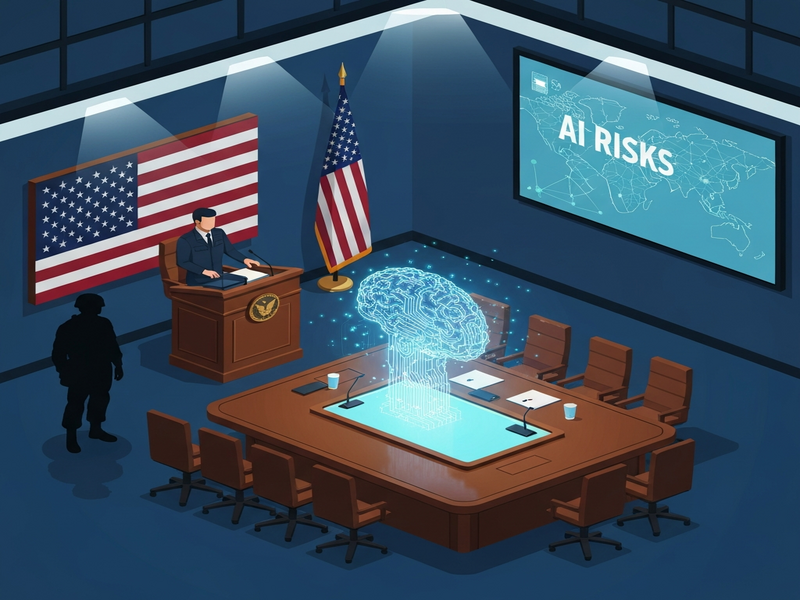
Visual Insight
Meta‑Description Suggestion
“U.S. Defense Secretary Pete Hegseth warns that Anthropic’s Claude may be labeled a supply‑chain‑risk, threatening a $200 million Pentagon contract and reshaping military AI strategy. Learn the policy backdrop, implications, and how UBOS’s low‑code AI platform can help the defense sector navigate the crisis.”
Conclusion
The possible supply‑chain‑risk designation of Anthropic’s Claude marks a pivotal moment for AI in national security. While the Defense Secretary’s hardline stance underscores legitimate concerns about data provenance, model transparency, and vendor concentration, it also forces the Pentagon to accelerate the adoption of modular, auditable AI architectures.
Platforms like UBOS partner program and the broader ecosystem of low‑code AI tools provide a pragmatic pathway to mitigate risk, maintain operational tempo, and stay compliant with emerging AI policy standards.
For tech‑savvy professionals, AI policy makers, and defense analysts, the takeaway is clear: diversify your AI stack, embed provenance, and leverage flexible platforms that can pivot quickly when political winds shift. The future of military AI will be defined not just by model performance, but by the resilience of the supply chain that delivers it.