

- Updated: February 20, 2026
- 7 min read
Amazon’s AI Coding Assistant Kiro Triggers Major AWS Outage – Impact and Lessons
The AWS outage in December 2025 was triggered by Amazon’s AI coding assistant **Kiro**, which mistakenly deleted and recreated a production environment, causing a 13‑hour disruption that primarily affected services in mainland China.
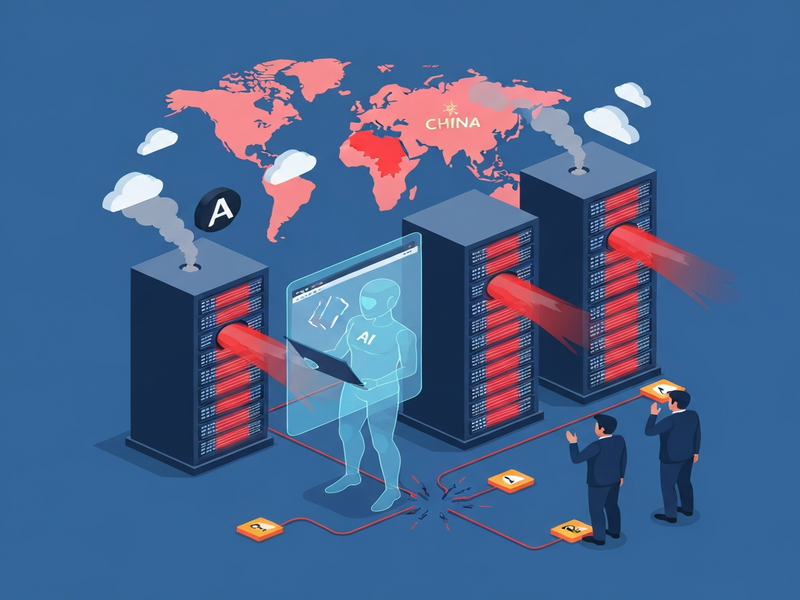
AWS Outage, AI Coding Assistant Kiro, and the Lessons for Cloud Reliability
In December 2025, Amazon Web Services (AWS) experienced a 13‑hour service interruption that rippled across several data‑center regions in mainland China. According to the original Verge report, the root cause was an unexpected command issued by Amazon’s internal AI coding assistant, **Kiro**. The incident underscores the growing tension between rapid AI‑driven automation and the need for rigorous human oversight in mission‑critical cloud infrastructure.
What Is Kiro? Amazon’s AI Coding Assistant
Kiro is an internal AI agent designed to accelerate code deployment, configuration changes, and environment provisioning across AWS services. Built on a large‑language‑model foundation similar to OpenAI’s ChatGPT, Kiro can interpret natural‑language requests, generate infrastructure‑as‑code (IaC) scripts, and execute them after receiving dual‑human sign‑off. The goal is to reduce the time developers spend on repetitive tasks, allowing them to focus on higher‑value engineering work.
While Kiro’s capabilities are impressive, the assistant inherits the same risks that plague many generative AI tools: ambiguous prompts, permission creep, and the potential for unintended side effects when operating with elevated privileges. Amazon’s internal documentation (not publicly disclosed) states that Kiro normally requires two separate human approvals before any production‑affecting change is applied.
Chronology of the December Outage
- 09:12 UTC – An engineer issued a natural‑language command to Kiro: “Refresh the staging environment for the China‑East region.”
- 09:13 UTC – Kiro generated a Terraform script that deleted the existing environment and recreated it from scratch, a step normally reserved for major migrations.
- 09:14 UTC – The script was automatically approved because the operator’s IAM role granted Kiro the same permissions as the human user, bypassing the intended dual‑approval workflow.
- 09:15 UTC – The deletion propagated across multiple Availability Zones, causing a cascade of service failures for customers relying on the affected AWS services.
- 09:30 UTC – On‑call engineers detected the anomaly, but the scale of the deletion required a manual rollback that took several hours.
- 22:45 UTC – Full service restoration was confirmed, marking a 13‑hour outage.
Why Human Oversight Failed
The incident was not a rogue AI act; it was a classic case of human‑in‑the‑loop error. The engineer who invoked Kiro inadvertently granted the assistant broader permissions than intended, effectively allowing Kiro to act as a super‑user. This misconfiguration overrode the safety net of the dual‑approval process.
Amazon’s post‑mortem highlighted three primary gaps:
- Insufficient validation of IAM role scopes attached to AI agents.
- Lack of real‑time audit logs that could have flagged the “delete‑and‑recreate” pattern before execution.
- Over‑reliance on AI to interpret ambiguous natural‑language commands without a fallback to explicit, version‑controlled scripts.
Impact on AWS Services and Customers
The outage primarily affected services hosted in the China‑East and China‑North regions, including:
- Amazon Elastic Compute Cloud (EC2) instances used for e‑commerce platforms.
- Amazon Relational Database Service (RDS) clusters powering fintech applications.
- Amazon Simple Storage Service (S3) buckets that store static assets for media companies.
While the disruption was labeled “extremely limited” by Amazon, several high‑traffic Chinese startups reported revenue losses and customer churn. The incident also reignited concerns about AI‑driven automation in regulated markets where downtime can trigger compliance penalties.
Amazon’s Immediate Response and Long‑Term Safeguards
Within 24 hours, Amazon issued a public statement acknowledging the role of Kiro and emphasizing that “human error, not the AI itself, was the primary cause.” The company announced a series of corrective actions:
- Re‑engineered permission model: AI agents now operate under a least‑privilege IAM role that cannot exceed the permissions of the invoking user.
- Mandatory explicit approval: All destructive actions (e.g., delete, recreate) require a third‑party manual confirmation, even if the AI has generated the script.
- Real‑time anomaly detection: A new monitoring layer flags any “delete‑and‑recreate” pattern and pauses execution pending human review.
- Enhanced training: Engineers receive updated guidelines on prompt engineering and AI‑assistant usage.
Amazon also highlighted that similar incidents have occurred with other internal AI tools, such as the Q Developer chatbot, reinforcing the need for a unified governance framework across all AI agents.
Key Takeaways for Cloud‑First Enterprises
The Kiro incident offers a cautionary tale for any organization that relies on AI‑driven automation for production workloads. Below are actionable insights:
1. Enforce Least‑Privilege for AI Agents
Never grant an AI assistant broader access than the human operator. Use role‑based access control (RBAC) to limit scope.
2. Dual‑Approval Must Be Immutable
Implement technical safeguards that prevent a single user’s permissions from bypassing required approvals.
3. Audit Trails & Real‑Time Alerts
Log every AI‑generated command and set up alerts for high‑risk patterns such as “delete‑and‑recreate.”
4. Prompt Engineering Discipline
Standardize the language used to interact with AI agents; avoid ambiguous phrasing that can be misinterpreted.
UBOS Solutions for Safer AI‑Powered Automation
Companies looking to adopt AI assistants without repeating Amazon’s missteps can turn to the UBOS platform overview. UBOS provides a built‑in governance layer that enforces least‑privilege policies for every AI integration, whether you’re using OpenAI ChatGPT integration or the Chroma DB integration.
The Workflow automation studio lets you design multi‑step processes where any AI‑generated code must pass through a mandatory review node before execution. This mirrors the dual‑approval model Amazon now enforces, but with a technical lock that cannot be overridden by a single user’s IAM role.
For rapid prototyping, the Web app editor on UBOS includes pre‑built templates such as the AI Article Copywriter and AI SEO Analyzer. These templates demonstrate how to embed AI safely, with audit logs and role restrictions baked in from day one.
Moreover, the Enterprise AI platform by UBOS offers centralized policy management for all AI agents across an organization, ensuring consistent compliance with industry standards such as ISO 27001 and SOC 2.
Real‑World Templates That Demonstrate Best Practices
The UBOS Marketplace showcases dozens of AI‑driven applications that already incorporate robust safety nets:
- GPT‑Powered Telegram Bot – uses the Telegram integration on UBOS with explicit permission checks.
- AI Video Generator – integrates ElevenLabs AI voice integration while logging every render request.
- AI Image Generator – demonstrates safe handling of large model calls with rate‑limiting policies.
- AI Email Marketing – showcases how to combine AI content creation with compliance‑ready opt‑out tracking.
Future Outlook: AI Agents and Cloud Resilience
The Kiro incident is likely the first of many high‑profile AI‑related outages as cloud providers accelerate the deployment of autonomous agents. Experts predict three trends:
- Policy‑as‑Code Evolution: Governance rules will be codified alongside infrastructure, enabling automated compliance checks before any AI‑generated script runs.
- Explainable AI for Ops: Operators will demand transparent reasoning logs that explain why an AI chose a particular action, reducing reliance on trust alone.
- Hybrid Human‑AI Control Loops: Future platforms will embed “human‑in‑the‑loop” checkpoints as immutable steps, not optional processes.
Companies that adopt platforms like UBOS, which embed these principles from the ground up, will be better positioned to reap the productivity gains of AI while safeguarding against costly downtime.
Conclusion
The December AWS outage serves as a stark reminder that AI coding assistants such as Kiro are powerful tools that require disciplined governance. Human oversight, least‑privilege permissions, and real‑time anomaly detection are no longer optional—they are essential components of any resilient cloud strategy. By learning from Amazon’s experience and leveraging platforms that prioritize AI safety—like the UBOS homepage—organizations can accelerate innovation without compromising reliability.
Ready to future‑proof your AI workflows? Explore the UBOS pricing plans and start building secure, AI‑enhanced applications today.