

- Updated: January 4, 2026
- 6 min read
Aliro Smart Lock Standard Launches 2026, Uniting UWB and NFC for Seamless Access
Aliro smart lock, the new cross‑platform standard that unifies UWB technology and NFC unlocking, launches in Q1 2026, promising seamless access for iOS, Android, and wearables without cloud dependence.
Aliro Smart Lock Standard Takes Off in 2026
After years of development by the Connectivity Standards Alliance (CSA), the original Verge article confirmed that the Aliro specification will be publicly available early this year. The standard defines a unified credential and communication protocol that lets trusted smartphones, smartwatches, and other wearables act as digital keys for any Aliro‑certified lock.
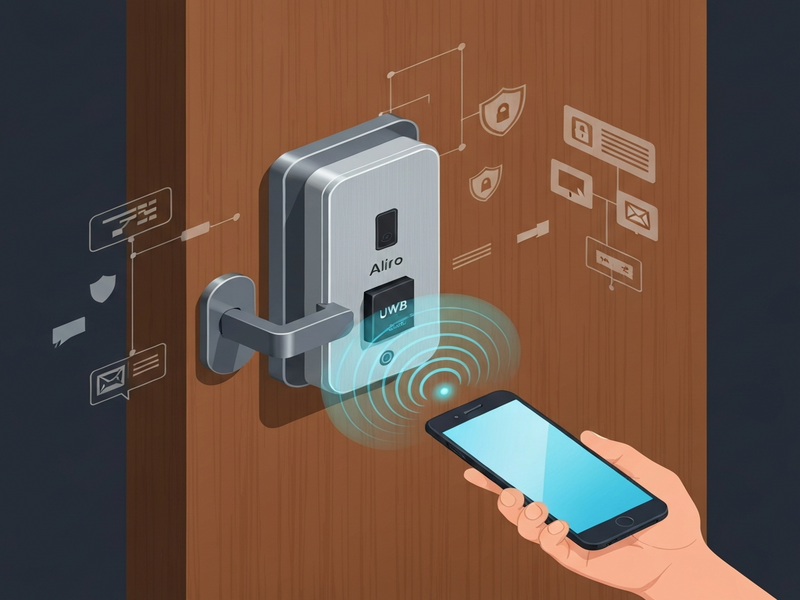
Technical Overview: UWB, NFC, and BLE in One Protocol
The Aliro 1.0 specification bundles three wireless technologies into a single, interoperable stack. Each technology serves a distinct use case, ensuring both convenience and redundancy.
UWB Technology – Precise, Hands‑Free Access
Ultra‑Wideband (UWB) provides centimeter‑level ranging, enabling a phone to unlock a door the moment the user approaches. Unlike Bluetooth, UWB does not rely on signal strength alone; it measures time‑of‑flight, making it resistant to relay attacks.
- Range: up to 3 meters with sub‑10 cm accuracy.
- Low latency: unlock within 200 ms of arrival.
- Energy‑efficient: UWB technology details show power draw comparable to BLE.
NFC Unlocking – Tap‑to‑Open Simplicity
Near‑Field Communication (NFC) remains the most straightforward method: a quick tap of the phone or smartwatch against the lock surface triggers an encrypted credential exchange.
- Compatibility: works on any NFC‑enabled device, including older Android phones.
- Security: credentials are stored locally and never transmitted to the cloud.
- Speed: unlock in under 150 ms.
- For a deeper dive, see our NFC unlocking guide.
BLE Fallback – Universal Connectivity
Bluetooth Low Energy (BLE) acts as a reliable fallback when UWB or NFC are unavailable. It initiates a secure handshake, then transmits the same asymmetric‑encrypted credentials used by the other channels.
| Feature | UWB | NFC | BLE |
|---|---|---|---|
| Range | 0‑3 m (precise) | 0‑4 cm (tap) | 0‑10 m |
| Latency | ≈200 ms | ≈150 ms | ≈300 ms |
| Power Use | Low | Very Low | Low‑Medium |
| Device Support | iPhone 15+, Galaxy S23+, Pixel 7+ | All NFC phones | All BLE‑capable devices |
Industry Collaboration and Supported Devices
Aliro is not a single‑vendor effort; it is a coalition of the world’s biggest ecosystem players:
- Apple, Google, and Samsung – providing the mobile side of the protocol.
- Lock manufacturers such as Schlage, Kwikset, Level, Nuki, and X‑Things/U‑Tec – delivering hardware that meets the radio and antenna requirements.
- Chip makers Qualcomm and NXP – supplying the UWB and NFC transceivers that power the standard.
Because the specification is open, any lock that integrates the required radios can become Aliro‑certified. Early adopters have announced roadmaps for 2026 releases, and the CSA expects a certification program to be live by Q2 2026.
Security and Privacy Architecture
Aliro’s security model is built around three core principles: local credential storage, asymmetric encryption, and zero‑trust communication.
Local Credential Storage
Digital keys are generated on the device and never leave it. The lock only receives a signed, one‑time use token that is valid for a single unlock event.
Asymmetric Encryption
Each lock holds a public key; each device holds the matching private key. The exchange is performed over a secure channel, preventing man‑in‑the‑middle attacks.
Zero‑Trust Communication
No cloud servers mediate the handshake. Even if the phone is offline, the lock can verify the token locally, ensuring access when cellular or Wi‑Fi is unavailable.
These measures align with the CSA’s claim that “Aliro works even when your phone is offline,” a key differentiator from many proprietary solutions that rely on cloud validation.
Market Impact and Adoption Timeline
Analysts predict that Aliro will accelerate smart‑lock adoption across three market segments:
- Consumer Smart Homes: By 2027, at least 30 % of new smart‑lock installations are expected to be Aliro‑compatible, driven by the convenience of cross‑platform unlocking.
- Enterprise Access Control: Offices and co‑working spaces will adopt Aliro for its zero‑trust model, reducing reliance on badge readers and central servers.
- IoT Developers: The open API and SDKs released alongside the standard will enable rapid prototyping of custom access solutions, especially in the UBOS for startups ecosystem.
Key milestones:
- Q1 2026 – Public release of Aliro 1.0 specification.
- Q2 2026 – Certification program opens; first batch of certified locks ships.
- Q4 2026 – Major OEMs (Schlage, Kwikset) roll out Aliro‑enabled models.
- 2027 – Broad adoption in enterprise access control platforms.
Quote from Aliro Steering Committee
“We’re delighted to bring a truly open, cross‑platform credential system to the market. Aliro’s blend of UWB precision, NFC simplicity, and BLE reliability gives users the freedom to choose any device as a key, without sacrificing security.” – Nelson Henry, Chair of the Aliro Steering Committee
How UBOS Accelerates Aliro Integration
Developers building on the UBOS platform overview can leverage pre‑built modules that speak the Aliro protocol out of the box. Below are three UBOS services that simplify deployment:
- Workflow Automation Studio: Create automated provisioning flows that issue digital keys to new users as soon as they are added to your directory. (Workflow automation studio)
- Web App Editor on UBOS: Build a custom portal where residents can manage their Aliro credentials, view access logs, and revoke keys instantly. (Web app editor on UBOS)
- AI Marketing Agents: Promote your new Aliro‑enabled lock line with AI‑generated campaigns that target tech‑savvy homeowners. (AI marketing agents)
For businesses evaluating cost, the UBOS pricing plans include a developer tier that grants unlimited API calls to the Aliro SDK, making large‑scale rollouts affordable.
Call to Action: Explore, Test, and Deploy
Ready to future‑proof your access control?
- Visit the UBOS homepage to request a free sandbox environment.
- Check out our UBOS templates for quick start, including a ready‑made Aliro integration template.
- Join the UBOS partner program to receive co‑marketing support and early‑access hardware kits.
- Read the UBOS portfolio examples to see how other companies have leveraged Aliro for secure, frictionless entry.
For developers who want to experiment with AI‑enhanced access, explore our AI Chatbot template or the GPT‑Powered Telegram Bot to create voice‑controlled door unlock commands.
Conclusion
The Aliro smart lock standard marks a pivotal moment for the IoT security landscape. By unifying UWB, NFC, and BLE under a single, open protocol, it eliminates platform lock‑in, boosts privacy, and paves the way for a truly interoperable smart‑home ecosystem. As manufacturers roll out certified devices throughout 2026, early adopters—both consumers and enterprises—will reap the benefits of faster, safer, and more convenient access.
Stay ahead of the curve by integrating Aliro with UBOS’s low‑code tools, and watch your smart‑lock deployments become the benchmark for next‑generation security.