

- Updated: January 2, 2026
- 6 min read
AI Trends 2026: Agents, Generative AI, World Models, and Physical AI Revolution
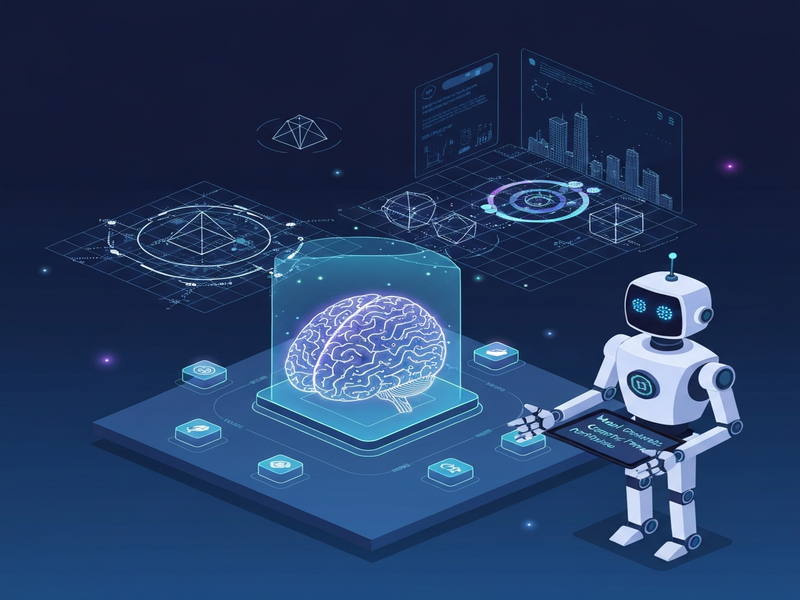
In 2026 AI is moving from hype to pragmatism, with the industry prioritizing smaller fine‑tuned models, 3‑D world models, reliable agents powered by the Model Context Protocol, and physical AI devices that solve real‑world problems.
The shift is documented in a recent TechCrunch analysis that outlines how AI research is leaving the era of ever‑larger language models and embracing practical, deployable solutions. For technology enthusiasts, product managers, and business leaders, understanding these trends is essential to stay competitive.
Shift from Hype to Pragmatism – An Overview
After a decade dominated by scaling laws and massive transformer models, the AI community now acknowledges diminishing returns on sheer size. Visionaries like Yann LeCun and Ilya Sutskever argue that new architectures are required to break the performance plateau. The focus has turned to:
- Deployable, domain‑specific models that run on edge hardware.
- Systems that understand and interact with the physical world.
- Agents that can reliably integrate with existing enterprise tools.
Companies that adapt quickly will benefit from lower compute costs, faster time‑to‑market, and stronger alignment with user workflows. UBOS, for example, offers an UBOS homepage that showcases a suite of tools designed for this pragmatic era.
Smaller, Fine‑Tuned Models & New Architectures
The “small‑model” movement is gaining traction because fine‑tuned language models (SLMs) can match or exceed the accuracy of larger, generic LLMs for specific tasks while consuming a fraction of the resources. Enterprises are now training models that fit on a single GPU or even on‑device CPUs, enabling real‑time inference without cloud latency.
New architectural ideas—such as mixture‑of‑experts, sparse attention, and modular transformers—allow developers to allocate compute only where it matters. This results in:
- Reduced inference cost (up to 70% savings).
- Improved data privacy by keeping sensitive data on‑premise.
- Faster iteration cycles for product teams.
UBOS makes it easy to spin up these models through its UBOS platform overview, which includes pre‑built pipelines for fine‑tuning and deployment.
World Models for 3D Reasoning
Traditional LLMs excel at text prediction but lack an understanding of physical space. World models fill this gap by learning how objects move, interact, and evolve in three‑dimensional environments. Recent breakthroughs from DeepMind’s Genie and startups like General Intuition have demonstrated real‑time, interactive world modeling that can be leveraged for robotics, simulation, and immersive gaming.
The commercial potential is massive:
- Game developers can generate lifelike NPC behavior without hand‑crafted scripts.
- Robotics firms can train agents in simulated physics before real‑world deployment.
- Design tools can auto‑generate 3D prototypes from textual prompts.
UBOS’s UBOS templates for quick start include a “World Model Playground” that lets developers prototype 3‑D reasoning without writing a single line of code.
Reliable AI Agents & the Model Context Protocol
The hype around autonomous agents in 2025 fell short because most agents could not access the tools and data they needed to act. The Model Context Protocol (MCP), dubbed “USB‑C for AI,” solves this by standardizing how agents communicate with external APIs, databases, and even on‑premise services.
Major players—Anthropic, OpenAI, Microsoft, and Google—have adopted MCP, turning it into an industry‑wide lingua franca for agentic workflows. The result is a new generation of agents that can:
- Retrieve up‑to‑date information from internal knowledge bases.
- Execute transactions across SaaS platforms without human intervention.
- Maintain context across multi‑step tasks, improving reliability.
UBOS integrates MCP directly into its Workflow automation studio, allowing product teams to build end‑to‑end AI‑driven processes in minutes.
Rise of Physical AI & Hardware Integration
Physical AI is no longer a futuristic concept. Edge‑optimized models, combined with affordable sensors, are powering a new wave of devices: smart glasses, AI‑enhanced wearables, autonomous drones, and collaborative robots. These devices perform inference locally, reducing latency and preserving user privacy.
Notable trends include:
- AI‑powered health rings that continuously monitor vitals and provide actionable insights.
- Smart glasses that overlay contextual information on real‑world objects.
- Industrial robots that adapt to changing environments using on‑device world models.
Developers can prototype such hardware integrations using UBOS’s Web app editor on UBOS, which supports direct deployment to edge devices and IoT hubs.
Real‑World Product Applications and Industry Impact
The pragmatic AI wave is already reshaping multiple sectors:
Enterprise Knowledge Management
Companies are replacing generic chatbots with domain‑specific agents that pull from internal documents, CRM data, and ERP systems via MCP. This reduces support ticket resolution time by up to 40%.
Marketing Automation
AI marketing agents now generate personalized copy, optimize ad spend, and even produce short videos on the fly. UBOS’s AI agents library includes ready‑made templates such as the AI SEO Analyzer and AI Article Copywriter, enabling marketers to launch campaigns in hours instead of weeks.
Customer Support
By combining the Customer Support with ChatGPT API template and MCP, support desks can auto‑triage tickets, suggest resolutions, and hand off complex cases to human agents only when necessary.
Healthcare & Wearables
Wearable AI devices now run on‑device models that detect anomalies in heart rhythm or glucose levels, alerting users instantly. The AI Voice Assistant integration with ElevenLabs AI voice integration provides natural‑language feedback without sending data to the cloud.
Education & Knowledge Extraction
Tools like Summarize for a 2nd Grader and Create Study Notes with AI illustrate how smaller models can be fine‑tuned for pedagogical tasks, delivering concise explanations tailored to age groups.
Across these use cases, the common denominator is a shift toward modular, interoperable components that can be assembled quickly—exactly the promise of UBOS’s UBOS partner program, which offers co‑selling, technical enablement, and revenue sharing for solution providers.
Meta Description Suggestion
Discover how AI in 2026 is moving from hype to pragmatism with smaller fine‑tuned models, world models, reliable agents, and physical AI devices—plus real‑world product examples and UBOS solutions to accelerate adoption.
Ready to Build Pragmatic AI Solutions?
Whether you are a startup, an SMB, or an enterprise, UBOS provides the tools you need to turn these 2026 AI trends into revenue‑generating products.
- UBOS for startups – fast‑track your MVP with pre‑built AI modules.
- UBOS solutions for SMBs – scale AI without massive infrastructure.
- Enterprise AI platform by UBOS – secure, compliant, and ready for large‑scale deployments.
- UBOS pricing plans – transparent pricing that grows with you.
- AI marketing agents – automate copy, SEO, and video creation.
- Generative AI – explore cutting‑edge content generation.
- tech news – stay updated on the latest AI breakthroughs.
Jump in today and experience the future of AI—practical, reliable, and ready to deliver value.
Telegram integration on UBOS
ChatGPT and Telegram integration
OpenAI ChatGPT integration
Chroma DB integration
About UBOS
Talk with Claude AI app
AI Video Generator
AI Chatbot template
Andrii Bidochko
CTO UBOS
Andrii Bidochko is an AI entrepreneur and researcher focused on AI agents, reinforcement learning, and autonomous systems. He writes about the technologies shaping the future of machine intelligence, from frontier models and agent architectures to real-world AI applications.