

- Updated: March 28, 2026
- 7 min read
AI Shallow Learning Debate Sparks Discussion on Hacker News
AI makes shallow learning appear productive, but genuine expertise still demands deep, intentional study and practice.
Why the Hacker News thread matters
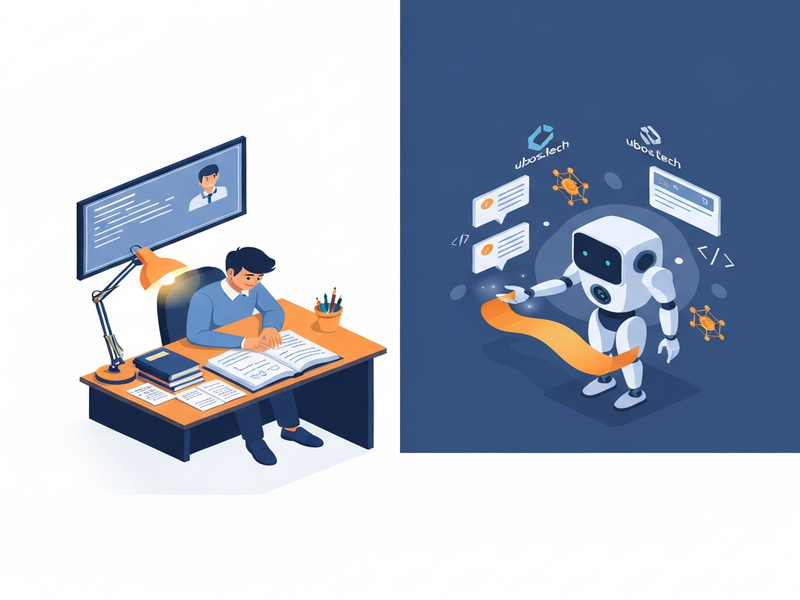
On Hacker News a lively discussion surfaced around the claim that large language models (LLMs) are turning “lazy” study habits into a veneer of productivity. Tech‑savvy professionals and AI enthusiasts are debating whether this trend is a harmless shortcut or a dangerous erosion of deep expertise.
The conversation is a microcosm of a broader industry shift: developers, researchers, and marketers now lean on AI for instant summaries, code snippets, and even strategic recommendations. While the speed boost is undeniable, many participants warn that the surface‑level gains can mask a loss of critical thinking, problem‑solving stamina, and long‑term retention.
Key takeaways from the Hacker News thread
- LLMs excel at distilling papers, docs, and code into bite‑size summaries, making it easy to “talk about” a topic without truly mastering it.
- Several commenters argue that this “shallow learning” feels productive because it reduces friction—yet the knowledge often evaporates after a few days.
- Opposing voices highlight that AI can serve as a tutor, prompting deeper inquiry when used with disciplined questioning (“debate it with me,” “help me reason through it”).
- Community members stress the importance of maintaining a baseline of domain expertise to audit AI‑generated outputs.
- There is consensus that the future will reward those who blend rapid AI assistance with deliberate, hands‑on practice.
How AI amplifies shallow vs. deep learning
Mechanics of LLM summarization
LLMs parse massive corpora, extract salient sentences, and re‑phrase them in a concise style. This process is optimized for speed and readability, not for the nuanced reasoning that emerges from wrestling with a concept over weeks or months.
When a developer asks an AI to “summarize this research paper,” the model returns a high‑level overview that often omits the methodological subtleties, assumptions, and failure cases—elements that are essential for true comprehension.
Psychology of perceived productivity
Human brains reward quick wins. A ten‑minute AI‑generated summary triggers dopamine, reinforcing the habit of “getting things done.” Over time, the habit can replace the slower, more effortful practice of deep reading, leading to a false sense of mastery.
Social platforms amplify this illusion: sharing a concise AI‑generated insight on LinkedIn or X feels like thought leadership, even when the underlying understanding is superficial.
The danger lies not in the tool itself but in how it is integrated into daily workflows. When AI is treated as a “TikTok of learning,” the result is a rapid churn of half‑baked ideas that never mature into robust solutions.
Real‑world examples and community perspectives
Below are concrete scenarios where AI’s convenience can either mask shallow learning or, when used responsibly, deepen expertise.
1. Code generation and debugging
Developers frequently paste a function stub into an LLM and receive a ready‑made implementation. While this accelerates prototyping, many admit they skip the mental exercise of tracing algorithmic flow, which is crucial for future maintenance.
One community member shared a workflow: they generate code with the AI, then manually refactor and add unit tests, turning the AI output into a learning exercise. This disciplined approach mirrors the “debate it with me” strategy advocated in the thread.
2. Research summarization for product teams
Product managers often ask AI to “extract the key takeaways from the latest AI‑productivity paper.” The result is a bullet list that can be copied into a slide deck. However, without digging into the original methodology, teams may adopt strategies that are misaligned with their context.
To counteract this, some teams pair AI summaries with a dedicated AI insights session where members discuss gaps, ask follow‑up questions, and map findings to real‑world constraints.
3. Marketing copy and SEO
AI tools can churn out SEO‑optimized copy in seconds. While this boosts output volume, marketers who rely solely on AI risk producing generic content that lacks brand voice. A balanced workflow involves using AI for first drafts, then refining with human creativity.
Our AI marketing agents illustrate this hybrid model: the agent drafts, the human edits, and the final piece undergoes A/B testing.
4. Learning new frameworks (e.g., React, FastAPI)
New developers often ask an LLM for “quick start code” for a framework. The AI provides a skeleton, but without understanding the underlying lifecycle, the developer may struggle when bugs arise.
Platforms like the Web app editor on UBOS encourage users to edit generated code, add tests, and deploy, turning a shallow snippet into a deep learning loop.
5. Data‑pipeline automation
Data engineers use AI to auto‑generate ETL scripts. While this reduces boilerplate, the hidden complexity of data quality, schema evolution, and performance tuning can be overlooked.
Integrating AI with the Workflow automation studio forces engineers to validate each step, preserving the rigor of traditional pipeline design.
Bridging the gap: turning AI‑assisted shortcuts into deep learning opportunities
- Ask follow‑up questions. Instead of accepting a summary, request the model to “explain the assumptions behind this result” or “compare this approach with alternative X.”
- Implement before you accept. Write a minimal prototype based on the AI suggestion, then deliberately break it to discover edge cases.
- Document the reasoning. Keep a learning journal where you note what the AI said, what you verified, and where you diverged.
- Pair AI with peer review. Share AI‑generated artifacts with teammates for critique, ensuring a human sanity check.
- Leverage AI as a tutor, not a teacher. Use prompts like “teach me the intuition behind X in three steps” to coax the model into a more pedagogical mode.
When these habits become routine, the AI transforms from a “shallow shortcut” into a catalyst for deeper mastery.
Take the next step with UBOS
If you’re ready to embed disciplined AI practices into your workflow, explore the ecosystem that supports both rapid prototyping and rigorous validation.
- Start with the UBOS homepage to see the full suite of AI‑enabled tools.
- Learn about the company’s mission on the About UBOS page.
- Discover how the UBOS platform overview integrates LLMs, vector stores, and automation.
- For early‑stage innovators, the UBOS for startups track offers templates and mentorship.
- SMBs can benefit from the UBOS solutions for SMBs, which blend low‑code UI with AI‑driven insights.
- Enterprises looking for scale should evaluate the Enterprise AI platform by UBOS.
- Experiment with the Web app editor on UBOS to turn AI‑generated snippets into production‑ready code.
- Automate repetitive tasks using the Workflow automation studio.
- Review the UBOS pricing plans to find a tier that matches your usage.
- Browse real‑world case studies in the UBOS portfolio examples for inspiration.
- Kick‑start projects with ready‑made assets from the UBOS templates for quick start.
By pairing disciplined learning habits with UBOS’s AI‑first infrastructure, you can avoid the trap of “productive‑looking laziness” and truly accelerate expertise.
Conclusion
The Hacker News discussion highlights a pivotal moment: AI can either dilute our learning or amplify it, depending on how we choose to engage. Shallow learning feels productive because it reduces friction, but without intentional deep work the knowledge evaporates, leaving professionals vulnerable to skill decay.
Adopting a hybrid approach—leveraging AI for speed while enforcing rigorous, hands‑on verification—creates a virtuous cycle. As the AI landscape matures, the most successful engineers, researchers, and marketers will be those who turn “quick answers” into “lasting insight.”
Ready to make AI a true learning partner? Explore the resources above and start building bridges that stay up.
Andrii Bidochko
CTO UBOS
Andrii Bidochko is an AI entrepreneur and researcher focused on AI agents, reinforcement learning, and autonomous systems. He writes about the technologies shaping the future of machine intelligence, from frontier models and agent architectures to real-world AI applications.