Introduction
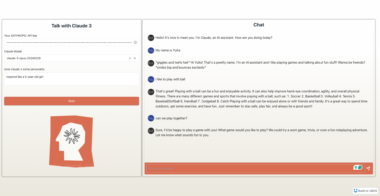
This is a simple chat sample, built upon Azure Function and the Serverless WebSocket feature of Azure SignalR Service.
Check the Live Demo
Run the Chat sample locally
Prerequisites
The following are required to run the Chat sample locally
- Node.js (Version 10.x, required for JavaScript sample)
- Visual Studio Code as the Function’s IDE
- Azure Functions Extension inside Visual Studio Code
- ngrok to expose local port to public
Configure application settings
When running and debugging the Azure Functions runtime locally, application settings are read from local.settings.json. Also, you can upload these settings to remote when you try to deploy Function App to Azure. Inside local.settings.json, replace the value of AzureSignalREndpoint and AzureSignalRAccessKey with the value from your ConnectionString of the Azure SignalR, the value of Endpoint= and AccessKey= respectively.
Run the Function locally
Open the folder [./chat/serverless] in VS Code, it contains a Function App host config so that with when press F5, the Azure Function extension detects the config and starts to run both home and messages Http Functions. The home Function http://localhost:7071/api/home is which to return the hosted web app, and the messages Function http://localhost:7071/api/messages is the Upstream we expect the Azure SignalR will invoke on every event. So next step is to expose this local port so that Azure SignalR is able to reach it. ngrok helps us to achieve this.
Inside the ngrok folder, type:
ngrok http 7071
From now on, ngrok forwards every request to http://(id).ngrok.io to http://localhost:7071.
Set the Upstreams for the Service
Now it is time to config the Upstream URL pattern inside Azure SignalR Service.
With this Private Preview version, we provide a REST API endpoint for you to set and get the Upstream settings of the Service. Please note that, later on, this endpoint will be removed when we support setting the Upstream from portal and Azure CLI.
We provide a simple web app https://ws-manage.azurewebsites.net/api/manage deployed for you to easily get and set the current Upstream settings of the service, with source code in this repo manage.
Put following into the Set Upstream text area to set the Upstream settings for the service.
{
    "templates": [
	{
        "urlTemplate": "http://(id).ngrok.io/api/messages?event={event}"
	}
    ]
}
Run the chat
Now visit http://localhost:7071/api/home?name=yourname and you are ready to chat locally.
Go through the demo code
There are two Functions inside this repo:
- The Function hosting the Chat’s static webpage
- The Function handling WebSocket requests
The Function hosting the Chat’s static webpage
The Chat’s webpage is quite simple, a static webpage is enough. It is based on pure html and the Vue.js JavaScript framework. What the function does in index.js is simply return the content of index.html, providing the Azure SignalR Serverless WebSocket endpoint value {AzureSignalREndpoint}/ws/client/hubs/chat. The following patterns are all valid while {hub} is required and {format} is optional with text as default value.
/ws/client?hub={hub}&format={text|binary}/ws/client/hubs/{hub}?format={text|binary}/ws/client/hubs/{hub}/formats/{text|binary}
To make the demo workflow simple, current auth info is read from request’s query name. AAD is also supported if AAD is configured for the Function App.
Configure the Upstreams for the WebSocket requests
You may’ve been noticed that no auth info is needed connecting to Azure SignalR Serverless WebSocket. It is the case when the connect UpstreamSettings
In the demo, we provide a workaround for setting the Upstream URL pattern as providing a claim as asrs.s.rfh and read the value from Environment variable UpstreamUrl, as for now the portal access is not yet ready. Later on, when Azure SignalR Service adds the ability to set the Upstream Settings from portal, this workaround will be obsoleted.
The Upstream URL pattern has 3 supported parameters, {event}, {hub}, {category}. These 3 parameters will be evaluated and replace dynamically in Azure SignalR for a single client request. For example, when a request /ws/client/hubs/chat comes in, with a configured Upstream URL pattern http://localhost:7071/api/messages?event={event}, when the client connects, it will first POST to this URL: http://localhost:7071/api/messages?event=connect.
| Event | {event} | {category} |
|---|---|---|
| Connect | connect | connections |
| Message | message | messages |
| Disconnect | disconnect | connections |
The Function handling WebSocket requests
Before the WebSocket connection is established, the connect event is triggered, providing the Function the ability to Auth the user or reject the user or select the subprotocol for the WebSocket connection. The subprotocol of the incoming request is set inside the header Sec-WebSocket-Protocol. As defined in the WebSocket spec, the header can be set multiple times, and the Function should be responsible for setting the response Sec-WebSocket-Protocol header of one selected protocol.
If the connect event returns success code, Azure SignalR Service will establish the real WebSocket connection with client. After that, every WebSocket frame triggers a HTTP request to the Upstream URL. The following headers are added by Azure SignalR Service so that the Function can read the info from the request headers:
X-ASRS-Hub:{hubname}X-ASRS-Category:connectionsX-ASRS-Connection-Id:{connection-id}X-ASRS-Event:connectX-ASRS-User-Id:{user-id}X-ASRS-User-Claims:{user-claims}X-ASRS-Signature:sha256={connection-id-hash-primary},sha256={connection-id-hash-secondary}X-ASRS-Client-Query-String?:{query-string}
In this Function, it reads payloads from the incoming request, the response of the incoming request will be delivered to the client by Azure SignalR service. Also, Azure SignalR Service provides REST APIs to handle the WebSocket connections:
- Broadcast messages:
POST /ws/api/v1/hubs/{hub} - Send message to user:
POST /ws/api/v1/hubs/{hub}/users/{id} - Send message to one connection:
POST /ws/api/v1/hubs/{hub}/connections/{connectionId} - Send message to group
POST /ws/api/v1/hubs/{hub}/groups/{group} - Close a connection
DELETE /ws/api/v1/hubs/chat/connections/a?reason=reason
Serverless WebSocket Chat Sample

Project Details
- vicancy/ws-serverless-sample
- Last Updated: 2/26/2025
Recomended MCP Servers
MCP server for Dynatrace Observability
A comprehensive MCP (Model Context Protocol) server for file system operations, providing Claude and other AI assistants with...
Experimental - Model Context Protocol (MCP) server for the Nylas API
壹心理测试+小程序源码
Flutter ChatGPT APP. The chatgpt chat app implemented by flutter supports custom modes and contextual continuous dialogue. In...
Post any message to any g_cat with that space webhook url
This is G_chat Mcp server written in Ts contain various tools fetch to post.
An MCP server that tracks the historical changes of Twitter usernames.
A Google Search MCP server that connects with LLMs or any MCP client to enable realtime search.
mcp_aidaily
Featured Templates
View More