

- Updated: February 23, 2026
- 5 min read
AI Investor Loyalty Erodes as VCs Back Both OpenAI and Anthropic
Answer: Investor loyalty in the AI sector has effectively vanished – dozens of leading venture capital firms are simultaneously funding OpenAI’s $100 billion round and Anthropic’s $30 billion raise, creating a new era of overlapping stakes and conflict‑of‑interest challenges for founders and startups.
The latest TechCrunch article reveals that at least a dozen prominent VCs have placed money in both OpenAI and Anthropic, two of the most powerful AI labs competing for talent, compute, and market share. This dual‑investment trend signals a seismic shift in how venture capital approaches the AI frontier.
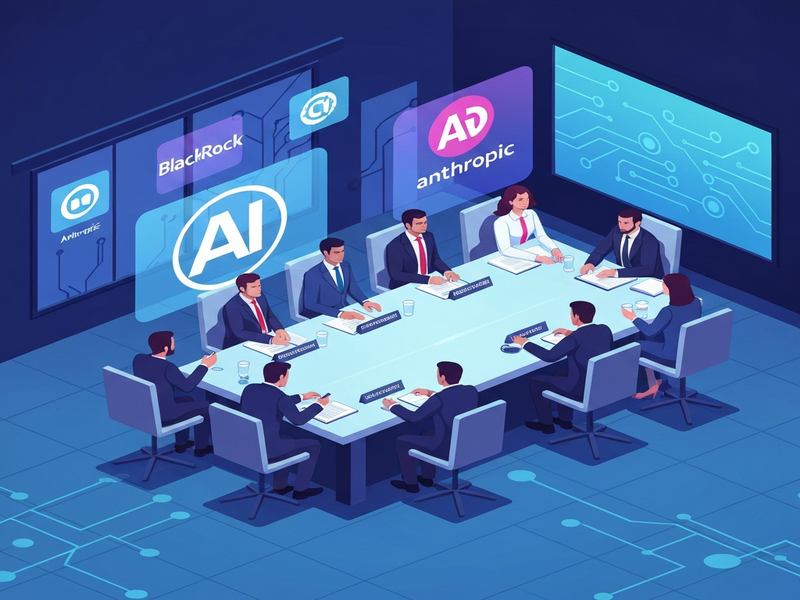
As the AI ecosystem balloons, the old rule that “VCs stay loyal to one AI champion” is crumbling. Below we break down the players, the motivations, and the ripple effects for every AI startup founder watching the market.
Dual Investments: Who’s Backing Both OpenAI and Anthropic?
The overlapping investor list reads like a who’s‑who of Silicon Valley’s deep‑pocketed firms:
- Founders Fund
- Iconiq Capital
- Insight Partners
- Sequoia Capital
- BlackRock‑affiliated funds
- Fidelity
- TPG
- D1 Capital
While some of these entities (e.g., Fidelity, TPG) traditionally manage public‑market assets, their venture arms are now treating AI as a “must‑have” exposure, regardless of competitive dynamics.
Notably, BlackRock’s senior managing director Adebayo Ogunlesi sits on OpenAI’s board, yet BlackRock‑linked funds participated in Anthropic’s raise. This illustrates how institutional investors can compartmentalize board influence from fund allocation, effectively sidestepping traditional loyalty expectations.
Why Venture Capitalists Are Doubling Down
The AI market’s capital intensity and upside potential dwarf most other tech sectors. VCs cite three core reasons for overlapping bets:
- Risk Mitigation: By holding stakes in both labs, investors hedge against the possibility that one model (e.g., GPT‑5) outperforms the other.
- Strategic Access: Dual exposure grants VCs privileged insight into two distinct research roadmaps, data pipelines, and partnership ecosystems.
- Scale of Returns: With OpenAI targeting a $100 billion valuation and Anthropic closing a $30 billion round, the upside on either side is massive enough to justify “portfolio‑level” investment.
As Enterprise AI platform by UBOS demonstrates, the demand for AI‑driven solutions is exploding across industries, reinforcing the belief that multiple AI powerhouses can coexist profitably.
Conflict‑of‑Interest Concerns: Board Seats, Fiduciary Duty, and Founder Trust
“When a VC sits on the board of two direct competitors, the line between strategic guidance and competitive leakage becomes blurry.” – Anonymous VC Analyst, 2026
Board Seats Amplify the Dilemma
Many of the overlapping investors also hold board positions at one or both companies. This creates a fiduciary tension: board members must act in the best interest of the specific company while simultaneously protecting the broader portfolio’s value.
Founder Perspective
Founder‑centric VCs have traditionally marketed themselves as “loyal allies.” The new reality forces founders to ask:
- Will my confidential product roadmap be shielded from a rival lab?
- Can I rely on a VC’s board seat to advocate for my interests when they also sit on a competitor’s board?
- What conflict‑of‑interest clauses should I negotiate into my term sheet?
As highlighted in the About UBOS page, transparency and clear governance structures are essential for maintaining trust in any partnership.
Implications for AI Startups and Founder Decision‑Making
The dual‑investment trend reshapes the strategic calculus for emerging AI companies in three key ways:
1. Re‑Evaluating Term Sheets
Founders should now scrutinize conflict‑of‑interest clauses more rigorously. Asking for “no‑board‑seat” commitments or “information‑barrier” provisions can protect proprietary data.
2. Diversifying Investor Base
Rather than relying on a single mega‑VC, startups may benefit from a mosaic of smaller investors who specialize in niche AI verticals (e.g., AI‑driven healthcare, AI‑powered finance). This reduces the risk of overlapping loyalties.
3. Leveraging Platform Tools
Platforms like the Workflow automation studio and the Web app editor on UBOS enable startups to prototype, test, and iterate without over‑relying on a single investor’s technical resources.
Moreover, the UBOS templates for quick start—such as the AI SEO Analyzer or the AI Article Copywriter—allow founders to accelerate go‑to‑market without heavy reliance on a single VC’s network.
What This Means for the Wider AI Investment Landscape
Erosion of Traditional Loyalty
The era where a VC “chooses a side” is fading. Institutional capital now views AI as a sector-wide growth engine, not a zero‑sum game. This shift could accelerate consolidation, as larger labs merge resources to stay ahead of the capital influx.
Potential for New Governance Models
To address conflict concerns, we may see the rise of “dual‑board” structures, independent advisory committees, or even AI‑driven compliance monitoring—areas where AI marketing agents could play a role in ensuring transparency.
Future Funding Outlook
With OpenAI’s $100 billion round and Anthropic’s $30 billion raise, the total AI‑focused capital in 2026 exceeds $130 billion. Expect more “dual‑investment” funds, especially from firms that manage both public‑market assets and venture portfolios.
Startups that can navigate this complex investor web—leveraging tools like the UBOS partner program and the UBOS pricing plans—will be best positioned to secure capital while preserving strategic independence.
Conclusion: Navigate the New Normal of AI Investor Loyalty
The dual‑investment phenomenon marks a turning point: AI investor loyalty is no longer a guarantee, but a strategic choice. Founders must demand clearer conflict‑of‑interest safeguards, diversify their capital sources, and adopt robust platform tools to stay competitive.
Ready to future‑proof your AI startup? Explore the AI investments hub, browse the latest startup news, and start building with the UBOS portfolio examples today.
By aligning with transparent partners and leveraging cutting‑edge AI development environments, you can turn the erosion of loyalty into a competitive advantage.
Andrii Bidochko
CTO UBOS
Andrii Bidochko is an AI entrepreneur and researcher focused on AI agents, reinforcement learning, and autonomous systems. He writes about the technologies shaping the future of machine intelligence, from frontier models and agent architectures to real-world AI applications.