

- Updated: February 6, 2026
- 6 min read
AI Helps Address Labor Shortages in Rare Disease Treatment – UBOS News
AI is rapidly mitigating labor shortages in rare‑disease drug discovery by automating data‑intensive tasks, accelerating target identification, and enabling scalable gene‑editing pipelines that would otherwise require thousands of highly specialized scientists.
Why labor shortages cripple rare‑disease drug discovery
Rare diseases affect an estimated 300 million people worldwide, yet fewer than 5% have FDA‑approved therapies. The bottleneck is not a lack of scientific insight but a chronic shortage of skilled personnel capable of navigating massive, multimodal datasets, synthesizing compounds, and performing intricate gene‑editing experiments. Traditional biotech pipelines rely on large teams of chemists, biologists, and data analysts, each contributing incremental value. When talent pools shrink—due to competitive hiring, geographic constraints, or the sheer complexity of the work—project timelines stretch from months to years, and costs skyrocket.
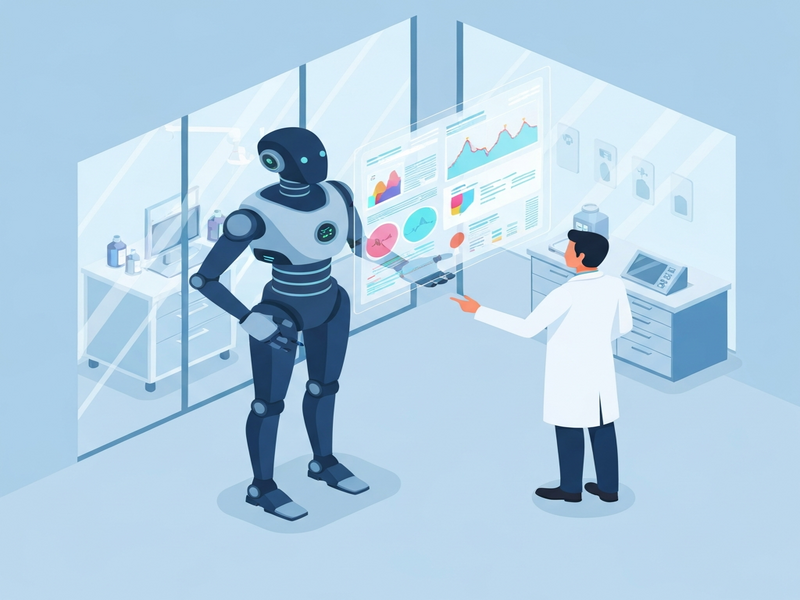
Enter artificial intelligence. By acting as a “force multiplier,” AI can compress years of manual labor into days, allowing leaner teams to achieve the same—or even superior—outcomes. This shift is especially critical for rare‑disease programs, where commercial incentives are modest and every saved hour translates directly into patient lives saved.
AI‑powered platforms that amplify biotech talent
Modern AI platforms ingest heterogeneous data—genomic sequences, chemical structures, clinical trial outcomes, and real‑world evidence—then apply multimodal deep‑learning models to generate hypotheses, predict molecular properties, and prioritize experiments. The result is a closed‑loop system that continuously learns from wet‑lab feedback, reducing the need for large, static research teams.
UBOS, a leading UBOS platform overview showcases how a unified AI stack can orchestrate everything from data ingestion to automated workflow execution, empowering biotech firms to focus on strategic decisions rather than repetitive data wrangling.
Insilico Medicine’s pharmaceutical superintelligence
At the recent Web Summit Qatar, Insilico Medicine’s CEO Alex Aliper unveiled the company’s ambition to build a “pharmaceutical superintelligence.” Their flagship system, the MMAI Gym, trains generalist large language models—such as ChatGPT and Gemini—to perform specialist tasks across drug discovery, from target validation to de‑novo molecule generation.
Key capabilities include:
- Automated hypothesis generation by mining millions of peer‑reviewed articles and patents.
- Multi‑modal screening that evaluates chemical, biological, and clinical data simultaneously.
- Rapid repurposing pipelines that identified candidate drugs for amyotrophic lateral sclerosis (ALS) within weeks.
By replacing manual literature reviews and high‑throughput screening with AI‑driven predictions, Insilico claims a 70% reduction in cycle time and a 30% cut in R&D spend. This efficiency directly addresses the talent shortage: fewer chemists are needed to synthesize and test compounds because the AI pre‑filters the most promising candidates.
GenEditBio’s AI‑driven in‑vivo gene‑editing delivery
GenEditBio represents the “second wave” of CRISPR innovation, shifting from ex‑vivo cell editing to precise in‑vivo delivery. Their proprietary engineered protein delivery vehicle (ePDV) is a virus‑like particle optimized through AI‑guided exploration of thousands of polymer nanoparticles.
The AI Video Generator‑style iterative loop works as follows:
- Generate a virtual library of polymer structures.
- Use a deep‑learning model to predict tissue affinity and immunogenicity.
- Run parallel in‑vivo assays; feed results back into the model for refinement.
This closed‑loop reduces the “design‑build‑test” cycle from months to weeks, enabling a single scientist to oversee what previously required a multidisciplinary team of virologists, chemists, and bioengineers. The approach has already secured FDA clearance for a CRISPR therapy targeting corneal dystrophy, illustrating how AI can accelerate regulatory milestones despite limited human resources.
Key AI technologies reshaping the rare‑disease pipeline
Beyond the flagship platforms, several emerging AI techniques are becoming indispensable:
Digital twins of patients
Virtual patient avatars—digital twins—allow researchers to simulate drug responses in silico before any human trial. Insilico’s roadmap includes a “digital twin engine” that will integrate multi‑omics data, lifestyle factors, and longitudinal health records to predict efficacy and safety for ultra‑rare cohorts.
Multimodal foundation models
Models that understand text, images, and molecular graphs simultaneously (e.g., AlphaFold‑style protein folding combined with language understanding) can propose novel biologics that satisfy both structural stability and therapeutic potency.
AI‑enhanced workflow automation
Automation studios—such as UBOS’s Workflow automation studio—enable drag‑and‑drop orchestration of data pipelines, model training, and result reporting. This reduces the need for custom scripting and lets scientists focus on hypothesis generation.
Challenges on the road to AI‑first biotech
While AI offers a compelling solution to labor scarcity, several hurdles remain:
- Data bias and scarcity: Most high‑quality datasets originate from Western populations, limiting model generalizability for rare diseases prevalent in under‑represented groups.
- Regulatory uncertainty: Agencies are still defining guidelines for AI‑generated claims, especially when models influence clinical trial design.
- Integration friction: Legacy LIMS and ELN systems often lack APIs, making seamless AI integration costly.
- Interpretability: Clinicians demand transparent rationale for AI‑suggested targets, prompting the need for explainable AI (XAI) frameworks.
Addressing these challenges requires collaborative ecosystems—where biotech firms, AI vendors, and regulators co‑create standards. UBOS’s UBOS partner program is designed to foster exactly that kind of cross‑industry partnership.
Future prospects: personalized therapy at scale
When AI fully matures, the rare‑disease landscape could shift from “one‑size‑fits‑none” to “precision‑by‑patient.” Imagine a workflow where a clinician uploads a patient’s genomic VCF file, the AI instantly generates a ranked list of gene‑editing strategies, selects the optimal ePDV, and even drafts a regulatory submission package—all within a single session.
Such a vision hinges on three pillars:
- Real‑time digital twins: Continuous learning from wearable data to refine dosing.
- AI‑driven manufacturing: On‑demand synthesis of personalized oligonucleotides using robotic labs.
- Integrated compliance engines: Automated generation of GMP and FDA documentation.
Companies that embed these capabilities early will not only overcome labor shortages but also create defensible IP around AI‑augmented therapeutic design.
Take the next step with AI‑enabled biotech tools
If you’re a researcher or executive looking to accelerate rare‑disease programs, consider leveraging UBOS’s end‑to‑end AI suite. Start with the UBOS templates for quick start, which include pre‑built pipelines for data ingestion, model training, and result visualization.
For content‑driven teams, the AI Article Copywriter can generate regulatory summaries, while the AI SEO Analyzer ensures your scientific communications reach the right audience.
Explore how AI for rare diseases is already reshaping pipelines, and discover the latest biotech news to stay ahead of regulatory trends.
Ready to prototype your AI‑first workflow? Review the UBOS pricing plans and select a tier that matches your team size. For strategic guidance, our About UBOS page outlines our mission to democratize AI across life sciences.
For a deeper dive into the industry perspective, read the original TechCrunch article that sparked this analysis.