

- Updated: April 21, 2025
- 3 min read
AI Doctoral Candidate’s Visa Revocation Sparks Academic Community Concerns
Understanding the Implications of Student Visa Revocation: A Focus on AI Doctoral Candidates
The recent revocation of student visas for international scholars in the United States has stirred significant concern within the academic community. This action, part of a broader governmental crackdown, has particularly impacted AI doctoral candidates, raising questions about the balance between national security and academic advancement. As the U.S. government employs artificial intelligence in visa screening processes, errors have emerged, leading to unintended consequences for students and institutions alike.
Impact on International Students: The Case of an AI Doctoral Candidate
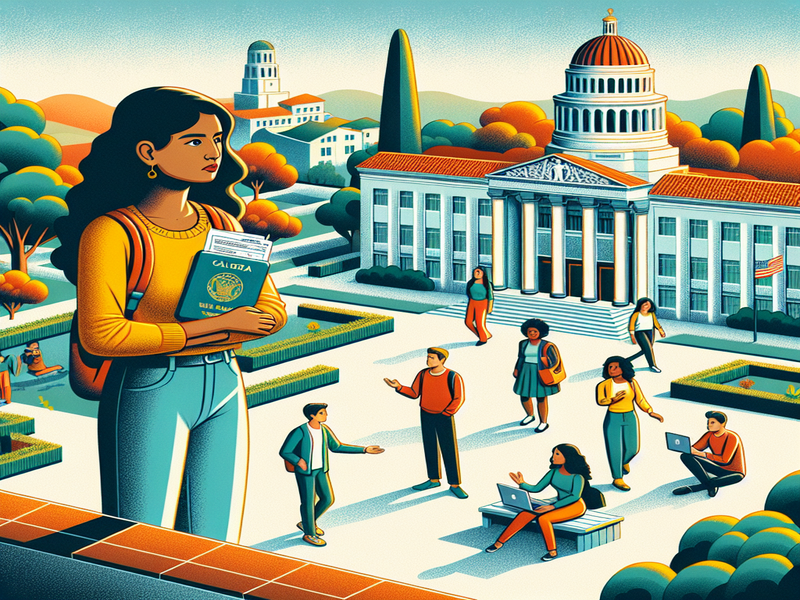
Among the affected individuals is an AI doctoral candidate based in California, whose visa revocation has become emblematic of the broader issue. This case highlights the precarious position of international students who contribute significantly to research and innovation in the United States. The disruption not only affects the student’s academic journey but also poses challenges to ongoing research projects that rely on their expertise.
Government’s Stance and AI in Visa Screening
The U.S. government’s use of AI technology in visa screening processes aims to enhance security measures. However, the implementation has not been without its flaws. The reliance on AI has led to errors, resulting in the wrongful revocation of visas for students who pose no threat. This situation underscores the need for a more nuanced approach that combines technological efficiency with human oversight.
Academic Community’s Response and Concerns
The academic community has responded with alarm to the visa revocation issue. Institutions and educators emphasize the critical role that international students play in fostering a diverse and innovative academic environment. The potential loss of talented individuals due to visa complications threatens to undermine the collaborative spirit that drives research advancements, particularly in fields like artificial intelligence.
Court Ruling and Its Implications
A recent court ruling has temporarily reinstated visas for some affected students, offering a reprieve amidst the ongoing controversy. This decision highlights the legal complexities surrounding immigration policies and the need for a balanced approach that considers both security and educational priorities. The ruling also sets a precedent for future cases, potentially influencing how similar situations are handled moving forward.
Contributions of International Students to the U.S. Economy and Research
International students, particularly those in advanced fields like AI, contribute significantly to the U.S. economy and research landscape. Their presence enriches academic institutions, fosters cross-cultural exchange, and drives innovation. The loss of these students due to visa issues could have far-reaching implications, affecting not only the academic community but also the broader economic and technological sectors.
Conclusion: Balancing Security with Academic Advancement
The revocation of student visas for international scholars underscores the need for a more balanced approach to immigration policies. While security is paramount, it is crucial to recognize the invaluable contributions of international students to the U.S. academic and economic landscape. By refining visa screening processes and ensuring that technological tools are used judiciously, the U.S. can maintain its position as a global leader in education and innovation.
For more insights on how AI is transforming various sectors, explore the revolutionizing marketing with generative AI and learn about the Enterprise AI platform by UBOS.
Furthermore, to understand the role of AI in shaping the future of IT, check out the role of AI chatbots in IT’s future. For those interested in the intersection of AI and education, transforming education with generative AI is a must-read.
To delve deeper into the implications of AI in immigration policies, consider reading the original news article here.
Andrii Bidochko
CTO UBOS
Andrii Bidochko is an AI entrepreneur and researcher focused on AI agents, reinforcement learning, and autonomous systems. He writes about the technologies shaping the future of machine intelligence, from frontier models and agent architectures to real-world AI applications.