

- Updated: January 6, 2026
- 7 min read
AI Companion Robots Take Center Stage at CES 2026 – The Rise of Robot Pets
AI companion robots and robot pets dominated CES 2026, showcasing how emotional artificial intelligence is moving from screens into physical companions for homes and offices.
Introduction
Las Vegas’s original Verge story captured the buzz around the new wave of consumer‑focused robots that aren’t built to work a factory floor but to sit on a desk, curl up on a couch, or follow you around the kitchen. For technology enthusiasts and early adopters, CES 2026 offered a preview of a future where smart homes are populated by devices that can see, hear, and even feel—thanks to advances in emotional AI.
From playful puffballs to sleek humanoids, the showcased products illustrate a shift from pure productivity tools (think voice‑controlled fridges) toward devices whose primary job is companionship. Below we break down the most compelling launches, explain how emotional AI works, and discuss what this means for consumers and the broader market.
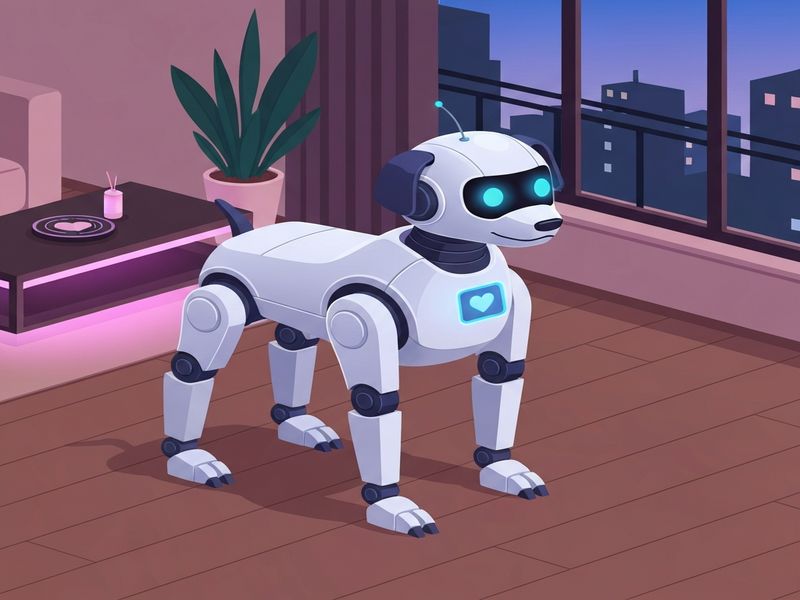
The Rise of AI Companion Robots at CES 2026
While robotics has long promised “helpful assistants,” CES 2026 proved that the industry is finally comfortable with the idea of companionship as a product category. Companies are leveraging large‑language models (LLMs) such as OpenAI’s GPT‑4 and Google’s Gemini to give robots conversational depth, while sensor suites provide the “emotional” layer—recognizing faces, tone of voice, and even subtle gestures.
- Integration of OpenAI ChatGPT integration for natural‑language understanding.
- Use of Chroma DB integration to store and retrieve personal interaction histories.
- Voice synthesis via ElevenLabs AI voice integration, giving robots a warm, human‑like timbre.
These technical building blocks are now packaged into consumer‑ready devices that promise to be “always‑on friends,” a concept that resonates strongly with the smart‑home audience.
Product Highlights
Loona DeskMate – The Pixar‑Inspired Desk Buddy
Loona transforms an iPhone into a wide‑eyed companion that tracks your gaze and reacts with animated expressions. Beyond the cute factor, it offers Slack notifications, meeting reminders, and a “focus mode” that dims distractions. The AI engine behind Loona is undisclosed, but the product demonstrates how AI companion robots can blend utility with emotional presence.
Zeroth W1 & M1 – WALL‑E Meets Real‑World Helper
Chinese startup Zeroth unveiled two models:
- W1: A compact rover that follows you, carries small items, and snaps photos. It claims “advanced mobility and environmental AI,” though specifics are scarce.
- M1: A doll‑sized humanoid equipped with Google’s Gemini model for conversation, reminders, childcare assistance, and fall detection. Its design targets both Western and Asian markets, signaling a global push for at‑home companions.
Fuzozo – The Purr‑Ready Pocket Pet
Fuzozo is a soft, spherical robot that purrs when stroked and can identify its owner via a built‑in cellular connection. Its portability hints at a future where robot pets can accompany you on trips, not just sit on a shelf.
LilMilo – The Bichon Frisé‑Style Emotional Companion
Ecovacs, known for robotic vacuums, introduced LilMilo, a fluffy robot that uses “lifelike biometrics” to recognize voices, develop a personality, and adapt to daily routines. While the AI details remain vague, the product underscores a trend: companies are repurposing existing robotics expertise to create emotionally resonant devices.
Other Notable Mentions
Several startups showcased niche applications that could become mainstream:
- AI SEO Analyzer – a cloud‑based tool that could soon be embedded in robot assistants for on‑the‑fly content optimization.
- AI Video Generator – enabling robots to create personalized video messages for users.
- AI Chatbot template – a ready‑made conversational engine that many of the showcased robots likely leverage.
How Emotional AI Is Entering Homes
Emotional AI combines three core capabilities:
- Perception: Cameras, microphones, and tactile sensors capture facial expressions, voice tone, and touch.
- Interpretation: LLMs map sensory data to emotional states (e.g., “you sound stressed”).
- Response: Voice synthesis, movement, or visual cues convey empathy, encouragement, or humor.
When these layers are integrated into a compact chassis, the result feels less like a tool and more like a pet or friend. For example, LilMilo’s “voice‑recognition biometrics” let it greet you by name, while Fuzozo’s purring response mimics a real cat’s soothing vibration.
From a developer’s perspective, platforms such as the UBOS platform overview simplify the creation of such experiences by offering pre‑built modules for vision, speech, and workflow automation. The Workflow automation studio lets creators define “if‑this‑then‑that” emotional triggers without writing extensive code.
Implications for Consumers and the Market
Consumer Benefits
- Companionship for Loneliness: Elderly users and remote workers gain a non‑judgmental presence that can reduce feelings of isolation.
- Personalized Assistance: AI‑driven reminders, health checks, and mood‑based music playlists adapt to daily rhythms.
- Entertainment & Education: Interactive storytelling, language practice, and game‑based learning become more engaging with a physical avatar.
Market Dynamics
The surge of emotional robots is reshaping several market segments:
| Segment | Key Drivers | Projected Growth (2026‑2030) |
|---|---|---|
| Home Companion Devices | Advances in LLMs, decreasing sensor costs | +45% |
| Healthcare‑Assistive Robots | Aging population, remote monitoring demand | +62% |
| Educational Toys | STEM curriculum integration, parental spending | +38% |
Investors are taking note. Venture capital funding for “emotional AI” startups rose 28% YoY, and major OEMs are acquiring niche robotics firms to accelerate time‑to‑market.
Potential Risks
- Privacy Concerns: Continuous audio‑visual monitoring raises data‑security questions.
- Emotional Dependency: Over‑reliance on synthetic companionship could affect human social skills.
- Regulatory Landscape: Emerging standards for AI safety and consumer protection may impact product rollout.
Brands that address these concerns transparently—by offering on‑device processing, clear data‑retention policies, and parental controls—will earn consumer trust and differentiate themselves in a crowded market.
Conclusion and Future Outlook
CES 2026 proved that AI companion robots and robot pets are no longer a novelty; they are becoming a mainstream category of smart home devices. As emotional AI matures, we can expect:
- Deeper integration with existing ecosystems (e.g., Telegram integration on UBOS for instant messaging with your robot).
- More robust on‑device inference, reducing reliance on cloud services and improving privacy.
- Cross‑domain templates—like the AI Voice Assistant or AI Image Generator—that let developers spin up new companion experiences in days instead of months.
For early adopters, the message is clear: the next wave of home automation will not just do tasks; it will share moments. Whether you’re looking for a desk buddy like Loona, a portable puffball like Fuzozo, or a full‑featured humanoid like Zeroth’s M1, the ecosystem is expanding rapidly, and platforms such as UBOS homepage are already providing the tools to build the next generation of emotional AI.
Stay tuned to the CES 2026 highlights page for post‑show updates, firmware releases, and developer roadmaps that will shape how these companions evolve over the next few years.
Explore More UBOS Resources
- About UBOS – Learn how the company fuels AI innovation.
- AI marketing agents – See how AI can boost your brand.
- UBOS for startups – Fast‑track your AI product.
- UBOS solutions for SMBs – Scalable AI for small businesses.
- Enterprise AI platform by UBOS – Enterprise‑grade AI infrastructure.
- Web app editor on UBOS – Build interactive UIs for your robot.
- UBOS pricing plans – Choose a plan that fits your budget.
- UBOS portfolio examples – Real‑world AI deployments.
- UBOS templates for quick start – Jump‑start your AI companion project.