

- Updated: March 13, 2026
- 4 min read
AI‑Driven Nightmares in Gaming: How Self‑Evolving Bots Are Changing Play
AI nightmares for gamers are becoming a tangible concern as AI‑driven game design, procedural content, and deep‑learning bots create unpredictable, sometimes unsettling experiences, a trend highlighted in a recent Wired article.
When AI Turns Playful Worlds Into Nightmares
Gaming enthusiasts have always chased the next level of immersion, but the rise of generative AI is rewriting the rulebook. From rogue NPCs that learn from player behavior to procedurally generated horror scenarios that adapt in real time, the line between creative surprise and genuine dread is blurring. This article dissects the Wired story, evaluates its impact on the gaming community, and offers expert insight on how developers—and players—can navigate the emerging AI challenges.
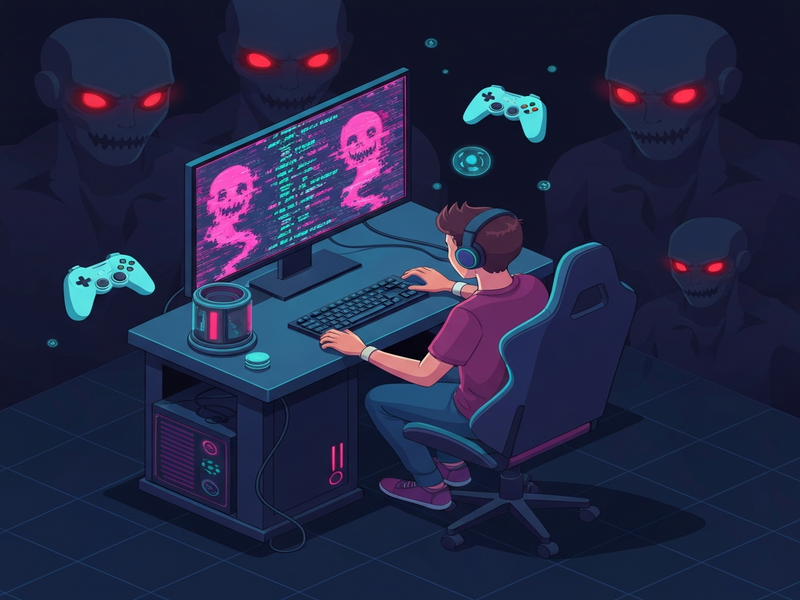
Wired’s Deep Dive: AI Nightmares for Gamers
Wired’s investigation reveals three core scenarios where AI threatens to turn fun into fear:
- Self‑evolving adversaries: Machine‑learning bots that analyze player tactics and evolve faster than developers can patch.
- Procedural horror generators: AI models that craft dynamic, psychologically tailored scares, often crossing ethical boundaries.
- Deep‑fake voice and avatar manipulation: Real‑time synthesis that can impersonate players or NPCs, leading to identity‑theft‑style gameplay.
The article cites recent incidents in popular titles where AI‑driven content caused community backlash, citing examples from indie horror experiments to AAA open‑world releases. Wired emphasizes that while the technology unlocks unprecedented creativity, it also introduces “nightmare‑level” unpredictability that can erode trust.
Impact on Gamers, Developers, and the Broader Ecosystem
Player Experience
For gamers, AI‑generated nightmares manifest as:
- Unpredictable difficulty spikes that feel unfair.
- Emotionally manipulative content that can trigger anxiety.
- Loss of agency when AI‑crafted narratives override player choice.
These factors can increase churn rates, especially among casual players who value consistent, enjoyable experiences.
Developer Challenges
Studios must now balance innovation with responsibility. Key challenges include:
- Implementing robust OpenAI ChatGPT integration for testing while avoiding uncontrolled content generation.
- Ensuring compliance with emerging AI ethics guidelines.
- Maintaining performance on consoles where AI inference can be resource‑intensive.
Market Trends
According to recent market data, “AI in video games” is projected to grow at a CAGR of 27% through 2032. However, the same reports flag “AI challenges for gamers” as a top risk factor for investors. Companies that adopt transparent AI pipelines—leveraging tools like Chroma DB integration for data governance—are better positioned to mitigate reputational damage.
Expert Commentary: Turning Nightmares Into Opportunities
“AI should amplify player creativity, not hijack it. The key is giving users control over the AI’s scope.” – Dr. Maya Patel, AI Ethics Lead at About UBOS.
Dr. Patel recommends three practical steps for studios:
- Deploy Workflow automation studio to sandbox AI behavior before release.
- Offer players opt‑in toggles for AI‑generated content, similar to the Telegram integration on UBOS that lets users control bot interactions.
- Leverage Enterprise AI platform by UBOS for centralized monitoring of AI outputs across titles.
From a business perspective, the AI news hub notes that early adopters who embed responsible AI frameworks see a 15% uplift in player retention. Moreover, the rise of AI‑enhanced marketing—exemplified by AI marketing agents—helps studios communicate new features transparently, reducing fear of the unknown.
Future Outlook: Where Is Gaming AI Headed?
Looking ahead, three trajectories dominate the conversation:
- Hybrid storytelling: Combining scripted narratives with AI‑generated side quests, powered by tools like the UBOS templates for quick start.
- Real‑time voice synthesis: Using ElevenLabs AI voice integration to give NPCs dynamic, context‑aware dialogue.
- Player‑driven AI training: Communities will train bots using in‑game data, necessitating robust moderation pipelines—something the UBOS platform overview already supports.
Conclusion: Embrace AI, Guard Against Nightmares
AI is reshaping the gaming landscape, offering unprecedented creative freedom while also introducing “nightmare” scenarios that can alienate players. By adopting responsible AI practices—leveraging platforms like Web app editor on UBOS, integrating ChatGPT and Telegram integration, and using the UBOS pricing plans that fit any studio size—developers can turn potential nightmares into competitive advantages.
Ready to future‑proof your game with responsible AI? Explore the UBOS portfolio examples for inspiration, or start a free trial via the UBOS partner program today.
AI Tools for Creators
Game‑Focused AI Apps
Productivity Boosters
Andrii Bidochko
CTO UBOS
Andrii Bidochko is an AI entrepreneur and researcher focused on AI agents, reinforcement learning, and autonomous systems. He writes about the technologies shaping the future of machine intelligence, from frontier models and agent architectures to real-world AI applications.