

- Updated: February 23, 2026
- 5 min read
AI‑Driven Food Production: Transforming Agriculture and Society
AI‑driven food production will transform agriculture by automating farming tasks, optimizing resource use, and reshaping the future of work, but it also demands new tax policies, equitable redistribution mechanisms, and robust technology governance to ensure sustainable food security for all.
Introduction: AI, Labor Displacement, and the Food System
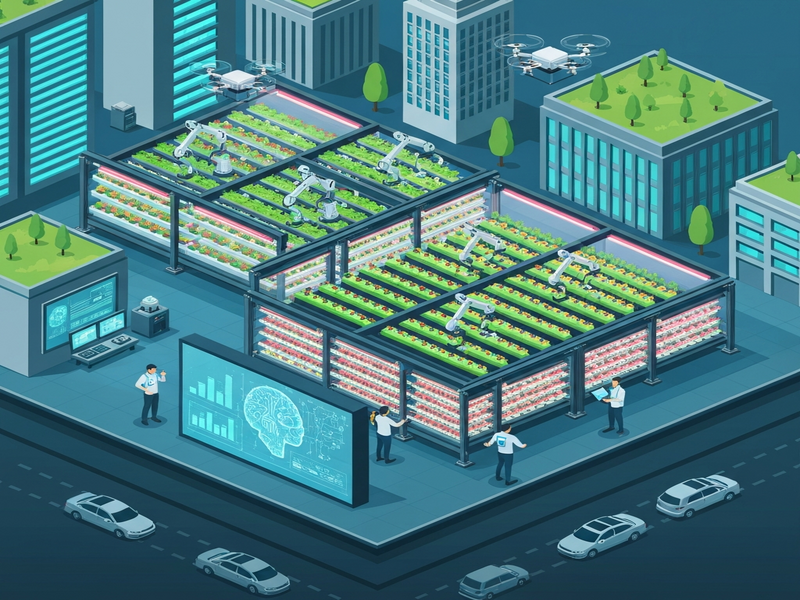
Artificial intelligence is rapidly moving from the office desk to the open field. From autonomous tractors that sow seeds with centimeter precision to neural‑network‑powered platforms that predict pest outbreaks, AI food production is no longer a futuristic concept—it is already being piloted on farms across the globe. This shift mirrors the broader narrative of AI replacing human labor in many sectors, raising a pivotal question: who will feed the world when machines do most of the work?
Tech‑savvy professionals, sustainability enthusiasts, and investors are watching closely because the stakes are high. The UBOS platform overview highlights how low‑code AI tools can accelerate the deployment of such technologies, making it easier for startups and established agribusinesses alike to experiment with AI agriculture. Yet, as the original Guardian story points out, the economic and social implications of this transition are still being debated.
Key Challenges: Resource Allocation, Equity, and Governance
Resource Allocation in an AI‑Powered Farm
AI systems excel at optimizing inputs—water, fertilizer, energy—based on real‑time sensor data. However, the concentration of these high‑value data streams in the hands of a few tech giants creates a new form of resource monopoly. Without transparent data sharing frameworks, smallholder farmers risk being sidelined. The AI marketing agents illustrate how proprietary algorithms can dominate market insights, leaving independent growers without the analytical firepower they need.
Equity: Who Gets to Eat?
When labor income shrinks, traditional tax bases erode, and the question of food access becomes political. If AI‑driven yields are owned by a handful of investors, the risk of a new “food elite” emerges. The UBOS for startups initiative shows that democratizing AI tools can empower new entrants, but scaling this model to the global food system requires deliberate equity policies.
Governance: Aligning AI Goals with Societal Needs
Governance frameworks must ensure that AI objectives align with broader societal goals such as climate mitigation and nutrition. The Enterprise AI platform by UBOS offers a blueprint for multi‑tenant governance, where different stakeholders can set constraints on AI behavior. Yet, without international coordination, national policies may diverge, creating regulatory arbitrage.
Proposed Solutions: Tax Reforms, Redistribution, and Policy Innovation
Tax Reforms to Fund the AI Transition
Traditional income taxes will become insufficient as AI displaces workers. Economists suggest a shift toward capital and data taxes that capture value generated by AI assets. The UBOS pricing plans demonstrate a tiered pricing model that could be adapted for public policy—charging higher rates for AI services that generate outsized societal benefits.
Redistribution Mechanisms: From Universal Basic Income to AI Equity Shares
Redistribution can take many forms. Direct cash transfers, food vouchers, or even public ownership of AI equity are on the table. The ChatGPT and Telegram integration showcases how decentralized platforms can deliver benefits directly to citizens, bypassing traditional bureaucratic channels.
Policy Innovations: Data Commons and Open Standards
Creating a data commons—a shared repository of agricultural data—can level the playing field. Open standards for AI model interoperability ensure that smaller players can plug into larger ecosystems without paying prohibitive licensing fees. The OpenAI ChatGPT integration provides a practical example of how open APIs can foster collaboration across sectors.
Future Outlook: Benefits of AI‑Driven Food Production
Sustainable Food Production
AI can dramatically reduce waste by matching supply with demand in near real‑time. Precision irrigation, powered by machine‑learning models, cuts water use by up to 30 % in arid regions. The ElevenLabs AI voice integration can be used to create voice‑enabled advisory bots that guide farmers through sustainable practices, making expertise accessible even in remote areas.
Food Security and Resilience
AI‑enhanced forecasting can anticipate crop failures weeks before they happen, allowing governments to pre‑position food aid. The AI Image Generator can visualize climate‑impact scenarios, helping policymakers communicate risks and mobilize resources quickly.
Economic Impact: New Jobs and New Markets
While AI displaces certain manual tasks, it also creates high‑skill roles in data science, robotics maintenance, and AI ethics. The AI SEO Analyzer helps agritech firms reach global markets, expanding export opportunities for AI‑enhanced produce. Moreover, the AI Article Copywriter can generate localized marketing content, reducing barriers for small producers to enter premium markets.
Conclusion: A Call to Action for Stakeholders
The promise of AI food production is undeniable: higher yields, lower environmental footprints, and a resilient supply chain. Yet, without proactive tax reforms, equitable redistribution, and robust governance, the benefits may accrue to a narrow elite, leaving the majority hungry for both food and influence.
Policymakers, investors, and technology providers must collaborate now. By leveraging open‑source platforms, adopting progressive tax structures, and embedding ethical safeguards, we can ensure that AI becomes a tool for universal nourishment rather than a catalyst for new forms of scarcity.
Join the conversation, explore the About UBOS initiatives, and help shape a future where every plate is filled, and every voice is heard.
Andrii Bidochko
CTO UBOS
Andrii Bidochko is an AI entrepreneur and researcher focused on AI agents, reinforcement learning, and autonomous systems. He writes about the technologies shaping the future of machine intelligence, from frontier models and agent architectures to real-world AI applications.