

- Updated: April 1, 2026
- 8 min read
Sonder Dating App’s Annoying Sign‑Up Process Goes Viral
The new dating app Sonder is intentionally using a difficult and annoying sign-up process as a strategic filter to attract users who are more committed to making genuine connections, a stark contrast to the low-friction approach of mainstream apps.
The Sonder Paradox: Why a Dating App’s Annoying Sign-Up Is Its Greatest Strength
In the sprawling, often bewildering landscape of modern romance, dating apps have become the default starting point. Yet, for many, they represent a paradox of choice—a seemingly infinite carousel of profiles that leads not to connection, but to a profound sense of fatigue. We’ve all seen it: the profile that lists “pineapple on pizza” as a controversial opinion or proudly proclaims they were Time Magazine’s 2006 Person of the Year. It’s a sea of sameness that breeds monotony. But what if the solution wasn’t to make things easier, but deliberately harder? A new contender in the dating world, Sonder, is betting its entire strategy on this counterintuitive premise. As recently detailed by TechCrunch, the Sonder dating app has engineered an intentionally annoying sign-up process, and against all conventional wisdom, it appears to be a masterstroke.
Deconstructing the Sonder Experience: More Collage Than Curriculum Vitae
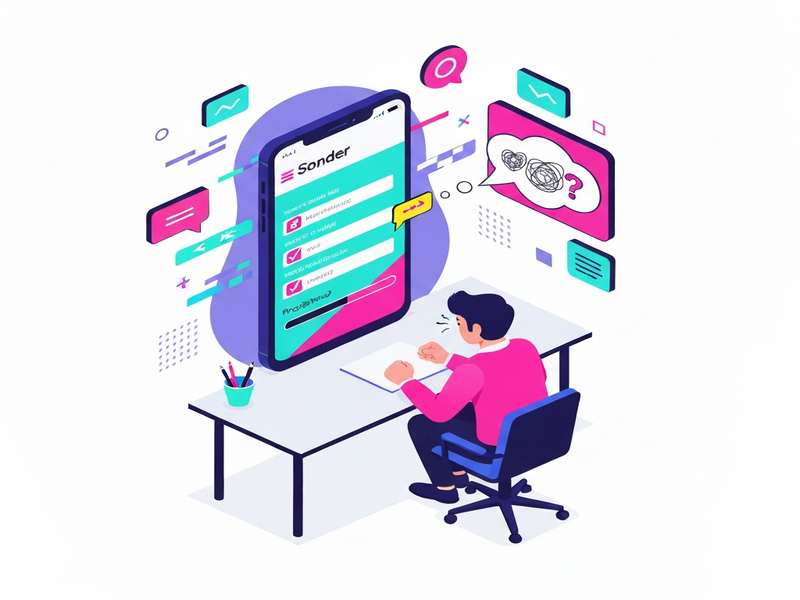
So, what makes the Sonder experience so different? Forget the endless drop-down menus and sterile text boxes that feel more like a job application than a quest for love. Sonder throws out the rulebook entirely. Instead of a structured profile, users are prompted to create something that resembles a digital collage, a mood board, or a throwback to the creative chaos of early MySpace. The platform encourages a completely unstructured format, pushing users to express their personality through a visual and creative medium rather than a series of pre-defined answers.
This approach fundamentally alters the user’s task. It’s no longer about efficiently filling in blanks but about thoughtfully curating a digital space that reflects who you are. This inherent friction is the core of Sonder’s strategy. It demands time, effort, and a spark of creativity—commodities that the casual swiper is unlikely to invest. The creative freedom it offers is a powerful differentiator. In a way, it mirrors the flexibility developers seek when building unique digital products; a powerful Web app editor on UBOS, for example, provides the tools to build without constraints, allowing for true innovation beyond rigid templates.
The Psychology of Annoyance: A Calculated Gamble on User Intent
This “annoying” process is not a design flaw; it’s a sophisticated psychological filter. The founders, a group of friends in their mid-twenties, built Sonder out of their own frustrations with the superficiality of existing apps. Their goal was to combat the burnout and loss of authenticity that plagues the online dating world. By raising the barrier to entry, they ensure that anyone who successfully creates a profile has already demonstrated a baseline level of commitment. You can’t mindlessly create a Sonder profile in two minutes while waiting for a coffee.
“We want to make sure it’s an actual person putting their own effort in to make that profile,” co-founder Mehedi Hassan explained, “because I think that also acts as an indicator of how much effort you’re actually interested in putting into your connections.”
This strategy taps into a core principle of human behavior: we value what we work for. The effort invested in creating a profile fosters a sense of ownership and increases the perceived value of the connections made on the platform. It’s a bold move that directly challenges the prevailing UX/UI wisdom of “frictionless” design. This kind of strategic thinking is essential for new ventures aiming to disrupt established markets, a philosophy we champion for clients using UBOS for startups to build their groundbreaking ideas.
Beyond the Screen: Fostering Connections in the Real World
Sonder’s commitment to authenticity doesn’t end with its digital profiles. The app is a gateway to a vibrant offline community, hosting quirky in-person events that defy the stale conventions of typical singles mixers. Imagine attending a “Speed Drawing” event, a “Presentation Night,” or even a “Performative Male Contest.” These gatherings are designed to facilitate interaction around a shared activity, removing the high-stakes pressure of a formal date. The app can be used for both platonic and romantic connections, further lowering the intimidation factor.
The founders liken this recurring event model to the recent phenomenon of run clubs, which offer a regular, low-pressure opportunity to meet new people. Sonder simply provides creative alternatives for those who, as Hassan puts it, “could not be paid to go to a book club.” This hybrid online-offline model is a powerful engine for community building. Managing the logistics for such a diverse event schedule—from sign-ups and reminders to post-event feedback—is a complex operational challenge. A sophisticated Workflow automation studio could be instrumental in streamlining these processes, allowing the team to focus on creating memorable experiences rather than getting bogged down in administrative tasks.
Sonder’s Subtle Approach to AI in a World of AI-Powered Matchmakers
As established players like Bumble and Tinder roll out flashy AI-powered dating assistants and photo analyzers, Sonder is taking a more measured and human-centric approach. While the team isn’t anti-AI—Hassan’s day job is in AI product engineering—they are wary of its potential to further dehumanize the dating experience. Sonder uses AI, but it operates quietly in the background. The app employs a Large Language Model (LLM) to analyze the unstructured, collage-style profiles, identifying potential matches based on a deeper, more nuanced understanding of a user’s personality and interests.
However, the founders draw a hard line at user-facing AI generation tools. You will not find an AI assistant to help you write your bio or create your mood board on Sonder. They believe that at that point, “it loses the human touch.” This deliberate choice reinforces their core value proposition of authenticity over efficiency. It’s a fascinating case study in ethical AI implementation, where technology serves to enhance human connection rather than replace it. This mirrors the philosophy behind powerful tools like the ChatGPT and Telegram integration, which brings advanced AI capabilities into a familiar, human-centric communication platform.
Carving a Niche in a Saturated Market: Sonder’s Viral Launch Strategy
Perhaps the most compelling evidence of Sonder’s success is its organic growth. The app has acquired over 6,500 users in London with zero paid marketing. This is a testament to a powerful product-market fit and a viral loop fueled by word-of-mouth. The founders are currently bootstrapping the project, working on it alongside their full-time jobs, but they have ambitions to secure funding and scale their vision. Their lean, user-centric approach is a powerful model for how to launch a product in a crowded market. By focusing on a genuine pain point and offering a radically different solution, they have generated authentic buzz that money can’t buy. This journey from a side project to a potential industry disruptor showcases the power of a strong core idea, a principle that underpins the entire UBOS platform overview, which is designed to empower creators to build and scale their visions efficiently.
Is ‘Intentional Inconvenience’ the Future of Digital Interaction?
Sonder’s strategy begs a larger question: are we witnessing a turning point in **user experience design**? For years, the tech industry has been obsessed with creating “seamless” and “frictionless” experiences. While this has its benefits, it can also lead to a devaluing of the experience itself. Sonder’s success suggests a growing appetite for what might be called “intentional inconvenience” or “desirable difficulty.” By making users work a little harder, platforms can increase engagement, filter for intent, and create a more valuable and memorable experience.
This is not just a trend in dating apps. We see it in the rise of exclusive online communities, the intricate unboxing rituals of luxury products, and the challenging gameplay of beloved video games. It’s a rebellion against the passive consumption model of the internet. This shift in **online dating trends** could have ripple effects across the digital landscape, forcing companies to reconsider whether “easier” is always “better.” Businesses looking to understand their own customers’ tolerance for—and even desire for—this kind of friction could leverage custom tools like an AI Survey Generator to gather deep, qualitative insights.
The Verdict: A Refreshing Rebellion or a Fleeting Fad?
Sonder is more than just a new dating app; it’s a bold social experiment. It’s a direct challenge to the swipe-right culture that has left so many feeling disposable and disconnected. By betting that effort equals authenticity, Sonder is tapping into a deep-seated desire for more meaningful human interaction. Whether this model can scale to compete with the giants of the industry remains to be seen. But its initial viral success proves that a significant portion of the market is starved for an alternative.
The app’s deliberately annoying sign-up process is a brilliant, self-selecting mechanism that builds a community of engaged, intentional users from the ground up. It’s a refreshing reminder that the best user experience isn’t always the easiest one. For small businesses and enterprises alike, Sonder’s story is a powerful lesson in the value of daring to be different. Building such a unique application is a significant undertaking, but platforms offering UBOS solutions for SMBs are making it easier than ever to bring innovative ideas to life. For those inspired by this disruptive model, exploring a UBOS partner program could be the first step toward building the next big thing in tech.

Andrii Bidochko
CTO UBOS
Andrii Bidochko is an AI entrepreneur and researcher focused on AI agents, reinforcement learning, and autonomous systems. He writes about the technologies shaping the future of machine intelligence, from frontier models and agent architectures to real-world AI applications.