

- Updated: March 26, 2026
- 5 min read
Sony and Honda Cancel Afeela EV Project Amid US Market Shift
Sony‑Honda Mobility has officially cancelled the development of the Afeela electric‑sedan and SUV, ending the joint venture’s flagship EV project in the United States.
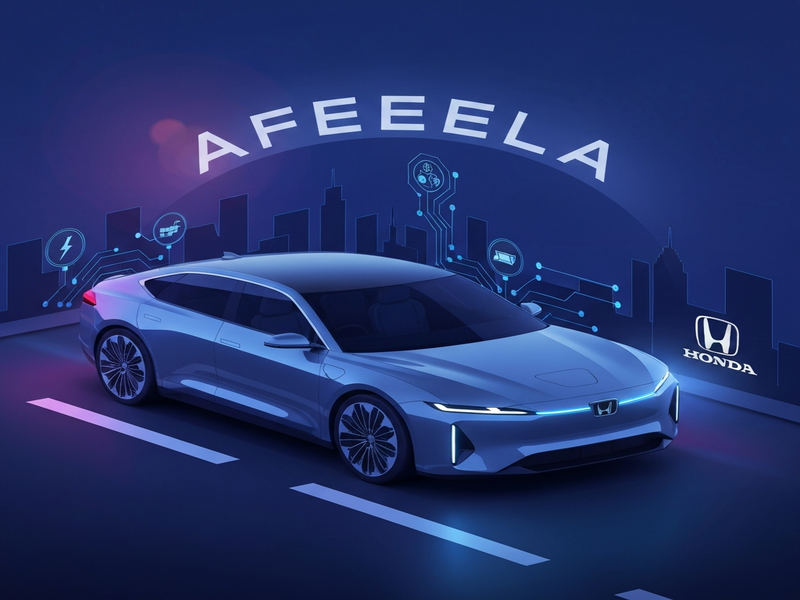
Sony‑Honda Mobility Dumps Afeela EV Sedan & SUV – What It Means for the US Electric‑Vehicle Market
In a surprise announcement on March 25, 2026, Sony‑Honda Mobility (SHM) confirmed that the Afeela‑branded electric sedan and SUV will no longer be produced. The decision follows Honda’s abrupt shift in its U.S. EV strategy, a move that could cost the automaker up to $16 billion in sunk development expenses. The cancellation reshapes the competitive landscape for luxury EVs and raises fresh questions about the viability of cross‑industry joint ventures in a rapidly evolving market.
Background: The Sony‑Honda Joint Venture and the Afeela Brand
Sony and Honda announced their partnership in 2022 with the ambitious goal of blending Sony’s consumer‑electronics expertise with Honda’s automotive engineering prowess. The joint venture, branded Sony‑Honda Mobility, aimed to launch two premium electric models under the new Afeela nameplate:
- Afeela 1 – a luxury sedan priced around $90,000, slated for a late‑2026 U.S. debut.
- Afeela SUV – a high‑tech crossover targeting the same affluent segment.
The venture promised to leverage “certain technologies and assets” from Honda while integrating Sony’s advanced infotainment, AI‑driven user interfaces, and sensor suites. Early prototypes showcased a panoramic dashboard screen, 360° audio, and a network of 33 sensors, echoing Sony’s Vision‑S concept unveiled at CES 2020.
Honda’s Strategic Shift in the U.S. EV Market
In early March 2026, Honda announced a sweeping revision of its U.S. electrification roadmap, cancelling three EV projects—including the Afeela sedan and SUV—citing:
- Tariff pressures stemming from the Trump administration’s trade policies.
- Escalating competition from Chinese manufacturers offering lower‑priced EVs.
- Uncertainty around federal tax credits and state‑level incentives.
Honda’s decision reflects a broader industry trend where legacy automakers are re‑evaluating capital‑intensive EV programs amid volatile policy environments. The cancellation leaves SHM with a “significant gap” in its product pipeline, prompting both partners to reassess their long‑term collaboration.
Impact on the Market and Future Outlook
The Afeela withdrawal sends ripples across several dimensions:
- Competitive Landscape: Luxury EV contenders such as Rivian, Lucid, and Tesla now face one fewer high‑priced rival, potentially easing pricing pressure in the $80k‑$120k segment.
- Supply Chain Realignment: Suppliers that had earmarked production capacity for Afeela components must pivot to other OEMs, accelerating the re‑allocation of battery packs, power electronics, and infotainment modules.
- Investor Sentiment: Honda’s $16 billion write‑off may trigger short‑term stock volatility, while Sony’s exposure to automotive risk is likely to be re‑priced by analysts.
- Regulatory Implications: The move underscores the fragility of U.S. EV policy, reinforcing calls for more stable, long‑term incentives.
Industry Reactions
Analysts at Enterprise AI platform by UBOS note that “the cancellation highlights the difficulty of launching a new luxury EV brand without a clear, government‑backed subsidy framework.” Meanwhile, venture capital firms are watching closely for opportunities to back next‑generation EV startups that can navigate the policy maze more nimbly.
“Sony‑Honda’s decision is a reality check for cross‑industry collaborations that underestimate the speed of policy shifts,” the TechCrunch article reported.
What This Means for Stakeholders
The fallout from the Afeela cancellation can be distilled into actionable insights for three primary audiences:
For Automotive Executives
- Re‑evaluate joint‑venture risk models, especially when partners operate in disparate regulatory environments.
- Prioritize modular platforms that can be repurposed across multiple vehicle segments.
- Accelerate partnerships with AI‑focused firms to reduce development timelines.
For Tech Companies
- Leverage AI‑driven product development tools—such as the Workflow automation studio—to shorten time‑to‑market.
- Explore the Web app editor on UBOS for rapid prototyping of vehicle‑connected services.
- Consider integrating with the AI marketing agents to boost brand awareness for new EV launches.
For Investors and Startups
- Target startups that offer plug‑and‑play AI solutions—like the AI SEO Analyzer—to improve digital visibility of EV products.
- Utilize the UBOS for startups program to access low‑cost cloud infrastructure and AI tooling.
- Monitor the UBOS pricing plans for scalable pricing as your EV venture grows.
Related Resources and Next Steps
If you’re navigating the EV landscape or looking to accelerate AI‑enabled product development, the following UBOS resources can help you stay ahead of the curve:
- UBOS electric vehicles – A curated guide on leveraging AI for EV design, testing, and deployment.
- UBOS auto industry news – Real‑time updates on policy shifts, market trends, and technology breakthroughs.
- UBOS platform overview – Discover the end‑to‑end AI platform that powers rapid innovation across automotive and SaaS domains.
- UBOS templates for quick start – Jump‑start your EV app with pre‑built templates like the AI YouTube Comment Analysis tool or the AI Article Copywriter.
- UBOS partner program – Collaborate with UBOS to co‑develop AI solutions for the automotive sector.
- UBOS portfolio examples – Real‑world case studies of AI‑driven EV projects that achieved market traction.
Ready to future‑proof your EV strategy?
Explore how UBOS can accelerate your product roadmap, reduce development costs, and unlock AI‑powered insights that keep you ahead of policy changes.
Andrii Bidochko
CTO UBOS
Andrii Bidochko is an AI entrepreneur and researcher focused on AI agents, reinforcement learning, and autonomous systems. He writes about the technologies shaping the future of machine intelligence, from frontier models and agent architectures to real-world AI applications.