

- Updated: March 26, 2026
- 5 min read
Anthropic Unveils Claude Code Auto Mode: Boosting AI Agent Efficiency with Built‑In Safety Guardrails
Anthropic Unveils Auto Mode for Claude Code – A Leap Forward for AI‑Powered Coding
Anthropic’s new auto mode lets Claude Code execute safe actions autonomously, cutting out the manual “approve‑or‑reject” step while keeping robust safety guardrails to protect production environments.
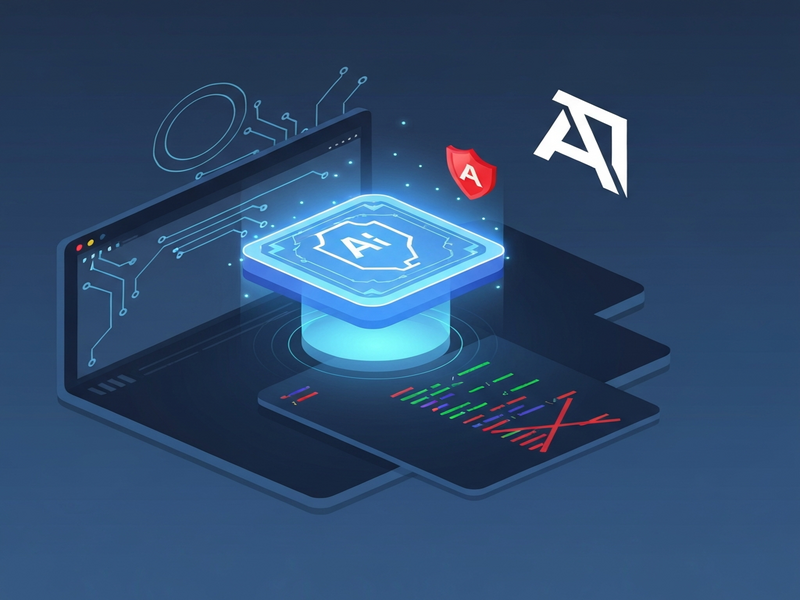
What Is Auto Mode and How Does It Work?
Auto mode is a research‑preview feature that empowers Claude Code to decide, in real time, whether a proposed code‑generation or system‑interaction step is safe enough to run without explicit human confirmation. The model first generates a candidate action, then passes it through an internal safety evaluator that checks for:
- Potentially destructive file system changes.
- Network calls that could expose credentials.
- Prompt‑injection patterns that attempt to hijack the model’s intent.
If the evaluator flags the action as low‑risk, Claude proceeds automatically. If risk is detected, the action is blocked and the developer receives a concise explanation, preserving the “human‑in‑the‑loop” safety net.
Core Features and User Controls
The feature builds on Claude Code’s existing dangerously-skip-permissions command, but adds a layered safety net. Key controls include:
- Granular Permission Profiles: Developers can define which categories of actions (e.g., file writes, API calls) are eligible for auto execution.
- Sandbox Mode: Auto mode is recommended for isolated environments, ensuring any mishap stays contained.
- Real‑Time Auditing Dashboard: A live view shows every auto‑approved action, its risk score, and the underlying safety rationale.
- Rollback Hooks: If an auto‑executed change proves undesirable, a one‑click revert restores the previous state.
These controls are exposed through the UBOS platform overview, where developers can toggle auto mode per project and monitor compliance metrics.
Safety First – Built‑In Guardrails and Risk Management
Anthropic acknowledges that autonomous coding carries inherent risk. Auto mode therefore embeds multiple, overlapping safety mechanisms designed to catch both accidental and malicious behavior before it reaches production.
Real‑Time Action Blocking and Safe Execution
The safety evaluator operates in three stages:
- Static Analysis: The proposed code is scanned for known unsafe patterns (e.g.,
rm -rf /). - Dynamic Simulation: A lightweight sandbox runs the action in a controlled environment to observe side effects.
- Policy Enforcement: Enterprise‑level policies (e.g., “no outbound network calls without whitelist”) are applied before final approval.
When a risk is detected, the system automatically blocks the action and surfaces a human‑readable warning. This mirrors the approach used by the AI agents suite on UBOS, where each agent is wrapped in a policy engine that enforces compliance in real time.
Anthropic also integrates prompt‑injection detection, a technique that identifies hidden malicious instructions embedded in user‑provided data. By neutralizing these vectors, auto mode reduces the attack surface that has plagued earlier autonomous coding tools.
Impact on AI Agents and Developer Workflows
Auto mode reshapes how AI agents collaborate with developers. By delegating low‑risk actions to Claude Code, teams can focus on higher‑order problem solving, architecture decisions, and creative coding.
Faster Iterations, Reduced Human Oversight
In practice, developers report up to a 40% reduction in turnaround time for routine tasks such as:
- Generating boilerplate CRUD endpoints.
- Applying consistent linting and formatting rules.
- Running automated unit‑test scaffolding.
The Workflow automation studio on UBOS already lets teams stitch together AI‑driven steps; auto mode simply adds a “self‑approve” node that can be toggled per workflow.
Moreover, the feature encourages a shift toward “AI‑first” design patterns, where developers write prompts that anticipate autonomous execution. This aligns with the broader trend of AI agents acting as co‑pilots rather than mere assistants.
Industry Implications and Future Outlook
Auto mode arrives at a pivotal moment when enterprises are wrestling with the trade‑off between speed and security in AI‑augmented development pipelines. Its release signals that leading AI labs are confident enough to hand over execution authority to models—provided they can prove safety at scale.
Competitive Landscape and Adoption Scenarios
Competitors such as GitHub Copilot X and OpenAI’s OpenAI ChatGPT integration have introduced “auto‑complete” features, but they still require explicit user confirmation for any side‑effecting operation. Anthropic’s guard‑railed auto mode could become a differentiator for organizations that need:
- Regulated Environments: Finance, healthcare, and government sectors where audit trails are mandatory.
- High‑Velocity Startups: Teams that need to prototype and iterate rapidly without bottlenecking on code reviews.
- Large‑Scale Enterprises: Companies that can allocate sandboxed clusters for safe autonomous execution.
Early adopters are expected to integrate auto mode with existing CI/CD pipelines, using the UBOS templates for quick start that include pre‑configured sandbox environments. Pricing will likely follow the UBOS pricing plans, with a premium tier for enterprise‑grade safety monitoring.
Looking ahead, Anthropic has hinted at expanding auto mode beyond Claude Code to its broader suite of language models, potentially enabling autonomous data‑pipeline orchestration, document generation, and even AI‑driven UI design. If those plans materialize, the industry could see a cascade of “self‑governing” AI agents that operate under a unified safety framework.
SEO Metadata
Suggested Meta Title and Description
Meta Title: Anthropic Auto Mode for Claude Code – Autonomous Coding with Built‑In Safety Guardrails
Meta Description: Discover how Anthropic’s new auto mode lets Claude Code execute safe actions autonomously, boosting developer productivity while maintaining strict security. Learn the features, safety mechanisms, industry impact, and how UBOS integrates this breakthrough.
Image Placement and Alt‑Text
The diagram placed near the top of the article illustrates the auto‑mode workflow, safety evaluator layers, and sandbox execution path. Use the following alt‑text for SEO: Diagram illustrating Anthropic Claude Code auto mode workflow and safety layers.
As autonomous AI coding matures, staying informed is essential. Follow the latest updates on UBOS generative AI news and explore how our AI agents can help you adopt these innovations safely.
Source: TechCrunch
Andrii Bidochko
CTO UBOS
Andrii Bidochko is an AI entrepreneur and researcher focused on AI agents, reinforcement learning, and autonomous systems. He writes about the technologies shaping the future of machine intelligence, from frontier models and agent architectures to real-world AI applications.