

- Updated: March 17, 2026
- 6 min read
Stryker Restores Systems After Pro‑Iranian Hack Wipes Thousands of Devices
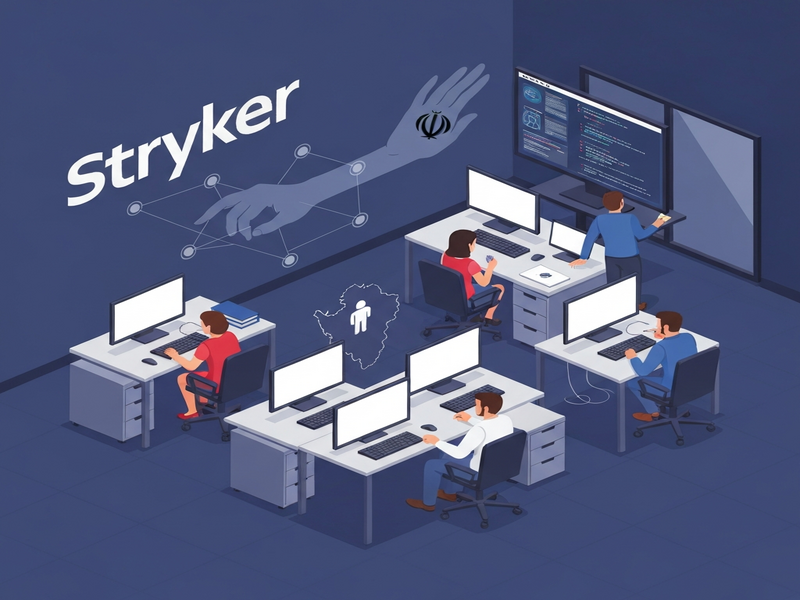
Stryker is actively restoring its IT infrastructure after the pro‑Iranian Handala group remotely wiped tens of thousands of employee devices, a breach that disrupted order processing, manufacturing, and shipping across the medical‑device giant.
Why the Stryker hack matters to healthcare IT leaders
For IT security managers and healthcare technology professionals, the Stryker hack is a stark reminder that nation‑state‑aligned threat actors can exploit legitimate management tools to launch destructive attacks. The incident, reported by TechCrunch, showcases a new attack vector—remote device wiping via compromised Microsoft Intune dashboards—rather than traditional ransomware. Understanding the timeline, impact, and response steps is essential for building resilient defenses in any medical‑device organization.
Handala’s destructive campaign: A concise timeline
- March 11, 2026 – Handala, a pro‑Iranian hacking collective, claims responsibility for breaching Stryker’s internal Microsoft environment.
- March 12–13 – The group gains access to the company’s Microsoft Intune console, a legitimate tool used to manage laptops, phones, and tablets.
- March 14 – Using the compromised console, Handala issues remote wipe commands that erase data on tens of thousands of employee devices, including personal smartphones.
- March 15 – Stryker publicly acknowledges the breach, confirming that its internet‑connected medical products remain safe but that internal operations are severely disrupted.
- March 16–17 – The company initiates a multi‑phase restoration plan while investigators from Palo Alto Networks and IBM begin forensic analysis.
Operational fallout: How the wipe crippled Stryker
The remote wipe had cascading effects across Stryker’s global footprint:
- Order processing halted – ERP systems lost critical authentication tokens, delaying order entry for hospitals worldwide.
- Manufacturing slowdown – Production lines dependent on real‑time inventory data experienced bottlenecks, pushing delivery timelines back by weeks.
- Employee productivity loss – Over 30,000 staff members reported being unable to access corporate email, VPN, and internal knowledge bases.
- Regulatory scrutiny – The U.S. Food & Drug Administration (FDA) issued a temporary advisory, requiring Stryker to demonstrate that device safety was uncompromised.
- Reputational damage – Media coverage amplified concerns about the security of medical‑device supply chains, prompting competitors to reassess their own defenses.
Stryker’s remediation roadmap: From containment to full recovery
Stryker’s incident response team followed a structured, MECE‑aligned approach:
1. Immediate containment
- Disabled all compromised Intune accounts and revoked associated tokens.
- Isolated affected network segments to prevent lateral movement.
- Engaged third‑party forensic firms (Palo Alto Networks, IBM) for rapid threat‑intel gathering.
2. System restoration
- Deployed fresh OS images to wiped devices using a hardened, air‑gapped imaging server.
- Re‑established Multi‑Factor Authentication (MFA) on all privileged accounts, addressing the previously missing MFA on the Intune admin console.
- Implemented a zero‑trust network architecture, segmenting device management traffic from core business applications.
3. Communication & compliance
- Issued internal alerts and step‑by‑step recovery guides to employees.
- Provided regular updates to regulators, confirming that all internet‑connected medical devices remained uncompromised.
- Published a post‑mortem report for stakeholders, outlining lessons learned and future hardening measures.
4. Long‑term hardening
Beyond immediate fixes, Stryker is investing in advanced security controls:
- Adoption of an Enterprise AI platform by UBOS to monitor anomalous admin activity in real time.
- Integration of Chroma DB integration for secure, searchable audit logs.
- Deployment of Workflow automation studio to enforce policy‑driven device provisioning.
Expert insight: Geopolitical motives behind the Handala attack
“The Handala group’s choice to target a medical‑device manufacturer, rather than a traditional financial or governmental entity, signals a strategic shift. By disrupting supply chains, they aim to exert pressure on U.S. policy without direct kinetic action.” – Dr. Lena Morales, Senior Threat Analyst at Palo Alto Networks
Dr. Morales notes that the attack aligns with a broader pattern of state‑aligned actors leveraging supply‑chain vulnerabilities to achieve political objectives. The timing—coinciding with heightened U.S. sanctions on Iran—suggests a retaliatory motive rather than pure financial gain.
Cyber‑security researchers at IBM echo this view, emphasizing that the Handala group’s reliance on phishing and credential‑stealing tools is consistent with Iran‑aligned threat groups that have previously targeted the energy and healthcare sectors.
Key takeaways for IT security managers
Below are actionable insights distilled from the Stryker incident, each aligned with the primary keywords “Stryker hack,” “pro‑Iranian hackers,” “Handala group,” “cybersecurity breach,” and “system restoration.”
- Validate privileged access: Enforce MFA on all admin consoles, especially those managing device fleets like Microsoft Intune.
- Segment device‑management traffic: Use zero‑trust network zones to isolate management protocols from core business data.
- Implement continuous monitoring: Deploy AI‑driven anomaly detection (e.g., AI SEO Analyzer style analytics) to flag unusual bulk‑wipe commands.
- Prepare a rapid‑restore playbook: Maintain immutable OS images and automated provisioning pipelines (see Web app editor on UBOS for template‑based recovery scripts).
- Educate staff on phishing: Conduct quarterly simulated phishing campaigns and integrate results with a AI Survey Generator to assess awareness.
How UBOS can accelerate your cyber‑resilience journey
UBOS offers a suite of tools that directly address the gaps exposed by the Stryker breach:
Unified platform overview
Explore the UBOS platform overview to see how a single pane of glass can manage device inventories, enforce MFA, and automate incident response workflows.
AI‑powered marketing agents for internal awareness
Leverage AI marketing agents to disseminate security best‑practice newsletters, ensuring every employee stays informed about emerging threats.
Tailored solutions for different business sizes
Whether you’re a startup or an enterprise, UBOS provides scalable options:
- UBOS solutions for SMBs – lightweight, cost‑effective security orchestration.
- UBOS for startups – rapid deployment with pre‑built templates.
- Enterprise AI platform by UBOS – advanced threat analytics and automated remediation at scale.
Pricing transparency
Review the UBOS pricing plans to align security investments with budgetary constraints while maintaining compliance.
Accelerate with ready‑made templates
Jump‑start your security automation using UBOS templates for quick start. For example, the AI Chatbot template can be repurposed as an internal help desk for incident reporting.
Showcase success stories
Explore real‑world implementations in the UBOS portfolio examples, including healthcare providers that have fortified their device‑management pipelines after similar attacks.
Looking ahead: Strengthening the medical‑device supply chain
The Stryker hack underscores a pivotal lesson: cyber‑threat actors are increasingly targeting the operational backbone of healthcare organizations, not just the data they store. As geopolitical tensions fuel more sophisticated campaigns, IT security managers must adopt a proactive, AI‑enhanced posture.
By integrating robust identity protection, zero‑trust networking, and automated restoration workflows—capabilities readily available through platforms like UBOS—medical‑device companies can reduce dwell time, limit operational disruption, and safeguard patient safety.
Stay vigilant, invest in continuous monitoring, and leverage AI‑driven automation to turn today’s breach lessons into tomorrow’s resilience.
Ready to future‑proof your organization? Visit the UBOS homepage and explore how AI‑powered security can protect your critical assets.
Andrii Bidochko
CTO UBOS
Andrii Bidochko is an AI entrepreneur and researcher focused on AI agents, reinforcement learning, and autonomous systems. He writes about the technologies shaping the future of machine intelligence, from frontier models and agent architectures to real-world AI applications.