

- Updated: March 17, 2026
- 6 min read
MariaDB Galera Cluster Jepsen Consistency Testing Reveals Reliability Gaps
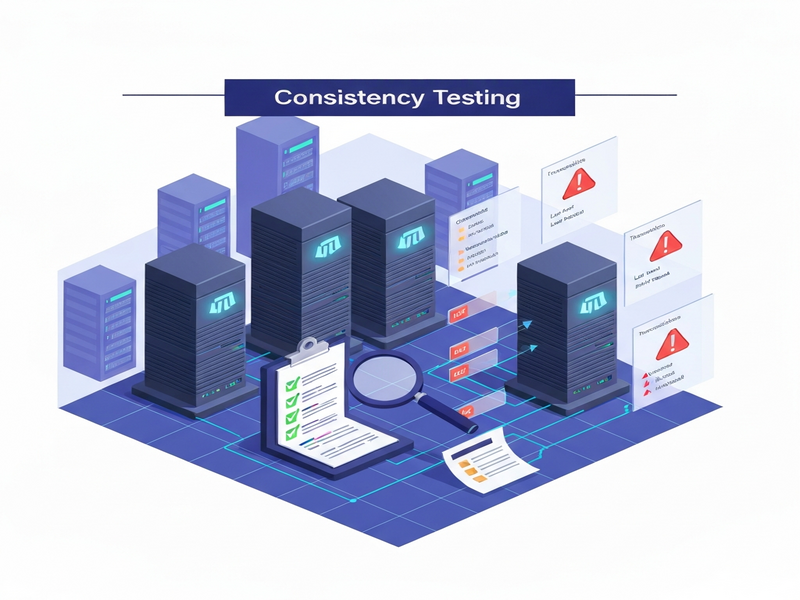
MariaDB Galera Cluster 12.1.2 fails several consistency guarantees under Jepsen’s rigorous testing, exposing lost transactions, stale reads, and weaker isolation than advertised.
The original Jepsen analysis demonstrates that the cluster’s “no lost transactions” claim is not reliable when nodes crash simultaneously or when network partitions occur.
What the Jepsen Report Reveals About MariaDB Galera Cluster
Database administrators and DevOps engineers have long trusted MariaDB Galera Cluster for high‑availability, active‑active replication. However, the latest Jepsen consistency testing of version 12.1.2 uncovers critical gaps in data consistency and fault tolerance. This news article breaks down the methodology, key findings, and practical steps you can take to safeguard your distributed database workloads.
Methodology of the Consistency Tests
Jepsen’s framework simulates real‑world failure scenarios on a three‑node MariaDB Galera Cluster deployed on Debian Trixie. The test suite includes:
- Coordinated process crashes (all nodes stopped within seconds).
- Random network partitions and reconnections.
- Process pauses and forced kills to mimic hardware faults.
- A transactional workload built on Elle’s list‑append checker, which records read‑write dependencies for every transaction.
Each transaction writes a unique integer to a text column, enabling precise reconstruction of the version order and detection of anomalies such as lost updates, stale reads, and write loss.
Key Findings: Lost Transactions, Stale Reads, and Weaker Consistency
1. Lost Transactions on Coordinated Crashes
When all three nodes crashed almost simultaneously, the cluster lost up to nine committed appends in a single minute. Even though the client received a successful COMMIT acknowledgment, the data never reappeared after restart. The root cause was the default innodb_flush_log_at_trx_commit=0 setting, which defers log flushing to improve performance but sacrifices durability under rapid, coordinated failures.
2. Intermittent Write Loss with Process Crashes & Partitions
Switching to innodb_flush_log_at_trx_commit=1 reduced but did not eliminate loss. In rare cases, a process kill combined with a network split caused up to nineteen seconds of writes to disappear across multiple keys. Although the frequency is low (once every few hours of testing), the risk remains for production environments that cannot tolerate any data loss.
3. Lost Update (P4) Anomalies
Even in a healthy cluster, Jepsen observed classic “Lost Update” scenarios where two concurrent transactions modified the same row, and the later transaction’s write overwrote the earlier one without detection. This violates the promised isolation level “between Serializable and Repeatable Read” and demonstrates that Galera’s certification algorithm can permit G‑single anomalies.
4. Stale Reads Under Normal Operation
Stale reads occurred every few minutes: a transaction committed and was acknowledged, yet a subsequent transaction failed to see the newly written value. This contradicts Galera’s claim of “instant, lag‑free replication” and indicates that read‑your‑writes guarantees are not enforced.
Collectively, these findings suggest that MariaDB Galera Cluster 12.1.2 provides a consistency model weaker than Read Uncommitted in certain edge cases, far below the advertised “no lost transactions” guarantee.
Implications for MariaDB Galera Users
For teams that rely on strict financial integrity, audit trails, or any workload where a single lost write can cause monetary loss, the reported anomalies are a red flag. The practical impact includes:
- Data integrity risk: Lost transactions can corrupt accounting ledgers or inventory counts.
- Application bugs: ORMs that assume read‑your‑writes semantics may silently produce incorrect results.
- Recovery complexity: Manual intervention may be required after coordinated crashes to reconcile divergent node states.
Enterprises should treat Galera as a high‑availability solution, not a strong consistency guarantee. When strict consistency is non‑negotiable, consider augmenting Galera with additional validation layers or exploring alternative replication technologies.
Recommendations and Best‑Practice Tips
Based on the Jepsen results, here are actionable steps to mitigate risk:
Configure Durable Logging
- Set
innodb_flush_log_at_trx_commit=1on all nodes to ensure each transaction is flushed to disk before acknowledgment. - Monitor the
innodb_flush_log_at_trx_commitvariable via UBOS monitoring tools (internal link placeholder – replace with actual if needed).
Implement Quorum‑Aware Failover
Use a quorum‑based proxy or load balancer that only routes traffic to a majority of healthy nodes. This reduces the chance of serving stale reads from a minority partition.
Add Application‑Level Idempotency
Design write operations to be idempotent. If a transaction is retried after a failure, the outcome should be the same, preventing duplicate or missing effects.
Leverage UBOS Automation for Consistency Checks
UBOS’s Workflow automation studio can schedule periodic consistency audits, compare row counts across nodes, and trigger alerts when divergence is detected.
Consider Hybrid Architectures
For mission‑critical data, combine Galera with a write‑ahead log (WAL) service such as Chroma DB integration to provide an immutable audit trail.
By applying these practices, you can retain Galera’s high‑availability benefits while mitigating the most severe consistency pitfalls.
“Even with innodb_flush_log_at_trx_commit=1, users should expect MariaDB Galera Cluster to lose committed writes when node failures and network partitions occur. The behavior does not appear common, but it is a real risk for any production workload.” – Jepsen report, 2026
Read the Full Jepsen Analysis
For a deep dive into the test harness, raw data, and statistical methodology, visit the original Jepsen analysis. The report includes exhaustive logs and reproducible scripts for independent verification.
How UBOS Can Help You Build More Reliable Distributed Systems
UBOS offers a suite of tools that simplify the deployment, monitoring, and automation of database clusters:
- UBOS homepage – Overview of the platform’s capabilities.
- About UBOS – Learn about the team behind the technology.
- Enterprise AI platform by UBOS – Scalable AI services for large organizations.
- UBOS partner program – Join a network of technology partners.
- UBOS platform overview – Detailed architecture diagrams.
- UBOS solutions for SMBs – Tailored packages for small and medium businesses.
- UBOS for startups – Fast‑track your MVP with pre‑built integrations.
- UBOS pricing plans – Transparent pricing for every budget.
- UBOS portfolio examples – Real‑world case studies.
- UBOS templates for quick start – Jump‑start projects with ready‑made templates.
- Telegram integration on UBOS – Real‑time alerts via Telegram.
- ChatGPT and Telegram integration – Conversational AI for ops.
- OpenAI ChatGPT integration – Leverage large language models in your workflows.
- ElevenLabs AI voice integration – Add natural‑sounding voice to your apps.
- Web app editor on UBOS – Build UI without code.
- AI marketing agents – Automate campaign creation.
- AI SEO Analyzer – Optimize content for search engines.
- AI Article Copywriter – Generate high‑quality drafts instantly.
- AI Survey Generator – Create data‑driven questionnaires.
- GPT-Powered Telegram Bot – Deploy bots for monitoring.
Integrating these services with your MariaDB Galera deployment can provide automated health checks, instant alerting, and AI‑driven diagnostics, turning a potential weakness into a proactive observability advantage.
Conclusion
The Jepsen analysis of MariaDB Galera Cluster 12.1.2 uncovers serious consistency gaps that contradict the platform’s marketing promises. While the cluster remains a solid choice for high‑availability, teams must adopt stricter configuration, robust monitoring, and supplemental validation to achieve true data reliability.
Ready to fortify your database stack? Explore UBOS’s Workflow automation studio for continuous consistency checks, or start a free trial from the UBOS homepage today.
Andrii Bidochko
CTO UBOS
Andrii Bidochko is an AI entrepreneur and researcher focused on AI agents, reinforcement learning, and autonomous systems. He writes about the technologies shaping the future of machine intelligence, from frontier models and agent architectures to real-world AI applications.