

- Updated: March 15, 2026
- 6 min read
AI Training Data Gets Emotional: Handshake AI Hires Improv Actors
Handshake AI is actively recruiting improv actors to create high‑quality emotion training data that will help AI models understand and generate authentic human feelings.
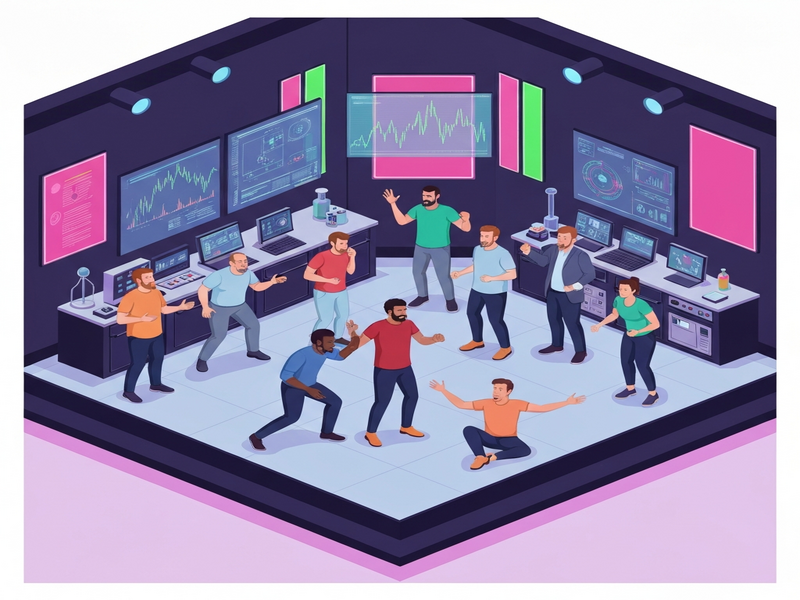
Why improv actors matter in the race for better AI training data
As large language models (LLMs) become more multimodal—producing text, voice, images, and video—their biggest weakness remains emotional nuance. Companies like UBOS homepage have highlighted that without rich, context‑aware datasets, AI struggles to recognize subtle shifts in tone, sarcasm, or empathy. Handshake AI’s new job listing is a direct response to this gap, tapping into the spontaneous, authentic reactions that only seasoned improv performers can provide.
What is Handshake AI?
Handshake AI is a data‑annotation and collection platform that partners with leading AI labs—including OpenAI, Anthropic, and Google DeepMind—to supply specialized training sets. Their business model mirrors that of other “data‑as‑a‑service” firms such as Scale AI and Mercor, but Handshake differentiates itself by focusing on human‑centric skills like storytelling, negotiation, and emotional expression.
The company’s rapid growth is evident: after a $150 million run‑rate was reported in late 2025, Handshake’s demand for niche data “tripled” in just six months. This surge is driven by AI labs racing to close the “jagged” performance gaps that appear when models excel at logical reasoning but falter on empathy‑driven tasks.
The improv actor job details
The listing, posted on Handshake’s public careers page, seeks performers with any background in theater, sketch comedy, or improv workshops. Key responsibilities include:
- Participating in video‑based improv sessions with other actors.
- Responding to light prompts or scenarios in real time, ensuring the interaction feels “grounded, human, and fun.”
- Labeling emotional cues (e.g., joy, frustration, sarcasm) for downstream AI training pipelines.
- Providing feedback on how well the AI mirrors human emotional flow.
Compensation is advertised at $74 per hour, with flexible, part‑time scheduling that can be slotted around auditions or rehearsals. While the pay is attractive, many community members on Reddit’s r/improv have expressed concerns about the long‑term impact of commodifying emotional performance for machines.
Why AI companies need emotion training data
Modern LLMs are evolving from pure text generators to full‑featured conversational agents. Features such as voice synthesis with nuanced intonation (e.g., OpenAI’s OpenAI ChatGPT integration) and multimodal image‑to‑text pipelines demand a deeper understanding of affect.
Below are the primary reasons emotion data is now a strategic priority:
- Human‑like voice assistants: Products like Anthropic’s Claude and Elon Musk’s xAI Grok now offer voice chat. Without training on authentic emotional cues, these assistants can sound flat or, worse, misinterpret user sentiment.
- Content moderation: Detecting hate speech, harassment, or subtle sarcasm requires models to grasp emotional context, reducing false positives and negatives.
- Customer support automation: AI agents must convey empathy to resolve issues effectively. Companies using AI marketing agents already see higher satisfaction scores when emotional nuance is present.
- Creative generation: From scriptwriting to video production, AI tools need to emulate human creativity, which is inherently emotional.
Handshake’s approach—capturing live, unscripted emotional exchanges—provides a richer dataset than traditional scripted recordings. This “in‑the‑moment” data mirrors real user interactions, making it invaluable for training robust, empathetic AI.
Industry reaction and future outlook
The announcement has sparked a lively debate across tech forums, academic circles, and creative communities. Key takeaways include:
- Ethical concerns: Critics argue that harvesting human emotion for commercial AI could accelerate job displacement for performers and therapists.
- Data quality vs. privacy: While the data is anonymized, the fine‑grained emotional labeling raises questions about consent and long‑term storage.
- Competitive advantage: Labs that secure high‑fidelity emotion datasets are likely to lead the next wave of “empathetic AI,” gaining market share in consumer‑facing products.
Looking ahead, we expect a surge in similar initiatives—think “improv‑style” data collection for robotics, VR avatars, and even autonomous vehicles that need to read pedestrian emotions. Companies that build robust pipelines now will set the standard for responsible, emotionally aware AI.
How UBOS can help AI teams leverage emotion data
For organizations looking to integrate emotion‑rich datasets into their workflows, the UBOS platform overview offers a low‑code environment to ingest, label, and iterate on multimodal data. Features such as the Workflow automation studio enable rapid creation of annotation pipelines without deep engineering effort.
Additionally, the Web app editor on UBOS lets data scientists prototype custom UI for improv sessions, while the UBOS templates for quick start include pre‑built “Emotion Capture” modules that can be deployed in minutes.
For startups, the UBOS for startups program provides discounted pricing and dedicated support, ensuring that emerging AI firms can compete with larger labs on data quality. SMBs can also benefit from the UBOS solutions for SMBs, which include collaborative annotation tools that scale with team size.
Template marketplace examples that illustrate emotion‑focused AI
- AI Article Copywriter – Generates copy with tone‑adjustable parameters, useful for testing emotional nuance.
- AI Video Generator – Produces short videos that can be paired with voice‑over emotion tags.
- AI Image Generator – Creates visual assets that can be annotated with affective descriptors.
Pricing, partnership, and next steps
Organizations interested in building emotion‑aware pipelines can explore the UBOS pricing plans, which range from a free tier for experimentation to enterprise‑grade packages that include dedicated support and SLA guarantees. For deeper collaboration, the UBOS partner program offers co‑branding opportunities and joint‑go‑to‑market strategies.
Conclusion
Handshake AI’s recruitment of improv actors underscores a pivotal shift: AI is no longer just about raw computational power; it’s about capturing the messy, beautiful spectrum of human emotion. By partnering with platforms like UBOS, AI labs can turn these live performances into structured, actionable training data, accelerating the development of truly empathetic agents.
For a deeper dive into the original announcement, read the Verge article that first broke the story.
Ready to experiment with emotion‑rich AI? Explore the UBOS portfolio examples and start building the next generation of empathetic technology today.
Andrii Bidochko
CTO UBOS
Andrii Bidochko is an AI entrepreneur and researcher focused on AI agents, reinforcement learning, and autonomous systems. He writes about the technologies shaping the future of machine intelligence, from frontier models and agent architectures to real-world AI applications.