

- Updated: March 13, 2026
- 5 min read
Digg Shuts Down App and Lays Off Staff Amid Retooling
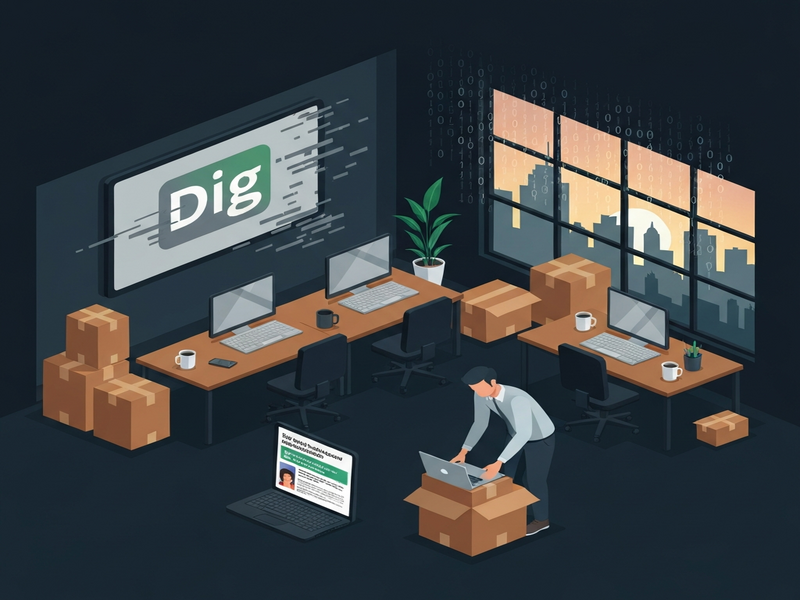
Digg has laid off a sizable portion of its workforce and removed its mobile app from stores as the company pivots to a new, AI‑driven strategy.
Digg Layoffs and App Shutdown: What the Tech Community Needs to Know
On March 13, 2026, Digg—once the flagship link‑sharing platform founded by Kevin Rose—announced sweeping staff reductions and the immediate removal of its iOS and Android apps. The move is part of a broader retooling effort aimed at rebuilding the service around AI‑enhanced moderation and community tools. While the brand will continue to exist, the layoffs signal a dramatic shift for a site that has struggled to compete with Reddit, Hacker News, and newer AI‑powered social hubs.
Background: Digg’s Recent Re‑tooling Efforts
Digg was resurrected in 2024 after Kevin Rose and Reddit co‑founder Alexis Ohanian acquired the remnants of the original site. Their vision was to create a community platform where moderators and admins wielded more control, and where AI could help verify user identities and curb spam. Despite a promising launch, the platform quickly ran into a familiar foe: sophisticated bot networks that flooded the site with SEO spam and fake engagement.
In a candid blog post, Digg’s CEO Justin Mezzell described the “dead internet theory” as a reality check: “The internet is now populated, in meaningful part, by sophisticated AI agents and automated accounts.” The company responded by banning tens of thousands of accounts, deploying custom anti‑bot tooling, and partnering with external security vendors. However, the scale of the problem outpaced the defenses, leading to unreliable vote counts and a deteriorating user experience.
To address these challenges, Digg announced a strategic pivot toward AI‑driven moderation, tighter community governance, and a leaner product roadmap. The layoffs and app shutdown are the first visible steps of this re‑tooling plan.
What Exactly Happened? Staff Reductions and App Removal
Digg’s public layoff notice did not disclose exact headcount numbers, but industry insiders estimate that roughly 40‑50% of the workforce was affected. The cuts primarily targeted engineering, product design, and marketing teams—areas most directly tied to the now‑defunct mobile experience.
- All mobile development teams were disbanded, leading to the immediate removal of the Digg app from the Apple App Store and Google Play Store.
- Customer support staff were reduced to a “core squad” focused on enterprise clients and high‑value users.
- Several senior product managers were let go, consolidating decision‑making under a smaller leadership group.
The company also announced that the TechCrunch article on Digg layoffs provides additional context and quotes from the leadership team.
Despite the shutdown of the mobile app, the web platform remains live, and the weekly Diggnation podcast will continue under Rose’s stewardship.
Impact: Users, Competitors, and the Wider Digital Media Landscape
For the roughly 1.2 million active Digg users, the app removal means a sudden loss of on‑the‑go content discovery. Many users have migrated to Reddit or specialized AI‑curated feeds, accelerating the consolidation of attention in a few dominant platforms.
From an industry perspective, Digg’s challenges underscore a broader trend: legacy social sites are increasingly vulnerable to AI‑generated spam and bot manipulation. As AI models become more accessible, the cost of creating high‑volume fake accounts drops dramatically, forcing platforms to invest heavily in detection and verification.
Investors are watching closely. The re‑tooling effort could serve as a case study for how AI can be leveraged to rebuild trust in community‑driven sites. Companies that successfully integrate AI moderation may gain a competitive edge, while those that ignore the bot problem risk rapid decline.
Official Statement from Digg Leadership
“We are confronting an internet that is increasingly populated by automated agents. Our decision to streamline the team and focus on AI‑enhanced moderation is not a retreat—it’s a strategic pivot to build a genuinely different community experience,” said Justin Mezzell, CEO of Digg.
Visual Overview
How UBOS Is Helping Companies Navigate Similar Challenges
Businesses facing rapid AI‑driven change can turn to UBOS for a flexible, low‑code platform that accelerates AI integration without massive engineering overhead.
AI‑Powered Moderation & Content Management
UBOS’s Chroma DB integration enables fast vector search for detecting duplicate or malicious content, a key tool for combating bot spam.
Voice‑Enabled Community Interaction
Leverage the ElevenLabs AI voice integration to create audio summaries of trending topics, keeping users engaged even without a mobile app.
Automation of Routine Tasks
The Workflow automation studio lets teams build bots that flag suspicious activity, route moderation tickets, and generate real‑time analytics.
Rapid Prototyping of New Features
Use the Web app editor on UBOS to spin up experimental community tools, test them with a subset of users, and iterate quickly.
AI‑Driven SEO & Content Insights
UBOS offers an AI SEO Analyzer that helps platforms understand how search engines view their content, reducing reliance on low‑quality backlinks that attract spam.
Content Generation at Scale
Deploy the AI Article Copywriter to produce high‑quality community guides, FAQs, and policy documents without overburdening the editorial team.
Explore the full UBOS platform overview to see how these components fit together for a resilient, AI‑first digital experience.
Next Steps for Tech Leaders
If your organization is grappling with bot spam, content moderation, or the need to pivot quickly, consider the following actions:
- Audit your current moderation pipeline and identify gaps where AI can add value.
- Prototype a low‑code solution using UBOS’s UBOS templates for quick start, focusing on moderation and user verification.
- Integrate voice or chat interfaces (e.g., ChatGPT and Telegram integration) to provide real‑time assistance to community managers.
- Leverage the Enterprise AI platform by UBOS for scalable analytics and reporting.
- Review pricing options via the UBOS pricing plans to align costs with expected ROI.
Andrii Bidochko
CTO UBOS
Andrii Bidochko is an AI entrepreneur and researcher focused on AI agents, reinforcement learning, and autonomous systems. He writes about the technologies shaping the future of machine intelligence, from frontier models and agent architectures to real-world AI applications.