

- Updated: March 12, 2026
- 6 min read
Fungal Networks: The Hidden Engines of Ecosystems
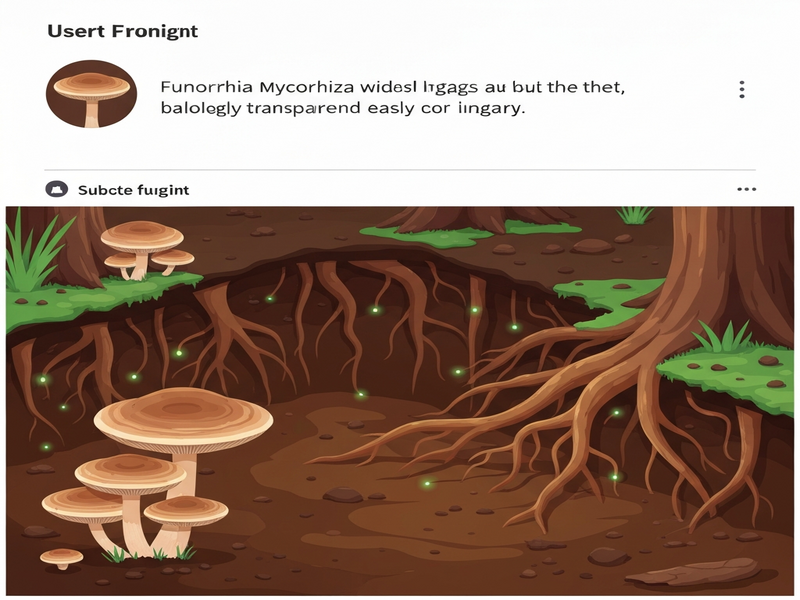
Fungi are the invisible architects of healthy forests, driving nutrient cycling, carbon storage, and plant resilience through vast mycorrhizal networks, yet only a handful of species are formally protected.
Why Fungi Matter: An Overview of Their Ecological Super‑powers
Fungi constitute a separate kingdom of life, estimated to contain anywhere from 2.2 million to 12 million species, of which only ~155 000 have been described. Despite this taxonomic mystery, scientists agree on three core services that make fungi indispensable:
- Mycorrhizal symbiosis: Up to 90 % of terrestrial plants form mutualistic relationships with mycorrhizal fungi, extending root surface area and unlocking nutrients such as phosphorus, nitrogen, and micronutrients.
- Carbon sequestration: Mycorrhizal networks lock away an estimated 13 billion tonnes of CO₂ each year—roughly a third of global fossil‑fuel emissions—by storing carbon in soil organic matter.
- Decomposition & soil formation: Fungi break down lignin and cellulose, turning dead wood into fertile humus that fuels the next generation of plant growth.
These functions are not abstract; they translate directly into forest health, climate mitigation, and the economic value of ecosystem services—an estimated $55 trillion when accounting for carbon credits, pharmaceuticals, and food production.
Mycorrhizal Networks: The “Wood Wide Web”
Often called the “Wood Wide Web,” mycorrhizal hyphae weave through soil, linking tree roots into a single communication platform. Through this network, trees can:
- Share carbon and nutrients with younger or stressed neighbors.
- Signal the presence of pests, prompting defensive chemistry in distant trees.
- Facilitate the spread of beneficial microbes that improve drought tolerance.
Research led by evolutionary biologist Toby Kiers (MacArthur “genius” grant winner) demonstrates that these underground highways are essential for forest resilience under climate stress.
Spotlight: The Endangered Agarikon Mushroom
The agarikon (Fomitopsis officinalis), also known as the quinine conk, is a massive shelf fungus that clings to ancient conifers in old‑growth forests across the Pacific Northwest, Europe, and parts of Asia. Historically prized for its medicinal compounds—antimicrobial, antiviral, and anti‑cancer agents—agarikon is now listed as an endangered species in the United States.
“In the past hundred years it declined 70 percent, and we don’t have evidence that decline is stopping,” says Jessica Allen, lead mycologist at NatureServe.
Key threats include:
- Habitat loss from logging and land conversion.
- Air pollution that impairs spore viability.
- Climate warming that shifts host‑tree distributions.
To safeguard the species, the San Diego Zoo’s biobank facility now stores agarikon tissue cultures, aiming for future re‑introduction programs.
Why Agarikon Matters Beyond Its Rarity
Beyond its cultural legacy, agarikon exemplifies the broader value of fungal diversity:
- Its secondary metabolites are a source of novel drug leads.
- It contributes to the decomposition of old‑growth wood, recycling carbon back into the ecosystem.
- Its presence signals a healthy, undisturbed forest microclimate—an indicator for conservation planning.
Recent Scientific Discoveries & Conservation Initiatives
In the last five years, a wave of interdisciplinary projects has begun to lift fungi from the shadows:
DNA Sequencing & Machine Learning
The Society for the Protection of Underground Networks (SPUN) combines high‑throughput DNA barcoding with AI to map global mycorrhizal hotspots. Their Workflow automation studio pipelines accelerate data cleaning, enabling rapid identification of previously unknown fungal taxa.
Citizen‑Science Platforms
Projects like the UBOS templates for quick start empower volunteers to upload geotagged photos of fruiting bodies, feeding a global database that now holds over 200 000 records. This crowdsourced effort mirrors the success of bird‑watching platforms and is crucial for detecting rapid declines.
Policy‑Driven Protection
At COP16 (2024) Chile and the United Kingdom introduced the Fungal Conservation Pledge, committing to treat fungi on par with flora and fauna in national biodiversity strategies. Thirteen countries have since signed an informal agreement, with a formal treaty slated for COP17 (2026).
Global Biodiversity Policy Relevance
Integrating fungi into the Convention on Biological Diversity (CBD) framework could unlock new funding streams for forest restoration. The United Nations’ Biodiversity Insights report estimates that protecting mycorrhizal hotspots would increase carbon sequestration potential by up to 15 %.
Key policy levers include:
- Protected area expansion: Currently only 10 % of mycorrhizal hotspots lie within reserves.
- Incentivized land stewardship: Payments for ecosystem services (PES) can reward landowners who maintain fungal diversity.
- Research funding: Dedicated grants for fungal genomics and field surveys.
When policymakers recognize fungi as “ecosystem engineers,” they can craft legislation that simultaneously tackles climate change, soil degradation, and biodiversity loss.
What This Means for You: Actionable Steps
Whether you are a researcher, educator, or policy maker, you can contribute to the fungal renaissance:
- Integrate fungal data into your projects. Use the Chroma DB integration to store and query large fungal datasets.
- Leverage AI tools for rapid analysis. The AI SEO Analyzer can help you optimize research publications for discoverability.
- Promote citizen science. Deploy the AI YouTube Comment Analysis tool to gauge public sentiment on fungal conservation videos.
- Advocate for policy change. Reference the Enterprise AI platform by UBOS case studies that illustrate economic returns from fungal‑based carbon credits.
Explore UBOS Solutions for Your Fungal Projects
UBOS offers a suite of low‑code tools that accelerate the creation of data‑driven environmental applications:
- Web app editor on UBOS – build interactive maps of fungal distributions without writing code.
- AI Chatbot template – answer public queries about mushroom foraging safely.
- AI Image Generator – create visual assets for outreach campaigns.
- UBOS pricing plans – flexible tiers for NGOs, startups, and enterprises.
Conclusion: The Time to Champion Fungi Is Now
Fungi are the silent powerhouses that keep forests alive, lock away carbon, and fuel the next generation of medicines. The endangered agarikon reminds us that even the most resilient species can vanish without intentional protection. Recent scientific breakthroughs, combined with emerging global policies, signal a turning point—one where fungi finally receive the conservation status they deserve.
By integrating fungal data into AI‑driven platforms, supporting citizen‑science initiatives, and lobbying for stronger biodiversity legislation, we can ensure that the “Wood Wide Web” continues to weave life‑supporting connections for centuries to come.
Ready to build the next generation of fungal‑focused applications? Visit the UBOS homepage to explore templates like the AI SEO Analyzer or start a project with the AI Chat App with ChatGPT API. Together, we can turn scientific insight into actionable impact.
Source: Yale e360 – “Fungi Kingdom”
Andrii Bidochko
CTO UBOS
Andrii Bidochko is an AI entrepreneur and researcher focused on AI agents, reinforcement learning, and autonomous systems. He writes about the technologies shaping the future of machine intelligence, from frontier models and agent architectures to real-world AI applications.