

- Updated: March 11, 2026
- 3 min read
AI‑Generated Memes: Students Mock Teachers on TikTok and Instagram
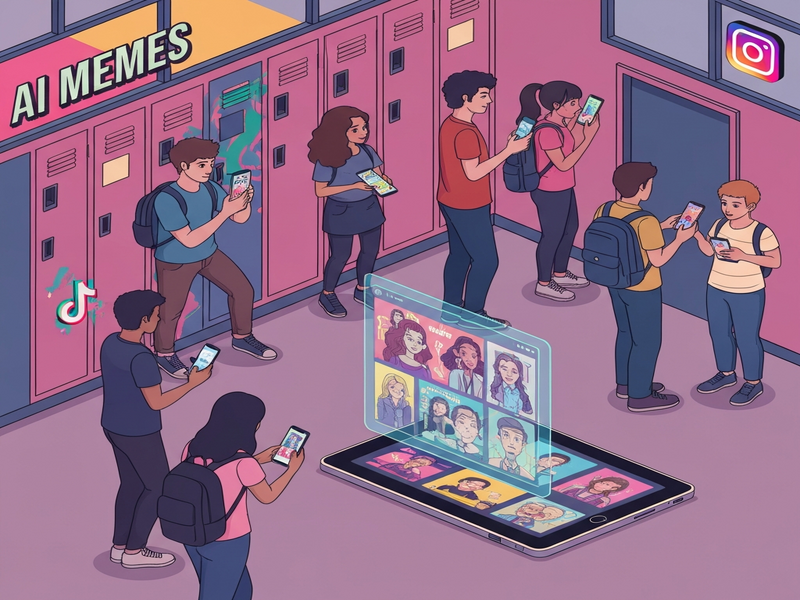
High school students across the United States are turning generative AI tools into a new form of digital harassment, creating meme‑style “slander pages” that mock teachers, administrators, and entire school districts. The phenomenon, first reported by Wired, shows how quickly AI‑generated content can spread on platforms like TikTok and Instagram, where short‑form videos and image carousels amplify the reach of each post.
Students are using services such as Viggle AI, a text‑to‑image generator that can produce realistic portraits of public figures with a single prompt. By feeding the model with a teacher’s name and a controversial comparison—often likening educators to historical dictators or extremist groups—the resulting images are posted to anonymous accounts that masquerade as fan pages or satire accounts. The captions typically add a layer of sarcasm, encouraging followers to share the content with hashtags that trend among teen circles.
One Texas district reported that a series of AI‑crafted memes depicted a local high‑school principal as a “Nazi officer,” complete with a swastika‑styled badge. The images were shared thousands of times on TikTok, where the platform’s algorithm promoted them to users who had previously engaged with school‑related content. Similar accounts have surfaced in California and Florida, each using the same template: a portrait generated by AI, a provocative headline, and a call‑to‑action that urges viewers to “expose the truth.”
Educators and parents are reacting with a mix of alarm and frustration. School administrators argue that the memes constitute cyberbullying, potentially violating district policies on harassment. Some districts have begun issuing digital‑citizenship workshops that specifically address AI‑generated content, warning students about the legal and ethical ramifications of impersonating real people. Parents, meanwhile, are grappling with the difficulty of monitoring their children’s activity on platforms that prioritize short, viral content over nuanced discussion.
Experts in AI ethics point out that the technology itself is neutral; it is the intent behind the prompts that determines the impact. As highlighted in UBOS’s AI‑ethics guide, the ease of producing realistic images raises questions about consent, defamation, and the spread of misinformation. When teenagers use these tools to target teachers, the line between satire and harassment becomes blurred, and existing policies struggle to keep pace.
Social‑media platforms are also under pressure to respond. Instagram’s community‑guidelines team has begun flagging accounts that repeatedly post AI‑generated harassment, but the sheer volume of content makes enforcement challenging. TikTok, which relies heavily on algorithmic recommendation, has announced a pilot program to detect synthetic media, yet critics argue that the measures are too late to curb the viral spread of already posted memes.
From a broader perspective, the rise of AI‑generated meme culture reflects a shift in how young people engage with technology and each other. The same tools that enable creative expression are being weaponized for mockery, highlighting the need for digital‑literacy curricula that address not only how to create content, but also the responsibility that comes with it. UBOS’s social‑media‑trends report notes that generative AI is likely to become a staple of teen communication, making proactive education essential.
While the legal framework for AI‑driven defamation is still evolving, schools are encouraged to document incidents, involve law‑enforcement when threats cross a line, and work with platform providers to remove harmful content. Ultimately, a collaborative approach that includes educators, parents, policymakers, and tech companies will be required to balance the creative possibilities of generative AI with the need to protect individuals from targeted harassment.
Andrii Bidochko
CTO UBOS
Andrii Bidochko is an AI entrepreneur and researcher focused on AI agents, reinforcement learning, and autonomous systems. He writes about the technologies shaping the future of machine intelligence, from frontier models and agent architectures to real-world AI applications.